
Creativity is a vital part of children’s development. It strengthens problem-solving skills, encourages curiosity, and supports cognitive growth. As such, engaging kids in imaginative activities allows them to think independently and express their emotions in healthy ways. The good news is that fostering creativity doesn’t require expensive toys or specialized art supplies. This way is a lot of open-ended options, like everyday household objects or thoughtfully designed Montessori materials, can offer children extraordinary opportunities for hands-on learning. A little bit of imagination can transform ordinary moments and simple materials into extraordinary opportunities for hands-on learning. This article explores various items that parents and caregivers can use to inspire children to craft, build, and experiment.
Paper, Pencils, and Crayons
Few materials are as versatile and accessible as paper, pencils, and crayons. These basic supplies help children to explore foundational creative activities, such as drawing, coloring, and writing. Aside from doodling, children can also use these materials to experiment with folding and layering to create collages or handmade cards. With these materials, parents and caregivers can create a stimulating environment that invites children to imagine freely and bring their ideas to life.
Building Blocks
Building blocks are excellent tools for inspiring creativity and critical thinking. Whether wooden, plastic, or magnetic, blocks encourage children to experiment with balance and design. Playing with these pieces encourages kids to develop spatial awareness and problem-solving as well as pick up engineering principles in a playful context.
Blocks also foster storytelling and imaginative play, as a simple tower can transform into a castle, spaceship, or cityscape. The open-ended nature of building blocks ensures that no two creations are ever the same, giving children the freedom to innovate and explore their own ideas.
Blank Silicone Wristbands
Despite their simplicity, blank silicone wristbands offer a surprisingly engaging platform for creativity. Children can decorate these accessories using permanent markers and stickers to design personalized, custom bracelets. This activity promotes fine motor skills as well as pattern recognition, and color coordination while allowing kids to express individuality and experiment with design concepts on a small scale. Additionally, making wristbands can be a social activity. It can encourage collaboration, idea sharing, and gift-giving among friends or family members.
Cardboard Boxes
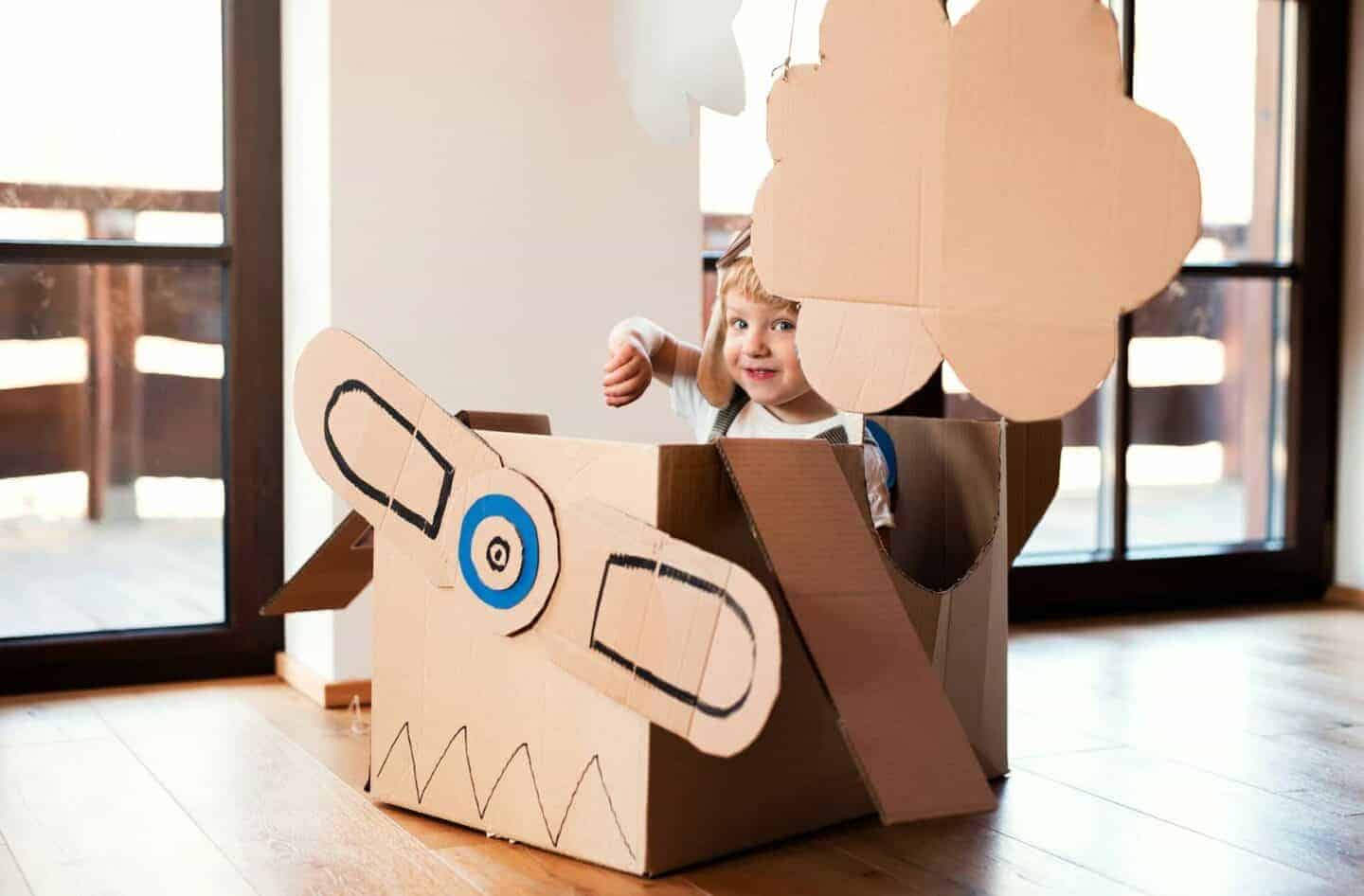
Cardboard boxes are a blank canvas for imaginative play and creative projects. For instance, large boxes can be transformed into forts, playhouses, or vehicles. The process of building and decorating boxes can also give children a sense of accomplishment. Smaller boxes, on the other hand, work well for creating miniature models or intricate craft projects, which can be beneficial projects for children who want to focus and refine their creativity.
Working with cardboard can also give children the opportunity to learn how to cut, fold, and assemble pieces, which can then encourage them to plan their steps and solve problems along the way. Plus, it promotes resourcefulness, as it teaches kids to see everyday materials as opportunities for innovation and self-expression.
Toilet Paper Roll Core
There are many things you can do with toilet paper roll cores. They can be turned into animals, flowers, makeshift musical instruments, or even components of larger structures when combined with other materials. Decorating these cores also enables children to explore colors and patterns while practicing fine motor skills. The simplicity of the roll encourages kids to think creatively about how to repurpose an ordinary item, which can then help cultivate imaginative thinking and an understanding of sustainability through reuse.
Egg Cartons
Egg cartons are excellent for hands-on activities that combine art and problem-solving. Their segmented design naturally lends itself to sorting games, and they can also be turned into small planters or miniature creature creations. Children can paint, cut, and glue these items to produce decorative and educational projects. Furthermore, egg cartons encourage experimentation with three-dimensional design and spatial reasoning. These simple materials help children learn to think creatively about how everyday objects can be transformed into something entirely new.
Fabric Scraps
Do you have spare fabric at home? The scraps can be used to encourage children to experiment with texture and pattern in ways that other materials cannot. Kids can layer, knot, or stitch pieces together to create tactile projects that stimulate sensory awareness and imaginative thinking.
Letting children work with different types of fabric introduces them to a variety of tactile experiences, which can encourage them to make creative choices about how materials can be combined. This hands-on interaction also promotes concentration and patience, as it gives children the opportunity to figure out how different shapes and fabrics interact. Over time, working with fabric and turning leftover materials into meaningful, personalized creations can help kids develop an eye for design and coordination.
Plastic Bottles
Plastic bottles are perfect for projects that encourage experimentation with movement, sound, and interaction. Children can turn them into shakers, water timers, or floating boats, and explore how different materials behave in different conditions. They can also decorate the bottles, which allows for personal expression. Plus, combining their plastic bottle creations with other objects can spark inventive problem-solving, helping kids see how ordinary items can be transformed into entirely new and imaginative creations.

Encouraging creativity in children doesn’t require expensive tools or elaborate materials. In most cases, the simplest items offer the greatest opportunities for imaginative play and hands-on learning. Everyday materials can inspire children to think independently, problem-solve, and express themselves in meaningful ways. Providing kids access to these items allows room for experimentation and helps them develop skills that extend far beyond the craft table.