
Tulips are one of the most beautiful flowers to grace any garden. They are elegant and colourful, and they add a touch of spring to any setting. Growing tulips in water is a popular trend among gardeners and flower enthusiasts alike. This method is easy, and the results are stunning. In this blog post, we will take you through a step-by-step guide on how to grow tulips in water.

How to Grow Tulips in Water
Step 1: Gather your materials
To grow tulips in water, you will need the following items:
- Tulip bulbs
- A glass vase, glass jar, bulb vase or forcing vase. A forcing vase isn’t the most reliable to grow tulips but it is an option.
- Water
- Pebbles, decorative stones or glass beads
Step 2: Prepare the tulip bulbs
The first step is to prepare the tulip bulbs for planting. Take the tulip bulbs and soak them in lukewarm water for about two hours. This will help to activate the growth process in the bulbs.
Step 3: Choose a vase or glass jar
Select your glass container that is large enough to accommodate the tulip bulbs. The vase or jar should be clean and clear. A clear container will allow you to observe the growth of the tulips over time.
Step 4: Add pebbles or decorative stones
Add a layer of pebbles or decorative stones to the bottom of the tall vase or glass jar. This will provide support for the tulip bulbs and help to keep them in place.
Step 5: Add Water
Fill the vase or glass jar with fresh water until the level is just below the top of the pebbles. This should be enough water. For the best results, the water should be at room temperature or slightly warmer.
Step 6: Place the tulip bulbs in the vase
Place the base of the bulbs in the vase or glass jar. The bulbs should be positioned on top of the pebbles with the pointed end facing up. Make sure that the bulbs are not touching the water level to start the rooting process.
Step 7: Place the vase in a cool, dark place
Place the vase or glass jars in a cool, dark place for a period of about four to six weeks. This chilling period will allow the roots of the tulip bulbs to develop and grow. It’s a good time to stagger the planting of the bulbs in the vase of water so you will get the best display of indoor blooms at different times.
Step 8: Move the vase to a sunny location
After four to six weeks, you can move the vase or glass jar to a full sun location for its bloom cycle. This will help to encourage the tulip plants to grow and bloom. The water should be changed every few days to keep it fresh. You will have your spring flowers in no time!
Step 9: Enjoy your beautiful tulips
In a few weeks, you will start to see the tips of the bulbs sprout and grow. You can enjoy their beauty for several days before they start to wilt. Once the tulips have wilted, you can discard them and start the process over again with fresh bulbs.
Growing tulips in water is a simple and easy way to enjoy the beauty of these flowers, it’s a great alternative to cut tulips from farmer’s markets. You can have a vase of stunning tulips in your home with just a few simple steps. So why not give it a try this spring?

How To Grow Tulips in Soil inside
Growing tulips inside can be a great way to enjoy these beautiful flowers even if you don’t have a garden. Here are some tips to help you successfully grow indoor tulips the best way:
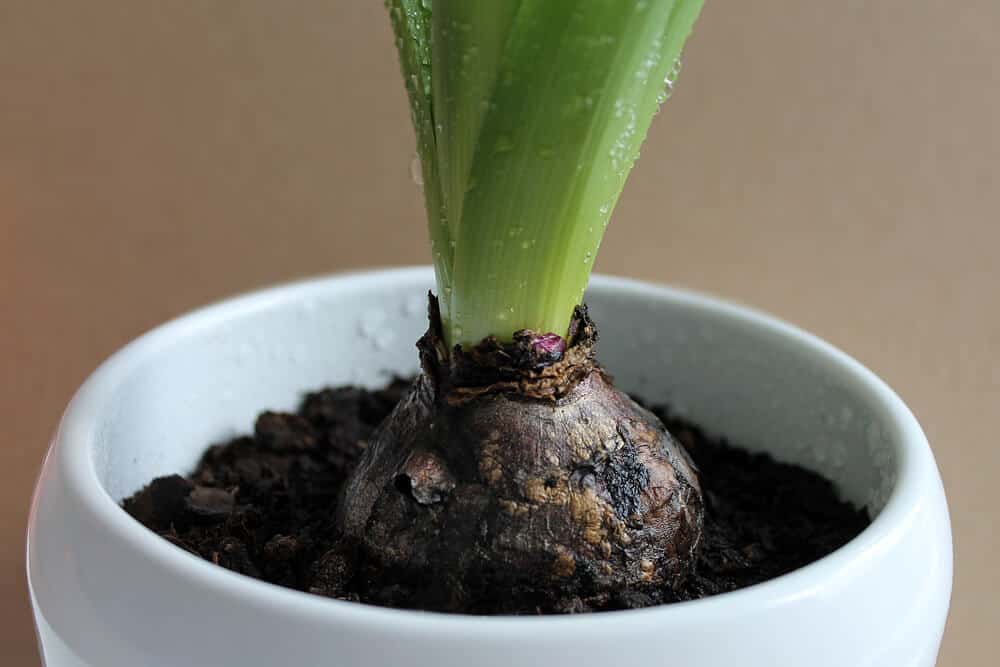
- Choose the right tulip variety: When growing tulips indoors, it’s best to choose early or mid-season perennial tulips that will bloom earlier and require less time to grow. Plus you can use again for next year’s blooms!
- Use the right container: Choose a container that’s large enough to accommodate the tulip bulbs and has drainage holes to prevent overwatering. You can also use a special tulip vase designed specifically for growing tulips indoors.
- Use the right soil: Use high-quality potting soil that’s rich in nutrients and provides good drainage. Add perlite or sand to the soil to improve drainage. I would avoid garden soil and head to your local garden centers for the best soil for beautiful blooms in your planted pots. There is a good reason for using clean garden center soil and that’s to avoid gnats in the organic matter on the top of the soil from the garden soil.
- Plant the bulbs: Plant the tulip bulbs pointed end up, about 4-6 inches deep in the soil. Leave enough space between each bulb to allow for new growth and airflow.
- Provide enough light: Tulips need at least 6 hours of sunlight a day to grow and bloom properly. If you don’t have enough natural light like a bright sunny window, you can use artificial grow lights.
- Water regularly: Tulips need regular watering, but be careful not to overwater them. Keep the soil moist but not waterlogged for proper care.
- Control temperature: As a general rule, tulips prefer cool temperatures between 50-60°F (10-16°C) to grow and bloom. Keep them away from direct heat sources like radiators and heaters.
- Fertilize: Feed your tulips with a balanced fertilizer every 2-3 weeks to provide the nutrients they need to grow and bloom.
- After blooming: Once the tulips have finished blooming, cut off the flowers. A little trick is to leave the tulip leaves to continue photosynthesis to help the second year. You can place bulbs in a paper bag in an unheated garage or in a cool, dry place and replant them outdoors in the late fall cold season with a colder soil temperature or continue to grow them indoors next year.
What types of tulip bulbs are best to grow inside?
When it comes to growing tulips indoors, some tulip varieties perform better than others. Here are some of the best tulip bulbs to grow inside:
- Single Early Tulips: These spring bulbs are one of the earliest bloomers and are ideal for indoor growing. They come in a wide range of colours and have sturdy stems that hold up well in a vase.
- Double Early Tulips: These tulips have large, double blooms that make a stunning display indoors and a good choice. They come in a variety of colours, including white, pink, yellow, and red.
- Triumph Tulips: These tulips have large, cup-shaped blooms that come in a wide range of colours. They are known for their strong stems and long-lasting blooms, making them ideal for indoor growing and cut flowers.
- Darwin Hybrid Tulips: These tulips are known for their large, sturdy blooms that come in a range of colours. They are also one of the tallest tulip single flower varieties, making them ideal for indoor growing.
- Fringed Tulips: These tulips have frilly edges on their blooms with curved green leaves, making them a unique and eye-catching addition to any indoor garden. They come in a range of colours, including pink, purple, and white.
When choosing tulip bulbs for indoor growing, it’s important to select early or mid-season varieties that don’t require a long period of cold stratification. These varieties will bloom earlier and require less time to grow, making them ideal for indoor growing.
By following these tips, you can grow gorgeous tulips in water, or in soil inside your home and enjoy their beauty all year round.
You may also like:
I have three yellow tulips in a pot from Aldi that were blooming just fine for about three days before they started to wilt. They are on out kitchen table so as to be close to a window, but that is also directly above a heat register (all our windows are). Any suggestions?
Tulips indoors usually wilt fast when they’re warm, so that heat register + window spot is very likely the culprit.
You could try this:
Move the pot off away from the heat register ASAP (even 1–2 metres away helps). Bright light is good, but cooler air matters more for tulips.
Keep them cool overnight if you can (a cooler room, hallway, or even a porch/conservatory). Tulips last much longer in cooler temps.
Check watering/drainage: feel the compost.
If it’s dry, water thoroughly until it drains out, then empty any outer pot/saucer so it’s not sitting in water.
If it’s wet/soggy, let it dry a bit and make sure the pot has drainage holes.
Rotate the pot daily so they don’t lean and stress toward the window.
Remove any fully spent blooms (snip the flower head off) so the plant doesn’t waste energy on them.
I hope this helps x