
Looking for secret methods to stop dog walking injuries?
Here it is, the most comprehensive guide to the equipment, mindset, and fitness you will need to prevent injuries while walking your pet.
Preventing from dog pulling should be high on your priorities when finding a leash to use. We cover that and more in our article below. Enjoy our guide!
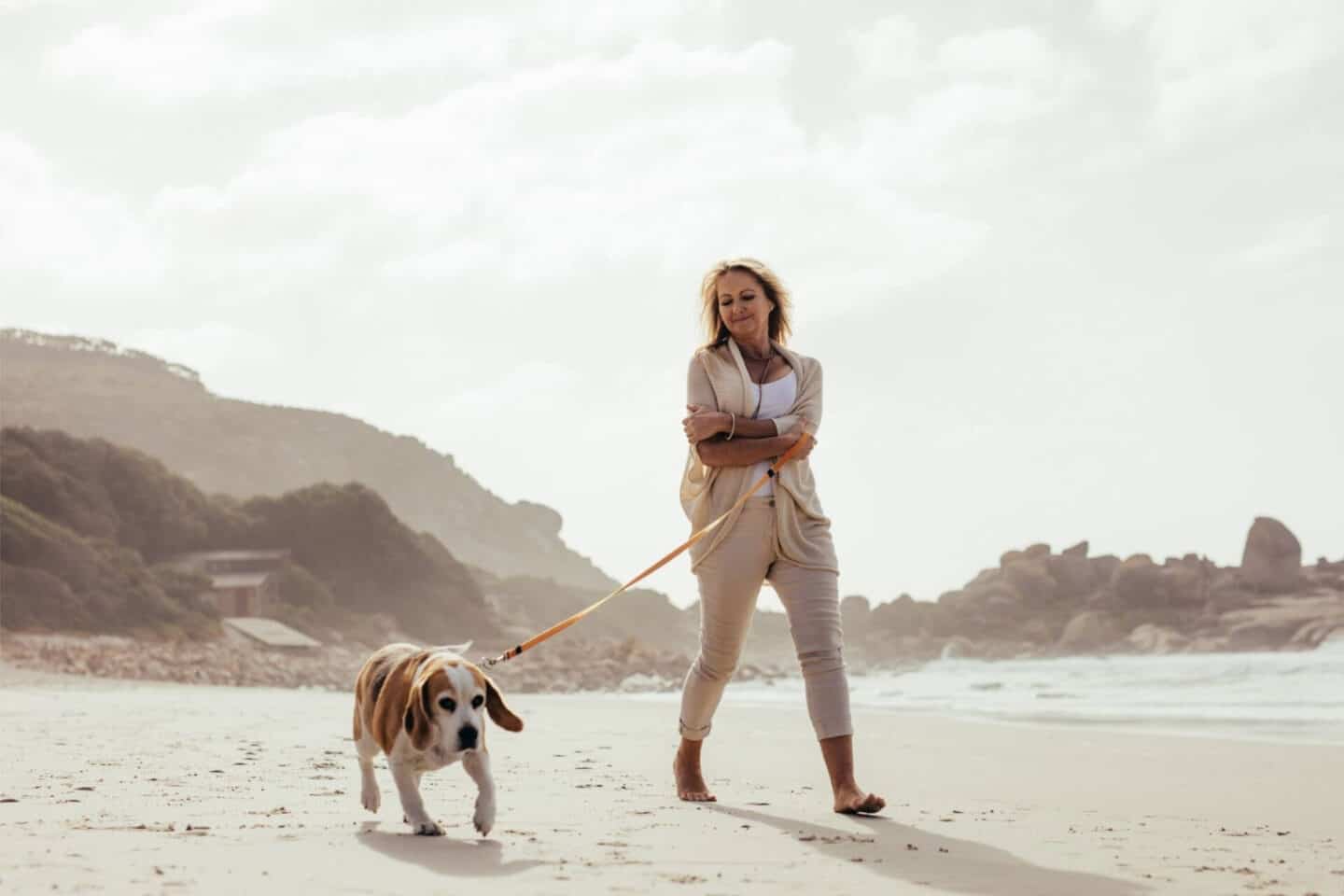
How to Stop Injuring Yourself when Walking Your Dog
Getting the right leash for your needs will go a long way. For instance, if you are having back pain, then a bungee-style leash will suit your needs well. This style of leash gives you some extra slack in order to feel the amount of pressure being exerted by your dog.
A regular straight-knit leash will not give you any sensation of pressure until it is too late, and the dog has destroyed your arm or back. The bungee-style leash will give you the ability to keep the dog closer, and at the same time giving you the time to look at your surroundings. Looking at what’s coming up is important because the more you have to keep track of your dog’s movements, the more you are sacrificing vital information.
For instance, if there is a large step or crack, and you are transfixed on whether your dog will move quickly to one side, your chances of tripping are high. Having a bungee-style leash will relieve your stress, and keep your mind focused on the true task at hand: walking. And walking in a manner that will keep you, your legs and arms injury free.
A Hands-free dog walking belt will also suit your well. This style of belt will attach to your leash (preferably bungee-style) allowing you to walk or job with your hands free. Usually arm pain accompanied with a handheld normal-style leash is common because dog-walkers are constantly in a state of arm discomfort from either leading the dog or being led by the dog, adding much strain to their already tired arms.
Attaching a leash to a hands-free dog walking belt will keep your hands free and open up your awareness skills. You will have your head up more, as you will not be in constant discomfort from holding your arms up to have your dog follow you. Having your head up more will create a sense of safety for you, giving you the peace of mind to watch out for possible injury causing environmental factors in front of you.
Fitness
Preventing injuries is also partly up to fitness. I hate to say it (not really) but if your physical health is sufficient, your injuries will not usually occur. As we all get older, we tend to be more “flexible” with our diet and exercise regimen. Meaning that we don’t keep up with our activity levels of our youth. Which is ok, but that’s when injuries will occur more.
I can’t preach the gospel of Yoga more. Check it out, go to an in-person class, get a private class, bring up a YouTube video with an 8-minute yoga stretch routine. You can do it at home, in a class with a few people, or anything in between. It’s a monster workout and even athletes are starting to be coached by their physios to start yoga routines nowadays.
We don’t want injuries to be causing you to stop taking care of your pets. Make sure you get at least moderate exercise in each day, make it a part of your routine, and you will become less physically injured. We promise. And you’ll feel a lot better emotionally going forward!
Who is at Risk for Dog Walking Injuries?
Older people are more vulnerable to fractures owing to falls or axial muscle compression forces that occur when walking (Pirruccio et al., 2019). That’s what our research says. Young people or children can also befall issues with dog walking, especially with unruly dogs or difficult to control leashes or harnesses.
If your health or fitness is diminished, meaning that you cannot control your body in a manner needed to manage a large, unpredictably moving fast dog, then you are at risk for dog walking injuries. Falling, twisting your muscles or bones, or getting your arms yanked are some injuries that are common when your fitness or general wellness is not up to standard.
When you are stronger and more durable muscularly, you are able to withstand the forces of nature that are incurred when you are walking your dog.
But going further; obedience training should be implemented to ensure dogs do not lunge too unpredictably while leashed. Also, clinicians should suggest smaller dog breeds for individuals thinking about buying a dog that they need to walk. If in doubt, please contact your medical professional or clinician to help cement your decision. Doctors always know best!