
Larger medspas can have advantages over independent estheticians, including more treatment rooms, larger equipment budgets, broader service menus, and teams that can handle higher client volume. Compact devices and multifunction platforms can help solo practitioners add selected machine-assisted services without operating a large facility. Whether that improves their competitive position depends on client demand, permitted services, and operating costs.
That does not make an independent studio equivalent to a medically supervised practice. Licensing and scope-of-practice rules still determine which treatments a practitioner may provide. But within those limits, aesthetic machines for estheticians can help a small business expand its menu and compete through specialization rather than size.
How Equipment Can Expand a Solo Studio’s Capabilities
Compact and multifunction equipment can help a solo studio offer several services within one treatment room, provided the space meets the requirements for each device and procedure.
That matters because space and capital are major constraints on independent practices. A compact system may add a service without requiring a larger location, while a multifunction platform may reduce the number of separate units needing storage. Each modality still requires appropriate training, cleaning, and maintenance.
The key distinction is scope. Access to equipment does not expand a license. In the United States, rules vary by state, credential, device, and intended use. California guidance, for example, allows certain LED and microcurrent applications under specified conditions while identifying radiofrequency and ultrasound facial lifting as potentially invasive or medical services. Oregon has a separate certification framework for advanced nonablative esthetics. Practitioners need to check the rules for the exact service they intend to offer.
Equipment Options Within a Solo Esthetician’s Permitted Scope
Advanced Facial Treatments
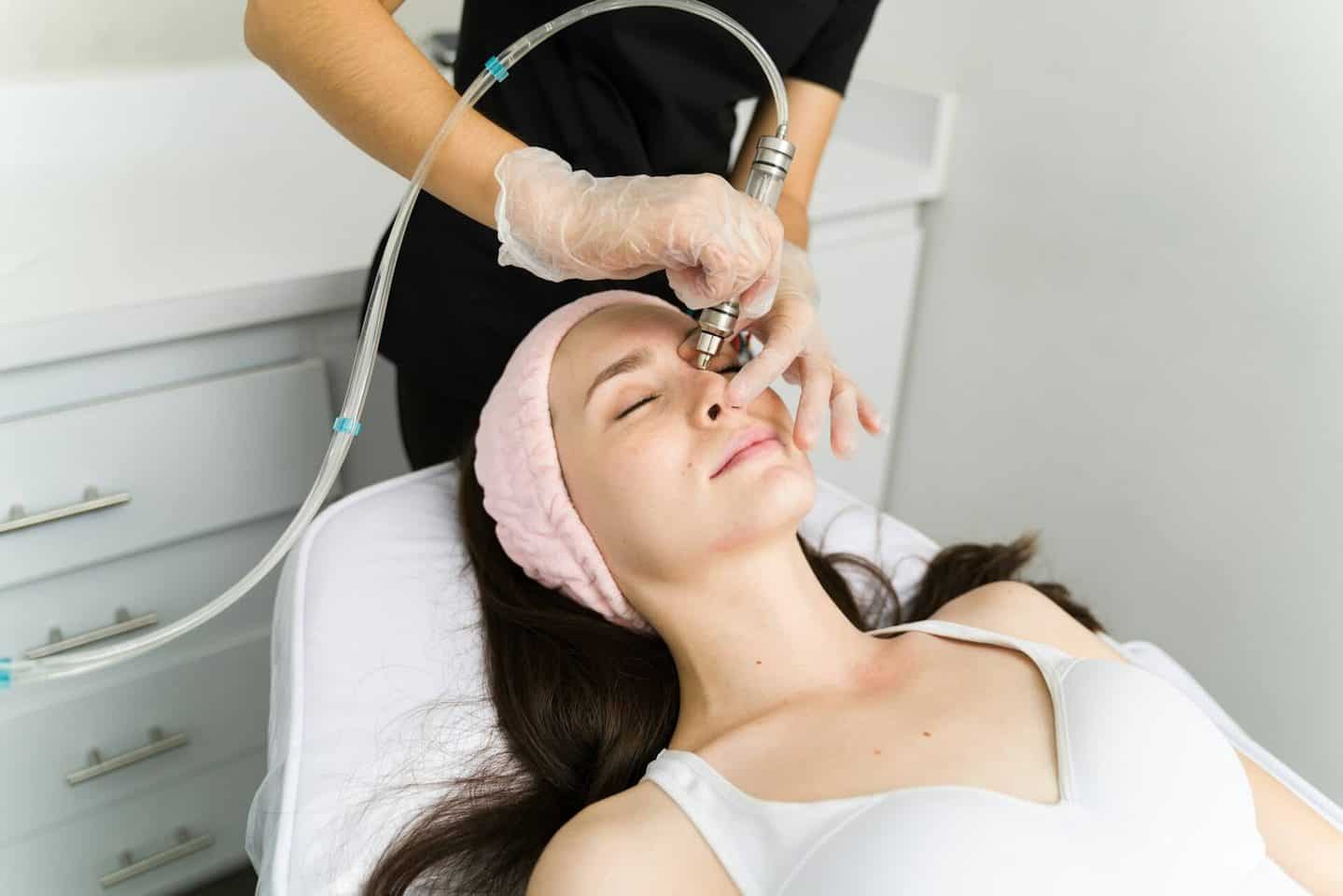
Technology can extend a traditional facial menu without replacing hands-on services. Depending on local rules and the specific device, options may include hydradermabrasion-style cleansing and exfoliation, LED treatments, microcurrent, or noninvasive radiofrequency.
These modalities do different jobs, so they are not interchangeable. FDA guidance also distinguishes between cosmetic products and medical devices based partly on intended use and whether a product is meant to affect the structure or function of the body. Device classification, labeling, training, and local licensing rules therefore belong in the buying decision.
Body Sculpting and Skin-Tightening Services
Body-focused technology can create another treatment category where the practitioner’s license permits it. Noninvasive body-contouring systems can use technologies such as radiofrequency, ultrasound, cooling, light, magnetic fields, massage, or vibration. The FDA notes that these approaches have different intended effects, risks, and limitations.
For a solo operator, the opportunity is less about copying a medspa menu and more about adding one or two services that fit existing client demand and the practitioner’s permitted scope.
Multifunction Equipment
Multifunction aesthetic machines can be practical when treatment-room space and investment capital are limited. However, compare the cost of the functions you will actually use with separate-device alternatives, and ask whether a fault in the shared platform could interrupt several services.
Independent practitioners comparing professional aesthetic machines should look beyond the treatment list. Permitted use, versatility, physical footprint, required training, warranty terms, technical support, replacement parts, consumables, and realistic client demand all affect whether a machine will earn its place in a small studio.
More Treatments Don’t Automatically Mean a Better Investment
A long treatment menu looks impressive, but unused equipment does not create revenue. Before buying, estimate how often clients are realistically likely to book the service.
Start with current demand. Are clients already asking for the result the machine is designed to support? What price can the local market sustain? How long will each appointment take, including setup, cleaning, and turnover? Then account for consumables, maintenance, servicing, financing costs, and possible downtime.
A simple equipment-cost recovery estimate can help: divide the upfront investment by the estimated amount each treatment leaves toward recovering that investment. Include consumables, payment fees, practitioner time, and reasonable allowances for servicing and other operating expenses, without counting any cost twice. This estimates the appointments needed to recover the upfront outlay; it does not establish overall business profitability. Compare that figure with realistic monthly bookings, not the machine’s theoretical maximum capacity.
For solo estheticians, utilization matters more than menu size. A well-booked machine with a clear purpose can be a better investment than a broader platform that sits idle.
The Advantages a Solo Studio Can Build Around
Equipment can narrow the service gap, but a small studio still competes differently from a larger operation.
A solo practitioner can build the experience around a consistent one-to-one relationship. The same person may conduct the consultation, perform the service, track progress, and adjust future appointments. That continuity supports personalization and a close understanding of regular clients.
Smaller practices can also specialize. Instead of offering every available modality, an independent esthetician can become known for a focused set of services that match a defined clientele. Treatment menus can be adjusted quickly, and purchasing decisions can stay tied to what regular clients actually request.
These qualities do not make solo studios inherently better than medspas. They are advantages a small business can deliberately build around, while medical aesthetic practices may offer broader staffing and procedures that require medical credentials.
What to Check Before Buying an Aesthetic Machine
Client Demand
Start with client problems, not trends. Review consultation notes, recurring questions, and frequently rebooked services. A machine is easier to justify when it addresses demand that already exists rather than requiring the business to create a new market.
Space and Workflow
Measure more than the machine. Consider cart space, handpieces, cables, consumable storage, cleaning requirements, electrical needs, and where the device will sit between appointments. Treatment time matters because the service must fit the actual schedule.
Training and Scope of Practice
Buying equipment does not authorize a practitioner to use it. Verify the device’s intended use, required training, insurance implications, and the rules that apply to the practitioner’s license. Some states distinguish between estheticians and advanced or master estheticians. Do not assume that a supplier’s training certificate or an arrangement with a medical supervisor authorizes a service outside your license; confirm the applicable licensing and delegation rules.
Training should cover client screening, contraindications, settings, sanitation, documentation, and when not to treat, rather than just button operation.
Warranty and Support
Check what the warranty covers, who performs repairs, how quickly support responds, whether parts are available, and what happens if the machine becomes unusable. Supplier training and post-purchase technical support matter when a device becomes part of a weekly treatment schedule.
Investment Recovery
Estimate how many realistically bookable treatments are needed to recover the investment. Use expected bookings, not best-case capacity, and include recurring costs. If the calculation only works with an immediately full treatment room, the purchase may be ahead of demand.
Build the Treatment Menu in Stages
A stronger growth path is staged: establish core services, add one proven technology, build demand and consistent utilization, then consider complementary treatments.
Solo estheticians do not need to recreate an entire medspa menu. A smaller practice can grow by choosing equipment that solves problems its existing clients already care about, learning to use it safely and consistently, and expanding only when bookings justify the next investment.
The competitive advantage is not owning the most machines. It is selecting the right technology, fitting it into a sustainable business model, and using it well.