
*Ad – This post contains affiliate links
After a busy summer, I wanted something that felt like self-care but also actually did something for my skin. You know the kind of thing. Not another product I’d use twice and then forget about, but a routine I could stick to.
So when I started using the Viforme Anti-aging Face Lifting Device, it quickly became a little moment of me time. With the girls back at school, those 20 minutes felt like the reset I didn’t realise I needed. I ended up using the time to listen to music, read or take just a breath and relax. It became a real moment of self-care rather than another thing on my to-do list. I kept to the same day – Tuesday each week to help keep a regular routine.
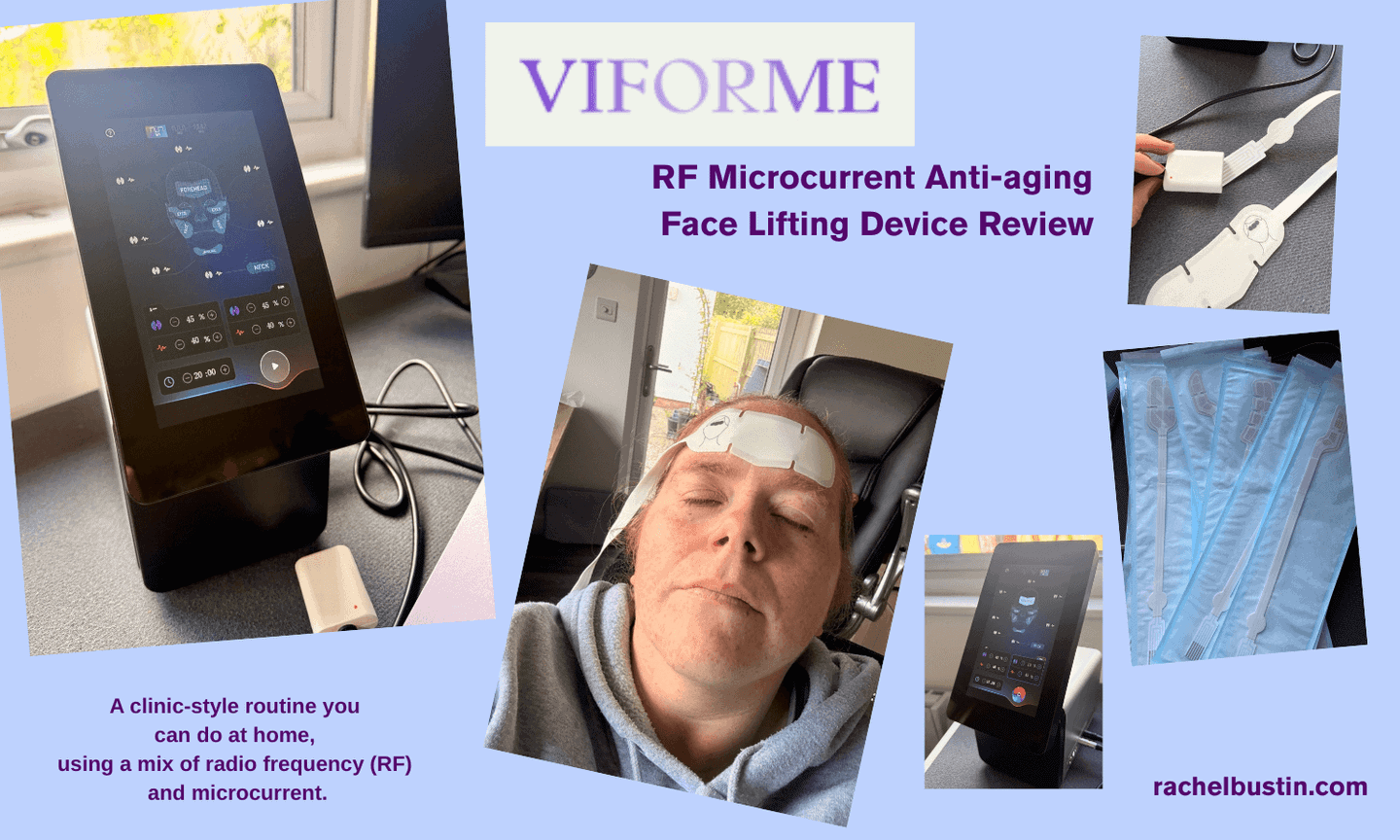
Viforme is designed to be a clinic-style routine you can do at home, using a mix of radio frequency (RF) and microcurrent, but with a twist. Instead of gliding a device around your face, you use hydrogel patches and the treatment is hands-free.
Viforme at a glance
- Tech: RF + microcurrent device
- Format: Hands-free hydrogel patches at home use
- Time: Around 20 minutes per session
- Schedule:1x/week for 4 weeks (one course)
- Maintenance: Around 1x/month after for regular use
Who it’s for: If you want gradual, realistic firming and a more lifted look over time, and you know you will stick to a weekly routine.
Who should skip: If you want instant dramatic results, or you know you will use it twice and forget about it.
What is the Viforme Anti-aging Face Lifting Device?
Viforme is an at-home facial device designed to support a more lifted, contoured look and help with the appearance of fine lines and skin firmness. The key thing to know is that it’s not a one-and-done gadget. It’s built around a course, so the results are meant to build over time and are designed for different areas of the face.
It’s the sort of device you buy when you want to invest in your skin long-term, without booking in for regular in-clinic treatments.
What’s in the Box
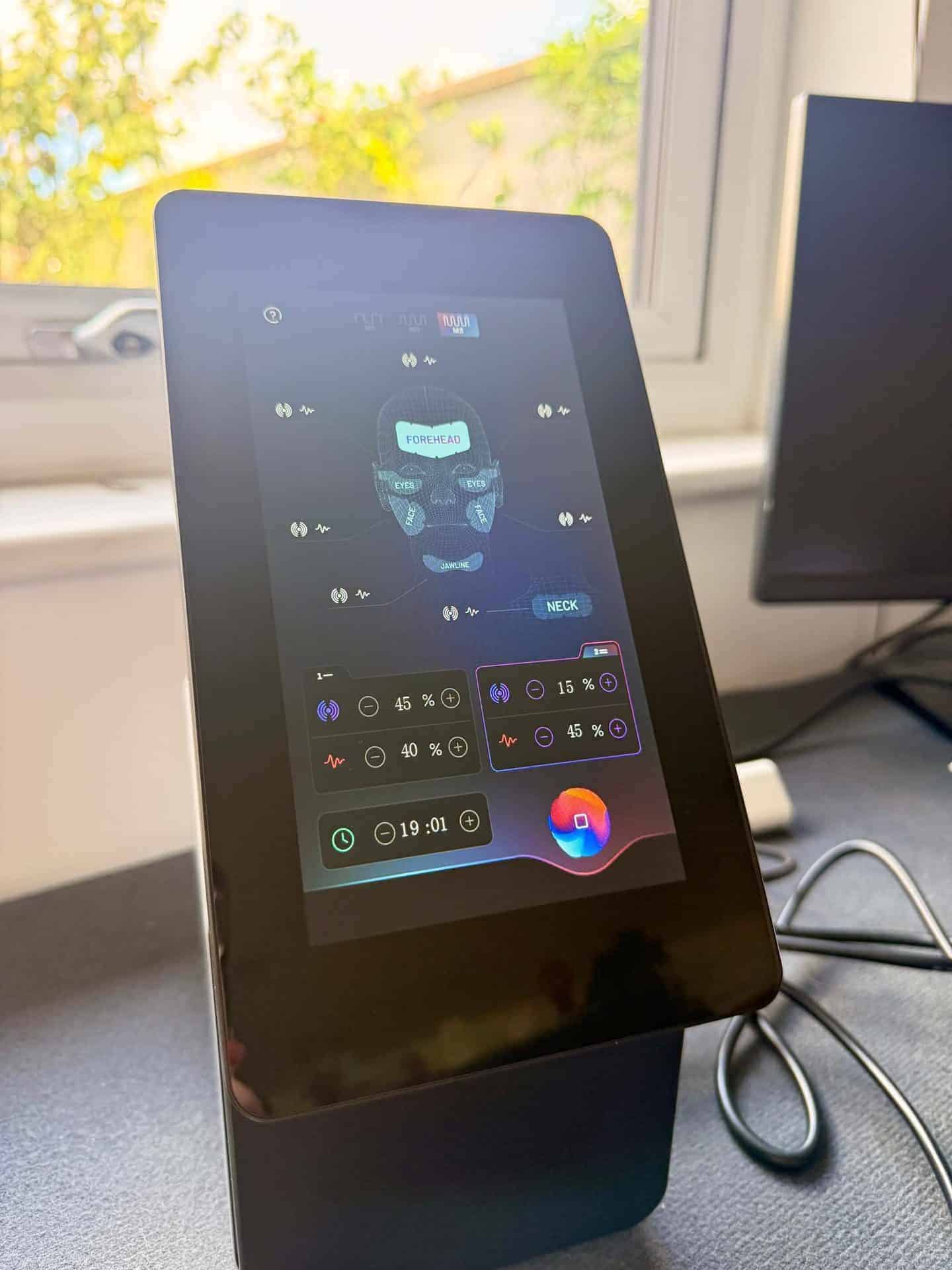
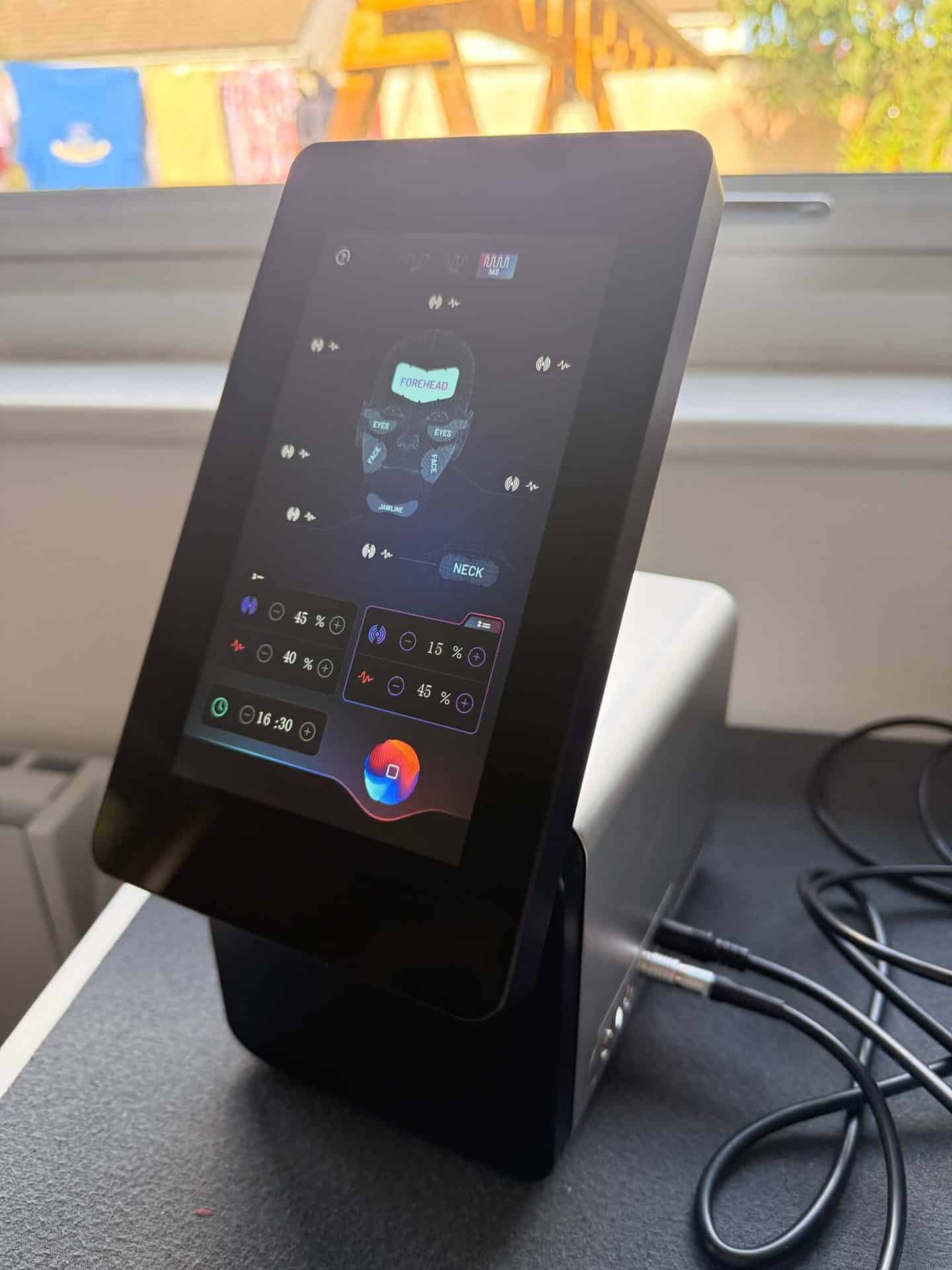
- The Viforme Machine – it’s got a gorgeous 7-inch touch screen that tilts up and down. The unit is heavy!
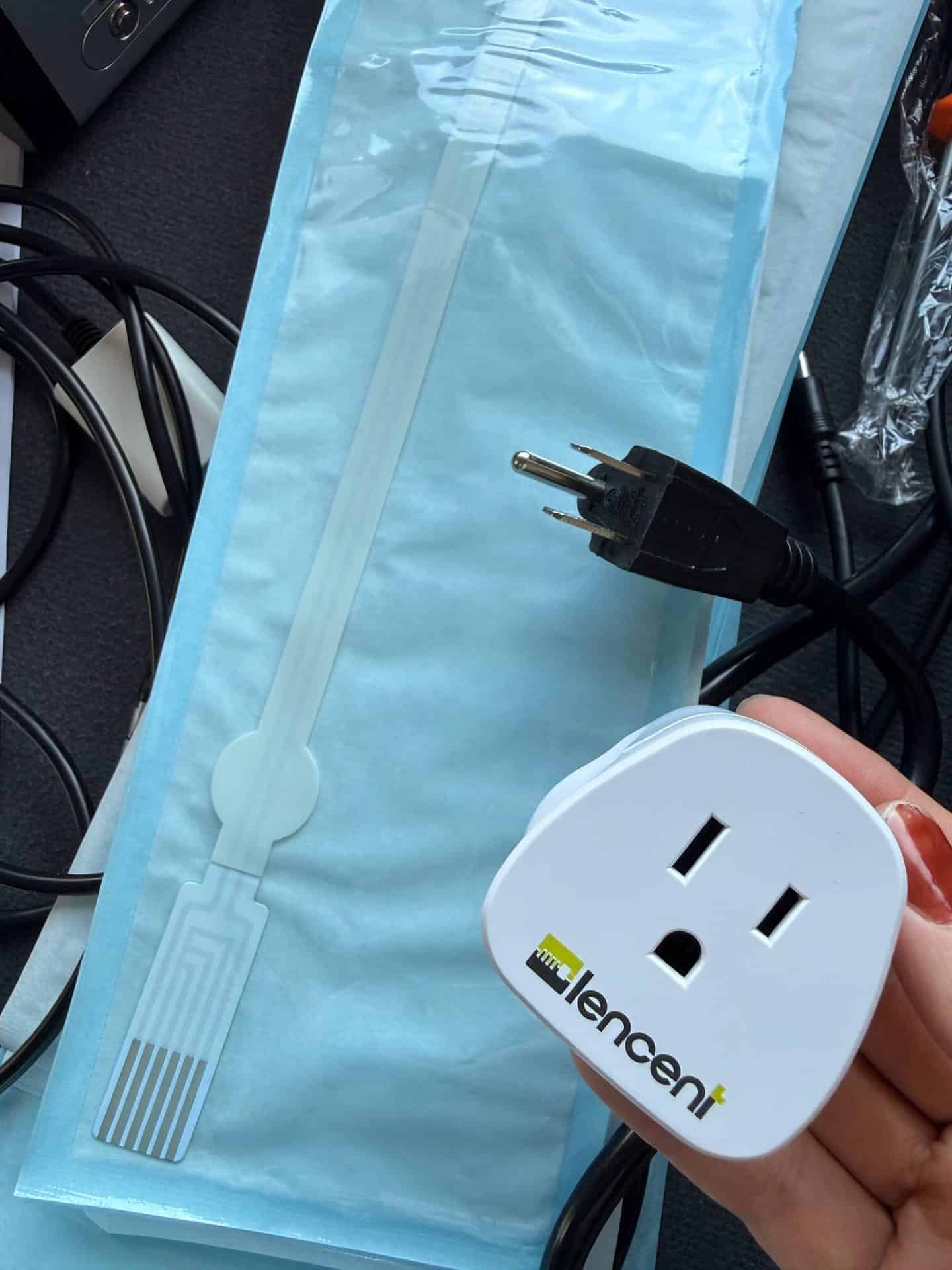
- Power cable and power adaptor – just note that it comes with a US plug. So I had to dig out a UK adapter to use it.
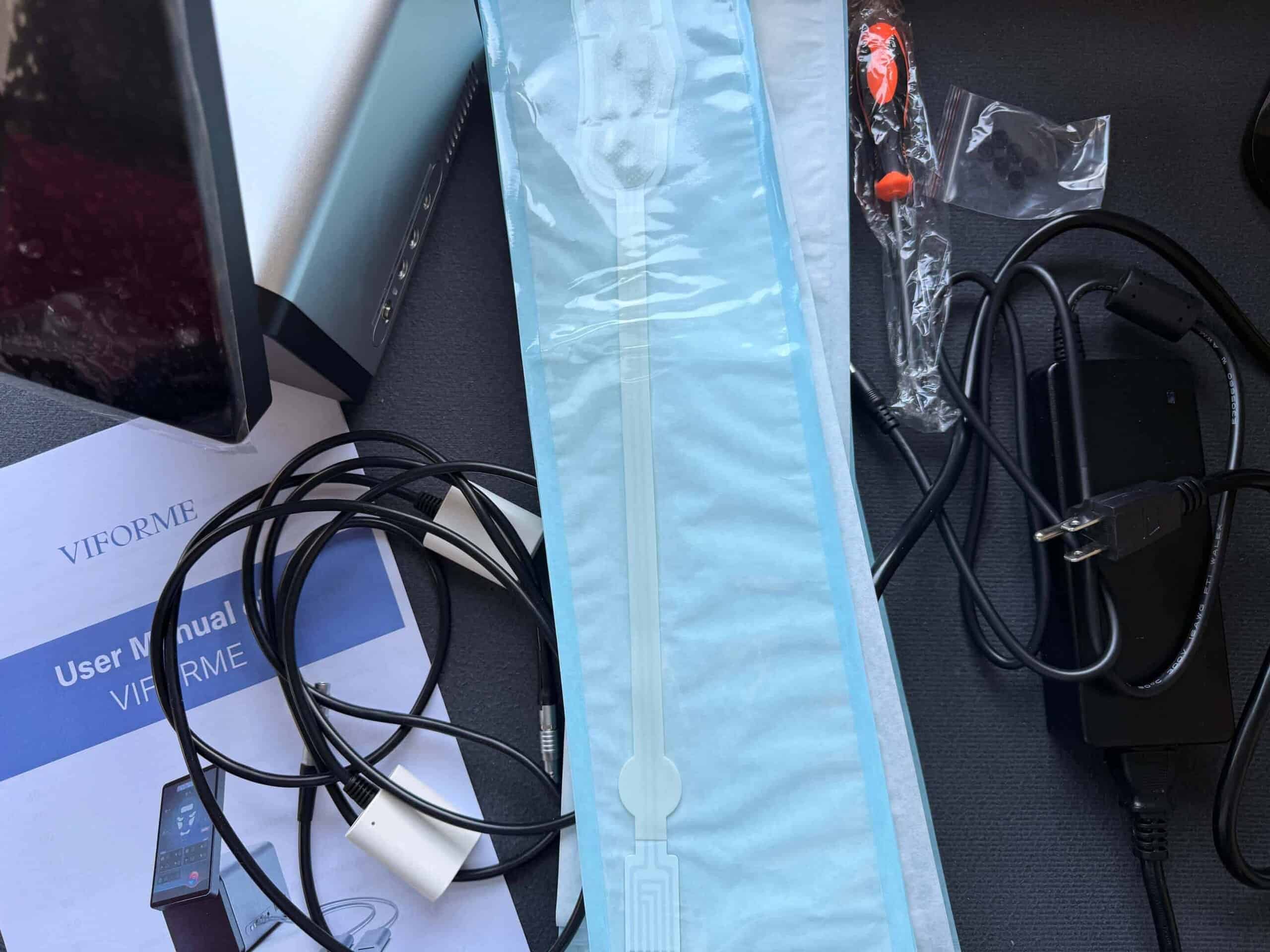
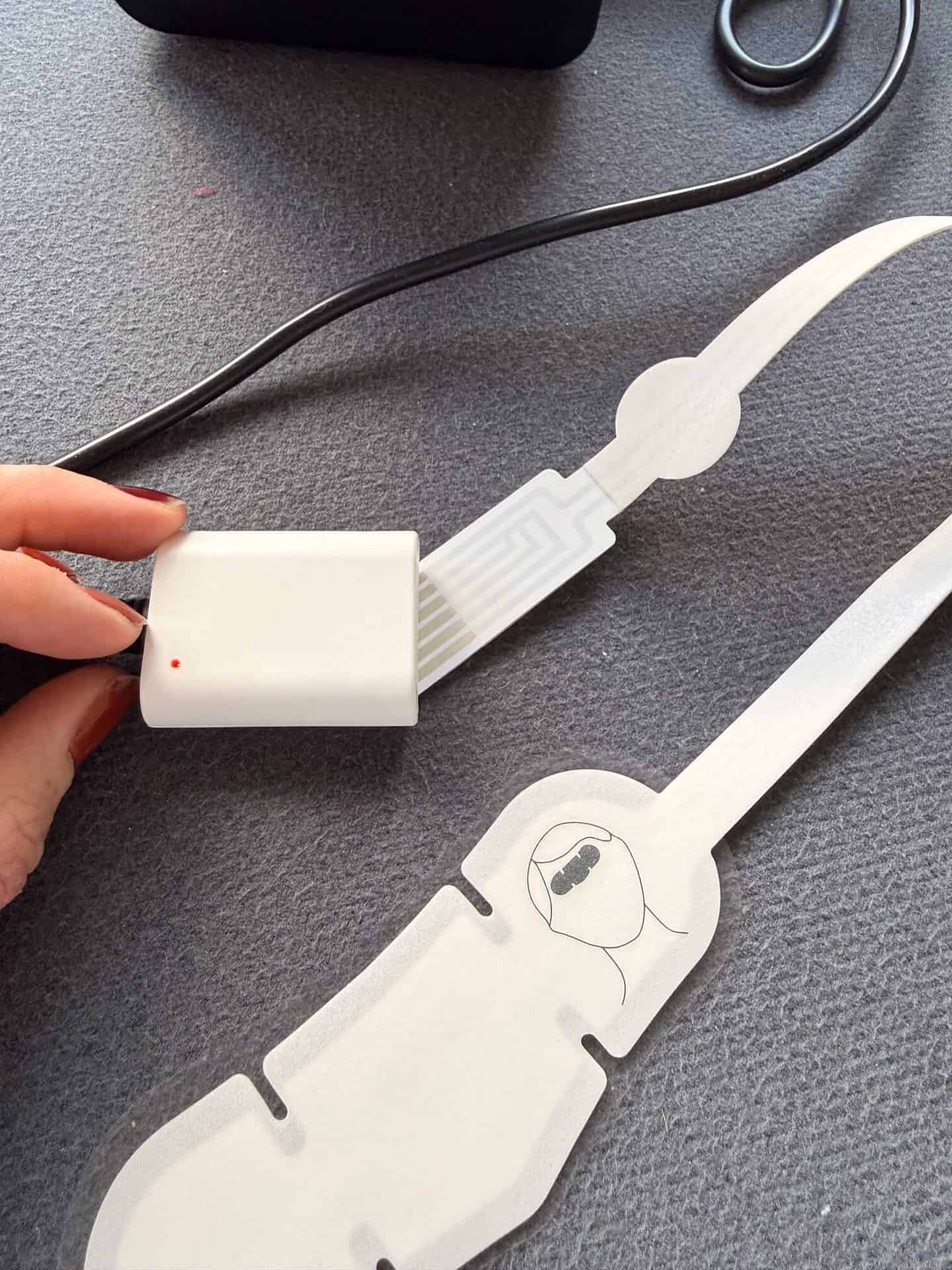
- 2 x card slot identifiers – the patch slots right into them very easily.
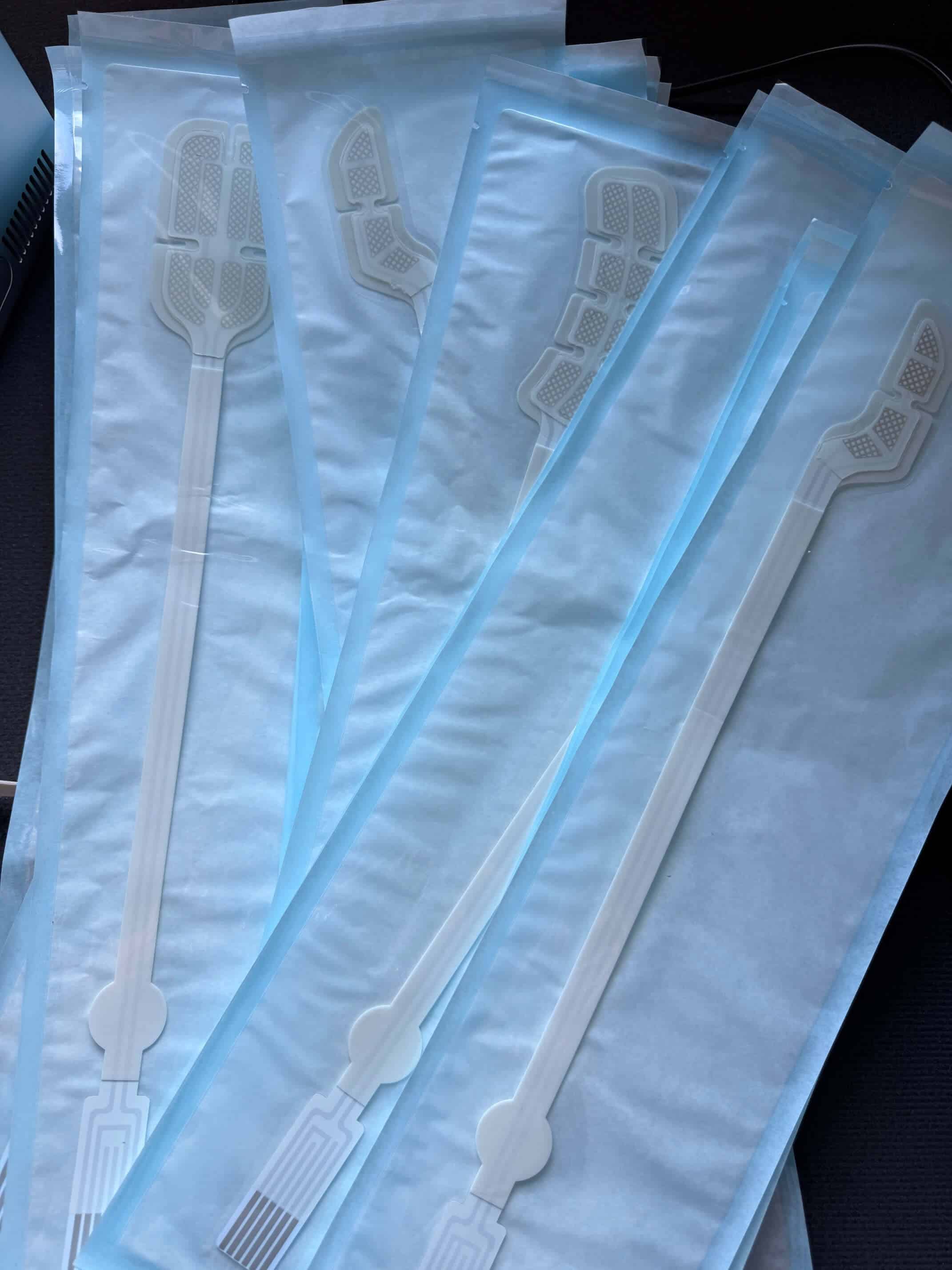
- 4 of each patch: forehead, neck, left cheek, right cheek, jawline, left eye, right eye.
- Little feet pads to stick under the machine
- Installation guide
- Instruction manual
How Viforme works (RF + microcurrent explained simply)
I always think it helps to understand what the technology is trying to do, especially for first-time users, because it makes it easier to set realistic expectations.
Radio frequency (RF): the ‘collagen support’ side
As we get older, collagen naturally declines. That is one of the reasons skin can start to look less bouncy and fine lines can feel more noticeable.
RF is used in lots of professional treatments. In plain English, it gently warms the deeper layers of the skin. That warming effect is designed to support collagen and elastin, which can help skin look firmer and smoother over time.
RF tends to help with:
- The look of fine lines
- Skin texture
- A firmer-looking finish
Microcurrent: the ‘muscle lift’ side
Microcurrent is a low-level electrical current that works with the facial muscles. People often describe it as a ‘workout for your face’.
The idea is that microcurrent can help create a more lifted, sculpted look, and for some people it can help reduce puffiness and make features look a little more defined.
Microcurrent tends to help with:
- A lifted, more contoured look
- Definition around the jawline and cheek area
- Puffiness and help with dark circles
Why Viforme combines both
This is the part that makes sense to me.
- RF on its own can be great for the look of fine lines and skin texture, but it does not really target the muscle side of things.
- Microcurrent on its own can help with lift and contour, but it does not always address fine lines in the same way.
Viforme combines both, so you are aiming to support both the ‘skin’ layer and the ‘lift’ layer in one routine.
What makes Viforme different (hands-free hydrogel patches)
Most at-home devices involve you standing in front of a mirror, slowly gliding something around your face, trying not to miss bits.
Viforme uses hydrogel patch electrodes instead. (No metal electrodes here!) You place the patches on the area you want to treat, connect them, choose your mode for the treatment area and then you can just lie back. They already have conductive gel on them.
I love anything that makes a routine easier to stick to, because that is usually the difference between seeing results and feeling like you wasted your money.
Why the patch approach matters:
- The patches help create full contact with the skin
- Energy distribution can feel more even
- It is genuinely hands-free, so you are more likely to do it weekly
Important: You cannot treat different areas at the same time if they require different modes. For example, if your forehead uses one mode and your chin uses another, you would need to do those separately.
My experience using Viforme (what it feels like)
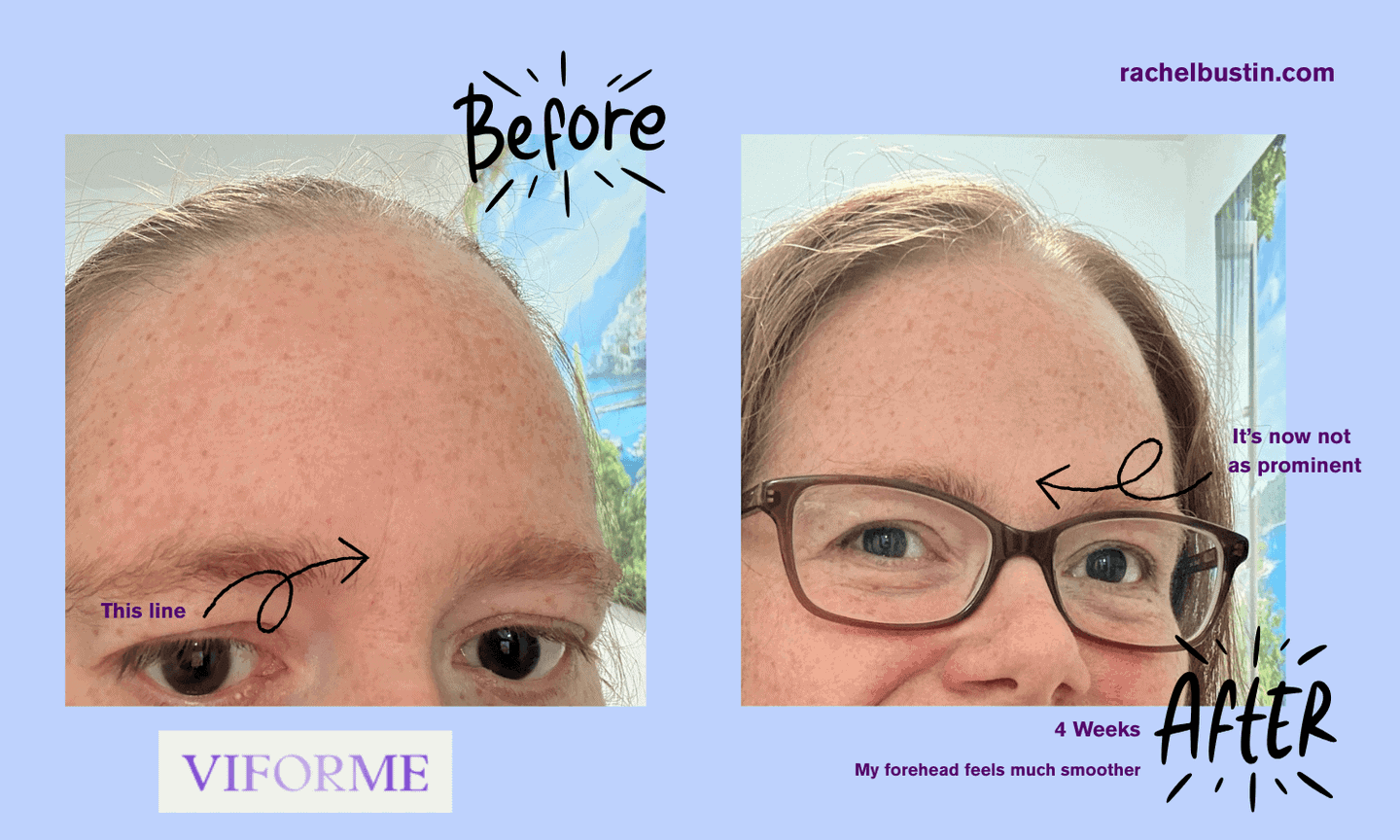
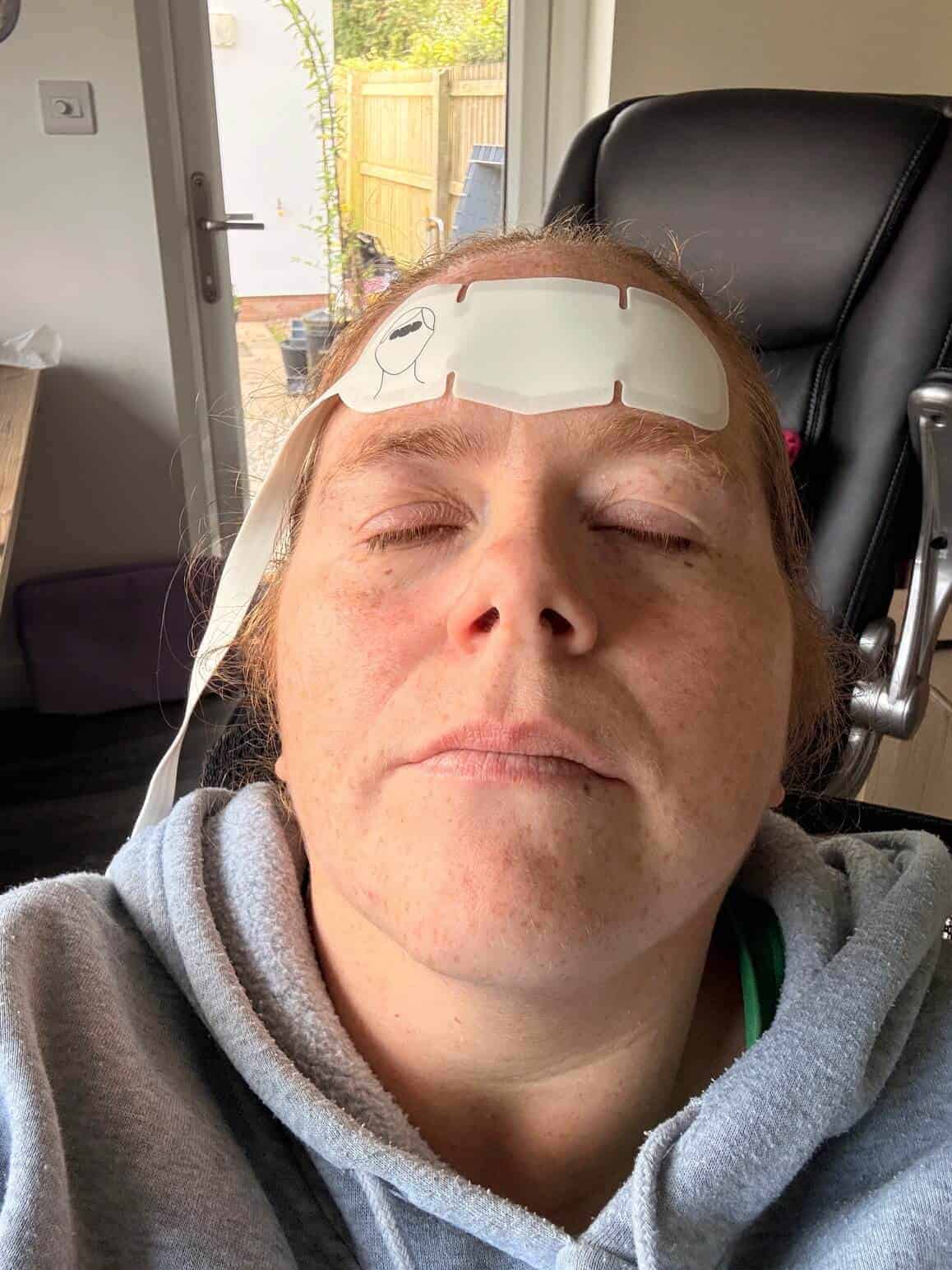
I used Viforme as a weekly routine throughout September, and I treated my forehead as part of my course. The biggest change for me after 4 weeks was how much smoother my forehead looked. It was not a dramatic, frozen change. It was more like my skin looked a bit more rested and less crinkly. Close up, you can see a real difference!
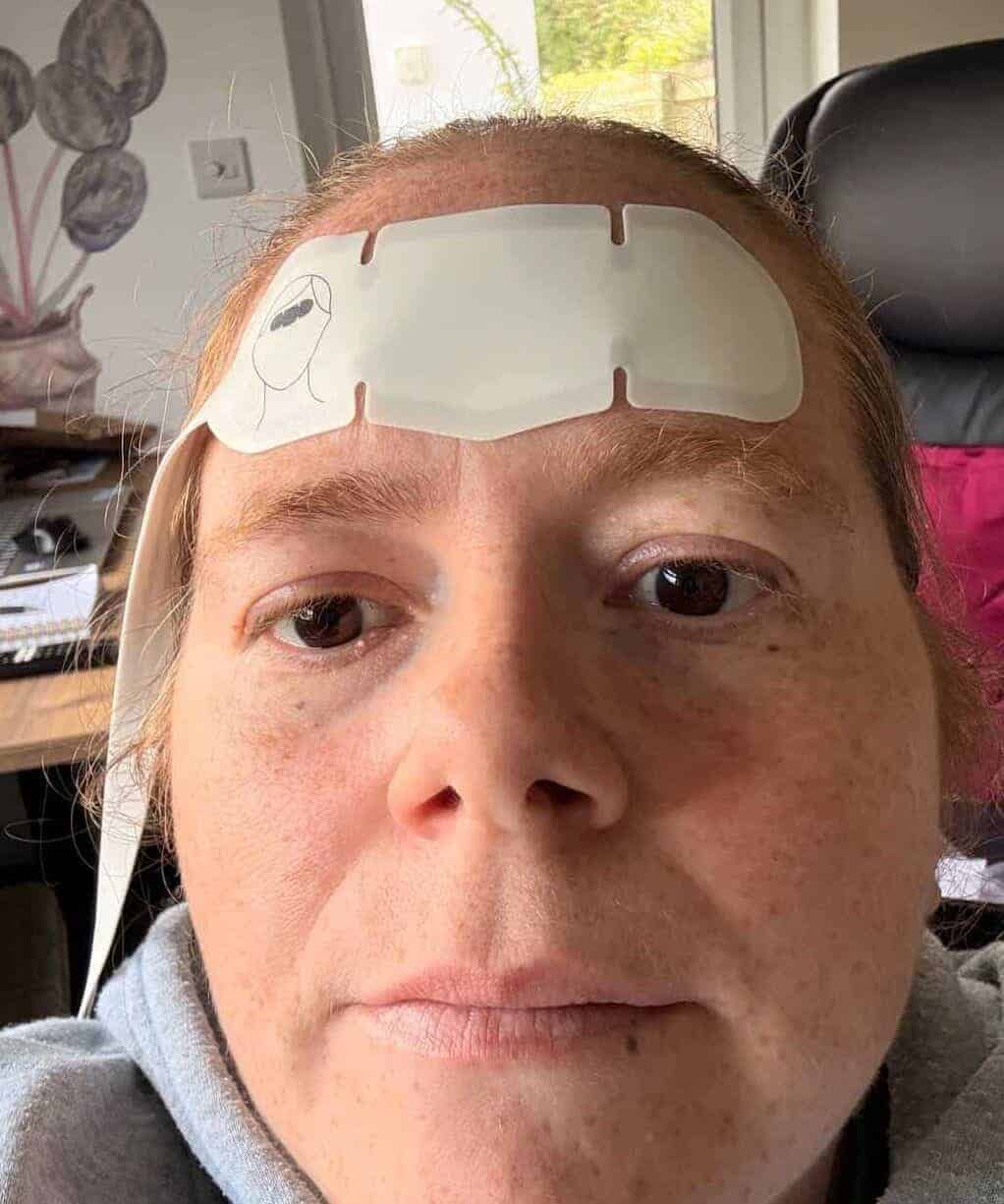
And honestly, I did not expect to love the hands-free part as much as I did. Being able to stick the patches on, press start, and then just chill out for 20 minutes made it feel like a mini self-care ritual. I found that you will need to lean back/recline when using them, as the patches can slip.
Step-by-step routine: 4-week course and maintenance
This is the part you will want to save, because it makes the whole thing feel much less intimidating for your treatment routine.
Before you start (prep)
- First thing. Start with clean, dry skin. No oil, no moisturiser, no slippery skincare.
- Tie your hair back and make sure your hands are clean.
- Decide which area you are treating today. Eye area, forehead, cheeks, jawline.
- Slot the ends of the patch into the card identifier. The device will know which patches you placed in the slots and will only start the correct treatment for the correct area!
- Apply the hydrogel patches and smooth them down so you get full contact.
During treatment (what you do)
- Power on the Viforme device.
- Select the mode and intensity.
- Set the time.
- Lie back and relax for around 20 minutes for a complete cycle.
What it feels like
The best way I can describe it is a gentle warming sensation combined with a slightly ‘gripping’ feeling in the muscles. I guess you can say electrical muscle stimulation is happening! It is not painful, but you can definitely feel that something is happening.
If you have ever tried microcurrent before, you will know that slightly twitchy, workout-like feeling. Viforme feels a bit like doing a tiny facial workout, but with warmth as well. It is a strange sensation to get used to!
Afterwards, I sometimes notice a light tingling that settles down within about 10 minutes. I use a cold flannel to cool my skin down.
After treatment (aftercare)
- Remove the patches gently.
- Clean your skin if you need to.
- Carry on with your normal skincare routine – I put on some hydrating moisturiser after.
The schedule: 4-week course and maintenance
The 4-week course
- 1 session per week
- 4 sessions make one course
- Keep at least a 7-day gap between sessions
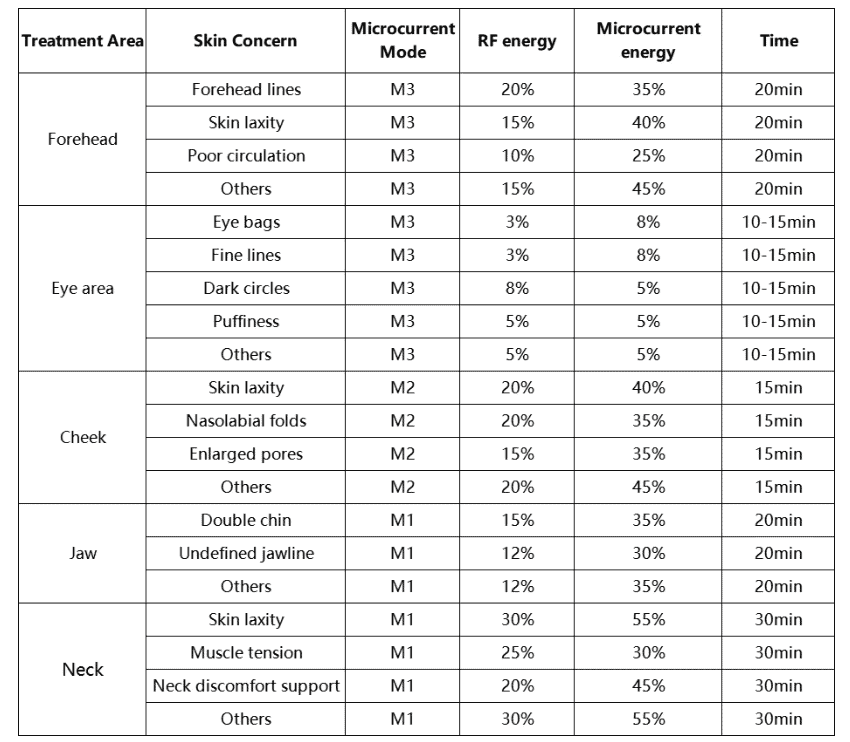
Viforme RF Microcurrent Device Treatment Guide
Please note: You can’t use patches for different areas at the same time. For example, the forehead uses M3 mode, and the chin uses M1, and only one mode can run at a time.
Maintenance
After the first month, maintenance is usually around one session per month for your desired results.
| Time period | Routine |
| Weeks 1 to 4 | 1 session per week (about 20 minutes) |
| Month 2 onwards | 1 session per month (maintenance) |
Immediate vs long-term results: what to expect and when
This is the bit that really matters, because it is where people can feel disappointed if they expect a facelift in a week.
What you might notice right away
- Skin can look a bit more awake and glowy
- A temporary plumper look
- A subtle lifted look from microcurrent for some people
What tends to show up after a few sessions
- Skin can feel firmer
- Less puffiness
- Slightly more definition in the face
What builds over 4 weeks
- Gradual improvement in the look of fine lines
- A more consistent lifted look
- A more ‘pulled together’ finish, especially if you are consistent
What’s realistic
- It is not a facelift
- Results depend on your age, muscle tone, baseline skin laxity, skincare routine, and consistency.
Safety notes (Botox, fillers, sensitive skin, implants)
I am always cautious with devices like this, and I think it is worth being calm and sensible.
- It is a controlled, low-energy output with a high safety margin.
- If your skin is very sensitised, wait until it has settled.
- Do not increase energy or frequency to try to speed things up. More is not always better.
- If you have had Botox or hyaluronic acid fillers, it is sensible to wait at least 6 months before using a device like this.
- If you have any metallic or electronic implants, or you are unsure, check with a clinician first.
Pros and cons
Pros
- Combines RF + microcurrent
- Hands-free patches make it easier to stick to
- Sessions are around 20 minutes
- Designed for results that build over time from consistent use
Cons
- Expensive upfront
- Ongoing patch replacements
- You cannot treat multiple areas at once if they need different modes
- You need consistency to see the best results
Who I think Viforme is best for
I think Viforme makes the most sense for someone who wants gradual improvements and likes the idea of a weekly ritual.
It feels especially suited to busy people, like mums, who will actually commit to 20 minutes if it is hands-free and want to improve the appearance of wrinkles.
If you are expecting instant dramatic change, or you know you will not follow the schedule, I would think twice.
Is Viforme worth it? (final verdict)
If you are the kind of person who enjoys at-home beauty tech and you want a realistic, gradual lift and firmer-looking skin, Viforme is the sort of device that can feel like a worthwhile investment, and it’s a one-time purchase with lifetime use.
If you’re looking for non-invasive results in the comfort of your own home, and you love the idea of skipping clinic appointments (and all the time and planning that goes with them), then it’s really worth considering. It feels like a practical way to keep on top of things, especially if you’re someone who likes a routine and you know you’ll use it.
For me, the hands-free patch system is the standout feature. It makes the whole routine easier, and with devices like this, ease usually equals consistency.
That said, it is a big purchase. I would only recommend it if you are happy to commit to the 4-week course for optimal results and then keep up with monthly maintenance.
FAQs
How often do you use Viforme?
Typically once a week for 4 weeks, then around once a month for maintenance.
How long is a session?
Around 20 minutes.
Does it hurt?
In my experience, no. It feels warm, tingly and slightly ‘grippy, but not painful.
Can I use it with Botox or fillers?
If you have had Botox or hyaluronic acid fillers, it is sensible to wait at least 6 months before using a device like this. If you are unsure, check with your practitioner.
Can I do forehead and chin in the same session?
Not if they require different modes. You may need to treat different areas separately.
When will I see results?
Some people notice a subtle lift or glow straight away, but the more meaningful changes tend to build over the 4-week course.
Is it suitable for sensitive skin?
If your skin is currently sensitised, I would wait until it has settled. If you are prone to sensitivity, start gently and follow the guidance that comes with the device.