
*This post is written with the assistance of Wallpaper From The 70s
I’ve been a homeowner for 10 years now, and I love nothing better than to pop into a DIY store at the weekends and browse the wallpaper section. Of course, before I discovered backdrops for photographers and bloggers I used wallpaper samples which did the same job. But now walking around and looking at the many designs give me inspiration for my own home. I quite fancy the idea of a wallpapered feature wall. Wallpaper designs have come on tremendously over the decades, as well as the feel! But did you know that the first wallpaper printing machine was invented by a Frenchman, Christophe-Philippe Oberkampf in 1785? In fact, by the 1800s full-on wallpaper murals and extravagant scenes were introduced.

What brought me to write this post on wallpaper designs through the decades, was my recent post on men’s hairstyles of the past. I know that sounds strange but, while I was researching that article I came upon a rich history in the past that I don’t really know much about. The decades that my parents grew up in. Therefore I’ve decided to go back and revisit different things of the decades gone by and this week, it happens to be wallpaper. It’s not as boring as you may think!
Wallpaper Designs of the 1920s
My late dad was born in 1929, and growing up I loved to hear his stories of when he was a child. He always said his mum was very fashionable and ahead of her time. She loved bright colours and patterns to give the rooms in their house a lift. But the wallpaper trend of the 1920s was very much Downton Abbey. Art Deco, glitz and glam designs. You could get a blue and cream geometric print, peacocks and shells were popular at that time. Classical elegance. If you can imagine flappers, jazz and cocktails you are on the right track. Are you a fan of 1920s wallpaper?
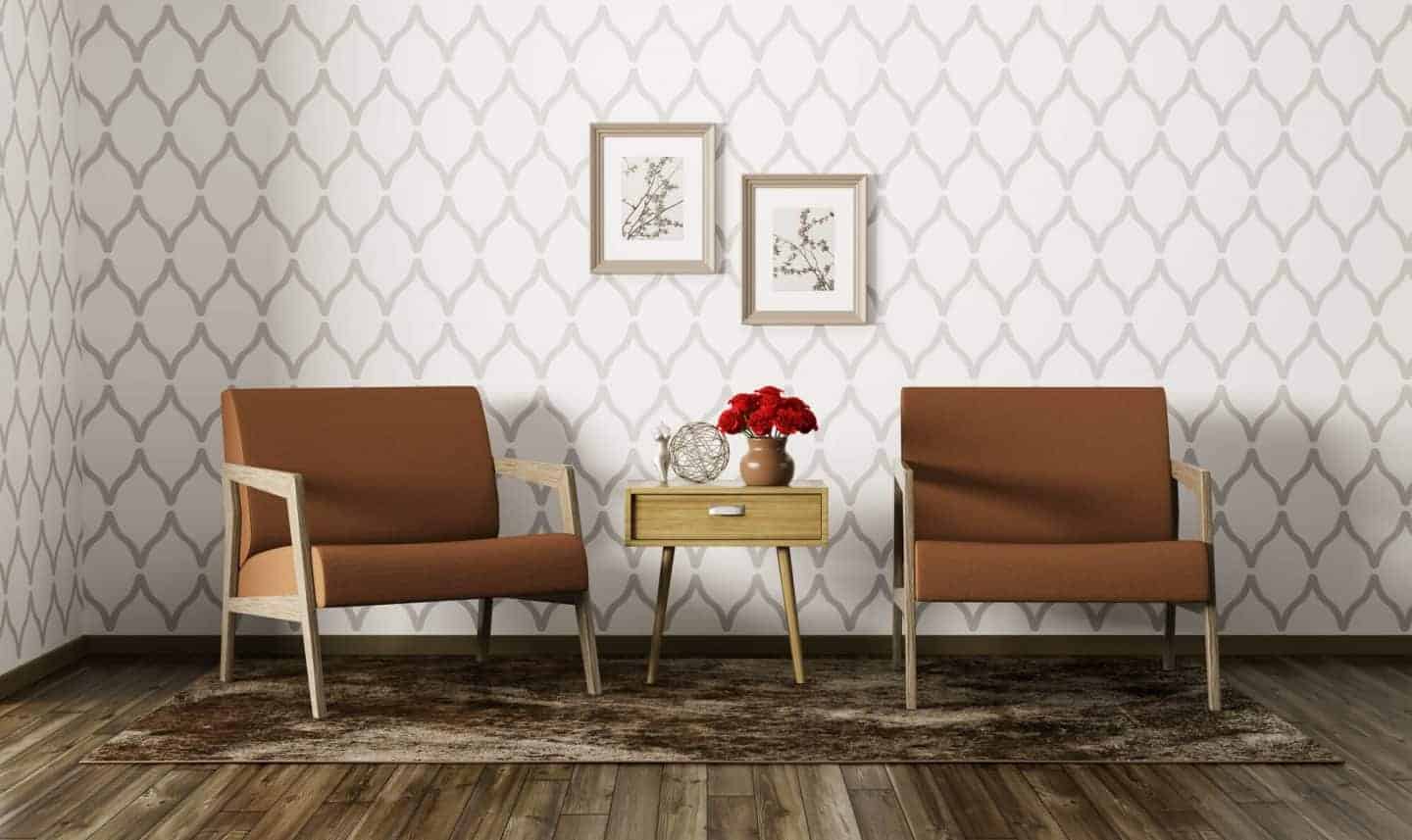
Heading into the 1930s
Wallpaper designs of the 30s headed into the vintage style we know today. Floral with an abstract flair, art deco started to diminish and out came these original and at times bizarre designs that you either like or you don’t!
Designs of the 1940s
Floral print. Not much more I can say about the 40s. Floral made its appearance from floor to ceiling wallpaper. Nowadays it would be customed for one wall or even only the top half of the walls in the spare bedroom! Pink floral and green floral geometric designs were apt for the 1940s post-war.
Rocking into the 1950s
Prepasted wallpapers were introduced around the 50s making it more accessible to all. Retro wallpaper designs, in greys and plums and mood bursting blues, kept the 50s alive. Although repetitive geometric shapes gave a closed-in feeling with some designs in smaller rooms. Now though these retro designs would be perfect for feature walls.
The Swinging 1960s
Wacky, bright, bold and psychedelic patterns, hit the 60s wallpaper designs. Beatle mania hit the radio and the daring new funky wallpaper styles hit the homes. Pop music was a huge influence on the lives of people in the swinging 60s.
The Earth-Loving 1970s
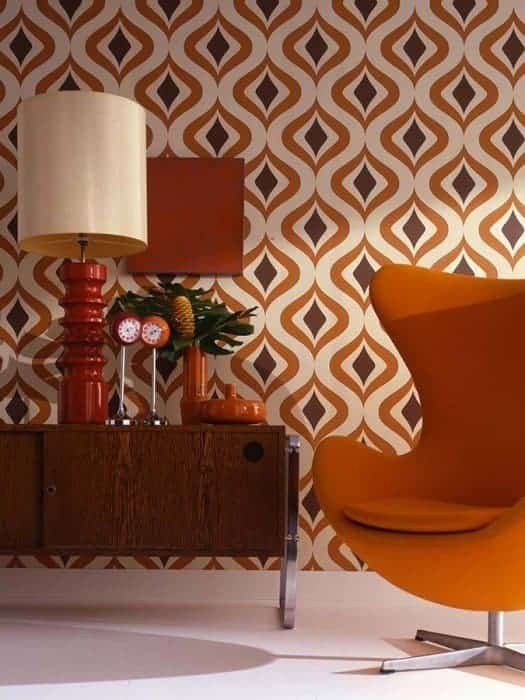
Orange and brown, strange but wonderful colour combinations. That was the 70s. The hippie nature-loving era brought out the love of brown and geometric designs. Gone was the harsh bold wacky psychedelic patterns of the 60s and now more down to earth, trends. Wallpaper from the 70s brought us realistic visionary designs, revolutionary times were happening with space exploration on the horizon.
The Fantabulous 80s
The decade of the rise of technology, gadgets, and the future. Woodchip wallpaper and Artex walls and ceilings were massively popular. Peach wallpaper and coloured carpets were the rages. Black and red, a colour combination that took over the house along with wallpaper borders. Bold clashing colours, trendy hipster patterns were here alongside the shoulder pads!
The 90s
It honestly felt like yesterday, but with the beginning of the 90s some 30 years ago white and beige walls were in All white kitchens were at the top of the most wanted. Comptempory designs were beginning to take shape. Embossed wallpaper was on-trend alongside the likes of Take That! In the late 90s, floral and damask wallpaper patterns were hugely popular.
Wallpaper in the 2000s
In the 2000s, wallpaper trends were characterized by a mix of old and new, with a nod to retro patterns, bold colours, and the early influence of digital design. This era saw a resurgence of 1970s-inspired designs, including large floral prints and abstract patterns, which were updated with new colour palettes and metallic finishes.
The use of wallpaper as a feature wall became popular, allowing for dramatic statements in otherwise minimally decorated rooms. Textured wallpapers, such as flock and bead designs, added depth and a tactile element to interiors. The 2000s also marked the beginning of eco-friendly and sustainable wallpapers, responding to a growing consumer awareness of environmental issues. The desire for personalization and self-expression in home decor was evident, with people seeking unique ways to reflect their style through their choice of wallpaper.
The 2010s
The 2010s saw wallpaper embracing bold and eclectic trends, with a noticeable shift towards customization and digital printing technologies that allowed for more intricate designs and personalization. The decade was marked by a variety of popular styles, from the resurgence of vintage patterns, such as those reminiscent of the Baroque and Art Deco periods, to the embrace of modern aesthetics with large-scale geometric shapes and nature-inspired prints.
Wallpaper became a medium for statement-making, with oversized florals and dramatic murals turning walls into focal points of interior design. Textured wallpapers, such as grasscloth and fabric-like finishes, added a luxurious feel to spaces. The DIY movement and the rise of home improvement shows contributed to wallpaper’s popularity, as homeowners sought to create unique, Instagram-worthy environments.
The 2010s also saw a continued interest in sustainability, with the increased availability of eco-friendly wallpapers made from renewable resources and using non-toxic inks.
The Current 2020s
The 2020s have seen a diverse range of wallpaper trends that reflect both the technological advancements and the evolving aesthetic preferences of the decade. Early in the decade, 2020 was marked by a resurgence in wallpaper popularity with geometric patterns, bold florals, tropical motifs, and marble effects coming to the fore.
As the decade progresses, the wallpaper industry continues to innovate, with subsequent years introducing fresh trends. By 2023, the design scene was exploring the latest in wallpaper design, with a focus on unique collections and a variety of styles to cater to the diverse tastes of consumers. Wallpaper has not only become a way to make a personal impact in any space but also a reflection of the broader shifts in interior design throughout the 2020s.
Well, there you have it, another trip down memory lane with wallpaper designs through the decades. Which was your favourite wallpaper decade?
My wallpaper through the decades favourite is the 2000s!
Thanks for stopping by today, I hope you have enjoyed this nostalgic post!
FAQs
Who invented woodchip wallpaper?
Woodchip wallpaper was invented by Hugo Erfurt, a German pharmacist, in 1864. Hugo Erfurt was known for his innovation in the wallpaper industry, and woodchip wallpaper, also known as ingrain wallpaper, became a popular choice for its textured appearance and ability to mask imperfections on walls.
How to make your own wallpaper
Creating your own wallpaper allows for personal expression and a unique touch to your space. Here’s a simplified process on how to make your own wallpaper:
- Design Creation: Begin by deciding on a design. You can draw or paint something by hand or create a digital design using graphic design software. Websites like Canva offer user-friendly interfaces with templates to help you get started.
- Digital Preparation: If your design is hand-drawn or painted, scan it into a computer and use image editing software to touch up or modify the design. Ensure your design is high resolution (at least 300 DPI) for clear printing.
- Pattern Repeating: Create a seamless pattern that can be repeated across the wall without visible breaks. This can be done manually or with software that has a pattern-making feature.
- Printing: Once your design is ready, you can print it at home if you have the equipment and are making small-scale wallpaper, like for a dollhouse. For full-sized walls, you’ll need to use a professional printing service.
- Material Selection: Choose the type of wallpaper material you want. Options include traditional paper, self-adhesive paper, or vinyl, each with different textures and application methods.
- Application: Finally, apply the wallpaper to your walls. If it’s traditional wallpaper, you’ll need to apply adhesive to the wall or the back of the paper. For self-adhesive wallpaper, simply peel off the backing and stick it to the wall, smoothing out any bubbles as you go.
Remember to take precise measurements of your wall space to ensure you print enough wallpaper to cover the area, and always account for a little extra for pattern matching and trimming.
How much does it cost to print your own wallpaper?
The cost to print your own custom wallpaper can vary widely depending on several factors, including the quality of the material, the complexity of the design, the resolution of the print, and the provider you choose. Based on the search results:
- Big Media Printing offers custom peel and stick wallpaper starting at $5.25 per square foot for premium wallpaper with a fabric look and $3 per square foot for economy film with a smooth finish.
- Tempaper sells custom peel and stick wallpaper prints by the square foot, but specific pricing is not listed in the snippet; you would need to visit their site for detailed pricing.
- MegaPrint charges $35 to send a roughly 9×14 size proof of the entire artwork, along with a similar size piece printed at actual size, so you can see how it will look on your wall.
It’s important to note that there may be additional costs for shipping, design services (if you require professional design assistance), or for ordering samples or proofs before committing to a full order. Always check with the provider for the most current pricing and options.
When was floral wallpaper popular?
Floral wallpaper has experienced several peaks in popularity throughout history. The height of its popularity can be traced back to the Rococo and Victorian eras of the 18th and 19th centuries. During these times, intricate floral patterns were highly sought after, and they often featured finely-colored roses, carnations, and other botanical motifs.
In the 20th century, floral wallpaper saw a resurgence in the 1960s and 1970s, with bright, stylized florals becoming popular. Then, in the 1950s, floral patterns were also prevalent in home decor, including drapery and upholstery, alongside wallpaper.
Floral wallpaper continues to be a popular choice for interior design, with trends evolving over time to reflect contemporary tastes. It has remained a staple in home decor due to its timeless appeal and the warmth and natural beauty it can bring to a space.
How to age wallpaper
Ageing wallpaper can give a room a vintage or antique look, adding character and depth to the interior design. Here are some techniques that can be used to create an aged appearance on wallpaper:
- Tea or Coffee Staining: Apply a wash of strong tea or coffee to the wallpaper to give it a yellowed, aged effect. This technique can result in uneven staining, which can contribute to the antique look.
- Sanding: Lightly sand the wallpaper, especially along the edges and high points of any texture, to wear it down and create a distressed look.
- Glazing: Mix a water-based stain with a glazing medium and apply it over the wallpaper to add a tinted, aged patina.
- Crackling: Use a crackle glaze or crackle medium over the wallpaper to create a network of fine cracks that mimic the look of aged, cracked paint.
- Painting: If the wallpaper has a raised pattern, dry-brush a light coat of paint over the surface to highlight the raised areas and make the wallpaper appear older.
- Tearing: For a more distressed look, you can carefully tear and peel small sections of the wallpaper to simulate wear and tear over time.
- Antiquing Products: There are various commercial antiquing products available that can be applied over wallpaper to create an aged effect.
- Smoke and Soot: For a more dramatic aged effect, you can use a candle or incense stick to create soot marks. Ensure good ventilation and be cautious with this method to avoid fire hazards.
Before attempting to age your wallpaper, it’s a good idea to test these techniques on a sample piece or in an inconspicuous area to ensure you achieve the desired effect. Remember, the goal is to create a look that appears naturally worn over time, so subtlety is often key.
I wonder why what was really special 50 years ago is now hideous (both wallpaper and haircuts )?