
A burned room tells its own story; the char, the collapsed material, and the obvious destruction speak for themselves to anyone assessing a claim. It’s the room three doors down, where nothing actually burned but everything smells wrong, that quietly costs families money. That damage is just as real, but almost entirely invisible unless someone deliberately documents it.
Smoke travels considerably further than flame and settles into materials that look untouched. Households in Philadelphia dealing with a fire frequently discover months afterward that the parts they didn’t photograph are the parts nobody will pay for.
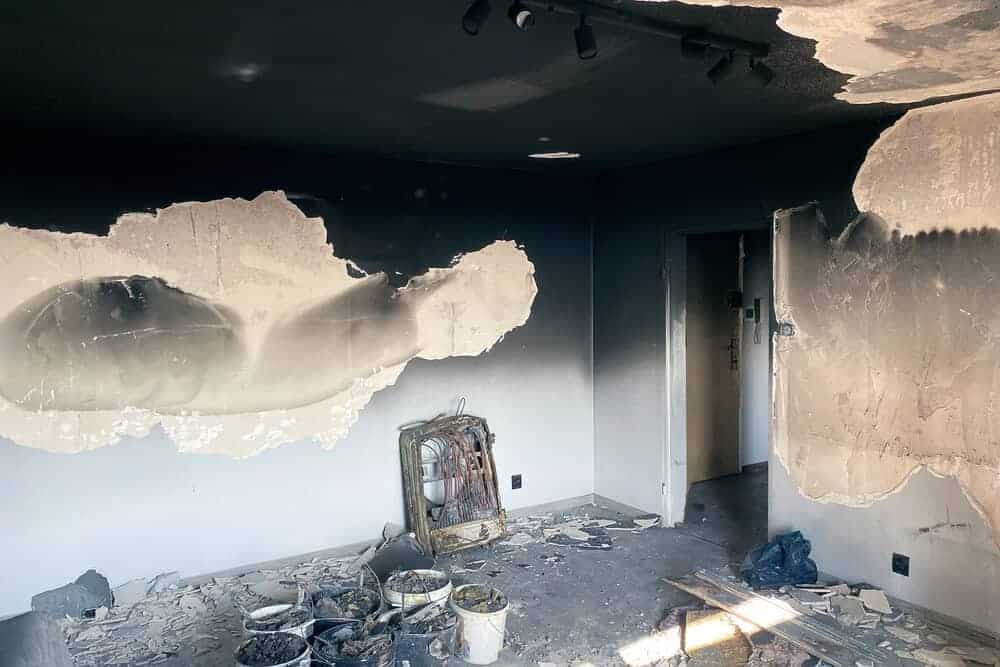
Here’s why that documentation carries the weight it does.
Smoke Reaches Rooms the Fire Never Did
Smoke moves through the paths air moves through, which means it travels beyond a single room.
- HVAC systems: carrying smoke throughout the house via ductwork
- Wall cavities: allowing residue to spread between rooms undetected
- Gaps around fixtures: small openings that let smoke pass beyond the immediate burn area
- Openings between floors: spreading contamination vertically through the home
The visible boundary of a fire is not the boundary of the loss, and unphotographed rooms, especially at vents and registers where soot accumulates first, risk being treated as undamaged simply because nobody recorded otherwise.
Residue Behaves Differently Depending on What Burned
Not all fire damage residue is the same, and the distinction affects both cleaning cost and whether a surface can be salvaged.
- Dry smoke: from fast-burning materials, leaves a powdery residue that removes relatively easily
- Wet smoke: from slow-burning synthetics, leaves something sticky and greasy that penetrates rather than sits
- Protein residue: from kitchen fires, leaves a thin film that’s nearly invisible while discolouring everything it touches
Photographing residue closely and noting where it feels greasy rather than dusty provides clearer detail than a general note about smoke damage doesn’t.
Odour Signals Contamination Inside Materials
Smell isn’t a nuisance separate from the damage; it’s evidence of particles and compounds lodged inside porous materials. The EPA notes that volatile organic compounds are emitted as gases from a range of products and that indoor concentrations are consistently higher than outdoor ones, which is precisely why fire damage residue odor persists in drywall, insulation, and textiles long after surfaces are wiped down.
Documenting odor is harder than documenting a stain and worth doing anyway. Noting which rooms smell, how strongly, and whether it worsens when the heating runs establishes a pattern that supports remediation beyond surface cleaning.
Contents Damage Frequently Exceeds Structural Damage
Clothing, upholstery, mattresses, books, and electronics absorb smoke readily and are frequently unsalvageable even where the room looks fine. A closet full of clothes can carry enough residue to render everything inside a total loss, despite the closet itself showing no visible sign of fire or smoke. Building toward a genuine understanding fire and smoke damage claims starts with photographing contents before anything is discarded, since disposal without documentation removes the only proof the item existed in the first place.
Room-by-room inventory work, like the process regularly handled by Funari Public Adjusters, can make a contents claim far more difficult to challenge. A comprehensive inventory supported by photographs, brand names, and serial numbers when available provides much stronger evidence than a lump-sum amount presented after damaged items have already been discarded.
Electronics and HVAC Carry Hidden Costs
Soot is corrosive and conductive, which makes electronics a particular problem. A television or computer that powers on immediately after a fire can fail weeks later as residue continues acting on internal components, corroding connections gradually in a way that isn’t obvious from a quick functional test.
HVAC systems present a related issue, having distributed contamination throughout the property and retained it in ductwork. Photographing the interior of accessible ducts and registers, and having the system assessed rather than assumed functional, addresses a cost that frequently appears only after a claim has closed, when the homeowner is left covering a repair nobody accounted for.
Documentation Windows Close Faster Than People Expect
Remediation is urgent for good reasons since residue continues damaging surfaces and odor becomes harder to remove with time. That urgency works against documentation.
- Photograph thoroughly before any cleaning begins: the earliest possible record, before anything is disturbed
- Keep damaged items until they’ve been recorded: disposal too early removes the only proof they existed
- Retain every receipt: for temporary accommodation and emergency purchases, all of which support the claim
- Mitigate without repairing: tarping and securing a property is appropriate; permanent repairs before assessment are not
Mitigating further damage is generally expected and sometimes required, so knowing the difference between temporary protection and premature repair genuinely matters.
Final Thoughts
Fire damage argues for itself, and smoke damage has to be argued for. That asymmetry is the entire reason documentation matters disproportionately here, because an adjuster works from a record rather than from an understanding of how smoke behaves. Photograph every room, including the ones that look untouched; record residue closely enough to show its texture; note odor by room; and inventory contents before anything goes in a skip.
Keep the receipts for everything you spend in the first fortnight. None of it takes long, and all of it becomes impossible to recreate once fire and smoke damage restoration has begun, which tends to happen within days of the fire being out.