
For a solo esthetician or small beauty business, adding a new service can be exciting and expensive at the same time. A hydrodermabrasion machine can expand a facial menu with cleansing, exfoliation, extraction, and hydration steps in one appointment, creating another service clients may return for.
But popularity alone does not make a piece of esthetician equipment profitable. The practical question is whether the machine will generate enough useful, bookable treatments to justify its purchase price, consumables, training, maintenance, and the time required to deliver each service.
What Does a Hydrodermabrasion Treatment Actually Do?
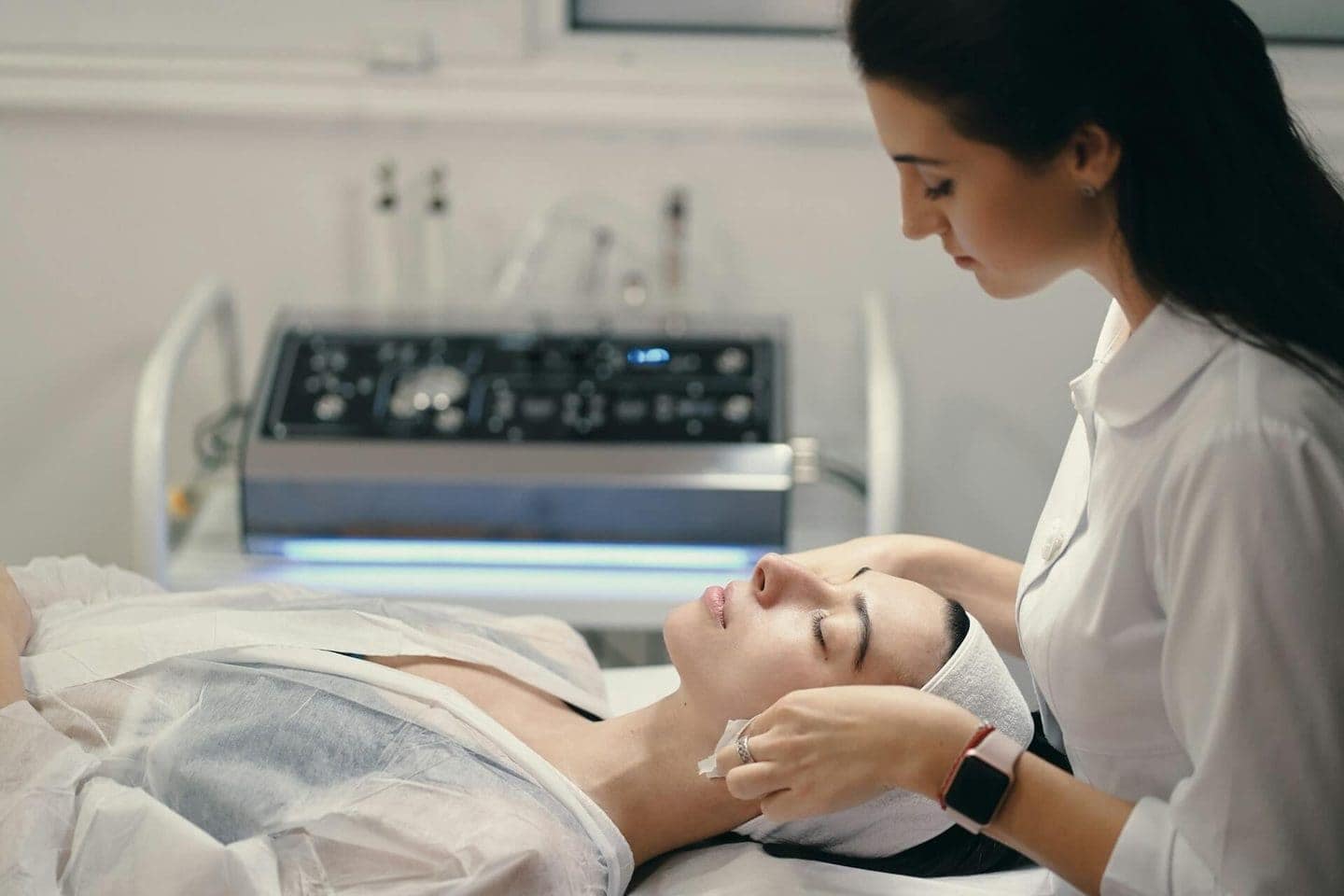
Hydrodermabrasion is a noninvasive resurfacing approach that combines exfoliation with suction and the delivery of water or topical solutions across the skin. Depending on the device and protocol, a treatment may move through cleansing, exfoliation, extraction, hydration, and serum-infusion steps within one appointment.
That combined workflow is part of the appeal for a facial business. Instead of operating separate pieces of equipment for every stage, a professional facial machine may bring several treatment functions into a single platform. The exact experience and capabilities, however, depend on the device, tips, solutions, and protocol being used.
There is also an important naming distinction. Hydrafacial® is a trademarked system with proprietary Vortex-Fusion™ technology, and providers need the appropriate Hydrafacial trademark license to promote services as authentic Hydrafacial treatments. Hydrodermabrasion and hydro-facial-style machines from other manufacturers may use similar treatment principles, but they are not automatically official Hydrafacial systems.
Hydrafacial markets its authentic treatment as requiring no downtime. That claim should not automatically be applied to other hydrodermabrasion equipment: treatment experience and recovery expectations depend on the device, solutions, protocol, and individual skin response.
Why Client Demand Makes the Treatment Attractive to Beauty Businesses
From a business perspective, hydrodermabrasion fits several features clients commonly value in a facial: cleansing, exfoliation, hydration, and a freshly treated appearance. A service designed around minimal disruption to normal routines can also be easier to fit into regular appointments than treatments requiring a significant recovery period.
That creates several possible revenue paths. A practitioner may offer the treatment as a standalone facial, build it into a premium facial, sell a short series, or pair it with compatible add-ons when appropriate for the client and within the practitioner’s scope of practice. Existing facial clients may also be easier to introduce to a new service than an entirely new audience.
Still, client interest and facial treatment profitability are not the same thing. A treatment can be popular while producing a weak margin if consumables are expensive, appointment times are long, the equipment is underused, or pricing is too low.
Demand matters, but utilization, cost per treatment, and realistic repeat bookings determine whether that demand turns into a sensible investment.
What to Look for Before Buying a Machine
Treatment Functions You’ll Actually Use
A long feature list can make beauty business equipment look more valuable than it is. Start with the services you can realistically sell.
For hydrodermabrasion, useful core features may include adjustable suction, controlled solution delivery, replaceable treatment tips, and settings that allow the practitioner to adapt the service to different protocols. Some machines also combine additional modalities such as light therapy, oxygen spray, ultrasound, radio frequency, cooling, microcurrent, or traditional microdermabrasion.
Those additions only improve the investment case if you are trained and permitted to offer them within your scope of practice, they fit your service menu, and clients will actually book them. Paying for ten extra functions that remain untouched does not create ten extra revenue streams.
Consumables and Cost Per Treatment
When comparing hydrodermabrasion machine costs, treat the purchase price as only the starting point. Ask which solutions, serums, tips, filters, tubing, cleaning products, and replacement components are required, how frequently they need replacing, and whether the system relies on proprietary consumables.
Then calculate a realistic consumable cost per appointment. A lower-priced machine with expensive or difficult-to-source supplies can become more costly over time than a higher-priced unit with predictable operating expenses.
Training, Warranty and Technical Support
Training and support are business issues, not extras. If the machine is difficult to operate correctly or a failed component leaves it unusable for weeks, booked appointments and client relationships can be affected.
When reviewing a supplier’s hydrafacial machine range, establish what equipment the label refers to. Rejuva Fresh identifies its products as its own hydrodermabrasion machines, rather than authentic Hydrafacial systems. Compare the specific model’s treatment functions, current price, required consumables, training, warranty terms, replacement-part availability, and technical support against the services you can realistically deliver.
Work Out Whether the Numbers Make Sense
A simple equipment-cost recovery estimate can help assess the purchase:
Equipment purchase cost ÷ estimated amount available per treatment toward equipment recovery = approximate treatments needed to recover the purchase price
Start with the treatment price, subtract appointment-level costs, and make realistic allowances for practitioner time and allocated operating expenses. Separate variable costs from fixed expenses and avoid counting the same cost twice.
For illustration only, imagine a hydrodermabrasion machine costs $3,000. A treatment sells for $150, while consumables, practitioner-time allocation, maintenance, payment costs, and marketing together account for $90. That leaves an estimated $60 per treatment toward equipment recovery.
On those assumptions, 50 treatments would recover the $3,000 purchase price. This is not a quoted device price or a full business break-even calculation. Additional setup costs, financing charges, taxes, and any overhead excluded from the estimate would also need to be covered.
The calculation is only useful if the appointment volume is realistic. Do not base the decision on a permanently full schedule. Use your current client count, rebooking patterns, treatment capacity, and likely demand to estimate how quickly those appointments could actually be delivered.
When the Investment Makes Sense and When It Doesn’t
A hydrodermabrasion machine may make more sense when you already have facial clients, people are requesting hydration or deep-cleansing services, and your schedule has room for additional treatments. The case becomes stronger when your planned price leaves a reasonable margin after consumables and labor, and when repeat appointments fit naturally into the way your clients already book.
Waiting can be the better business decision when demand is largely hypothetical. If you do not yet have an established client base, cash flow is tight, appointment volume is uncertain, or you have not calculated ongoing treatment costs, the purchase may create pressure rather than profit.
The decision should be based on your actual business model, not the assumption that a trending treatment will automatically fill the schedule.
Questions to Ask a Supplier Before You Buy
Before paying for any professional facial machine, ask questions that expose both the upfront and ongoing commitment:
- What equipment, handpieces, tips, and accessories are included?
- Which consumables are required, and are any proprietary?
- What is the estimated consumable cost per treatment?
- Is practitioner training included, and what does it cover?
- What does the warranty cover, and what is excluded?
- How quickly can replacement parts normally be supplied?
- What technical support is available after purchase?
- Which included functions can realistically become billable services in my business?
The right machine is not necessarily the one with the most functions. It is the one whose cost, useful treatment capabilities, recurring expenses, training, and support structure make sense for the clients you already serve and the business you are actually building.