
Tulip bulbs are a vibrant harbinger of spring, known for their brilliant colors and classic shapes that signal the end of winter. Gardeners often look forward to the next year’s blooms with anticipation, which begins with the proper storage of this year’s tulip bulbs. Today in this step-by-step guide I’m going to show you how to store tulip bulbs after they bloom. So the following year you will have perfect bulbs to plant out again without having to buy new bulbs.
After tulips have finished their grand display, the care they receive can significantly influence the beauty and health of the following season’s flowers.

For those living in various hardiness zones, understanding when and how to store tulip bulbs can ensure that these spring bulbs have the best chance for survival and vigour when replanted. It’s a gardener’s delight to see tulips re-emerging year after year, and with adequate storage techniques, the bulbs can be primed for success.
Storing tulip bulbs involves a few key steps that allow them to rest and gather the energy needed for the next blooming cycle. As seasons change and planting time approaches, these stored bulbs will be ready to face another cycle of growth.
With proper care, tulip bulbs can be fostered to not just survive but thrive, offering a testament to the gardener’s dedication and the resilience of these beloved plants. Thus, learning the process of storing tulip bulbs properly is a valuable skill for any enthusiast eager to continue the legacy of their spring garden year after year.
Understanding the Tulip Bulb Lifecycle
In the lifecycle of a tulip bulb, one observes distinct phases, including active growth leading to blooming, followed by a dormant period that prepares the bulb for the next growing season.
Growth and Blooming
During the initial growth phase, tulip bulbs utilize stored energy to develop their roots, stems, and leaves as they prepare for spring blooming.
Flower bulbs are typically planted before the first frost of winter to ensure a vibrant display of blooms in the following spring.
The growing season for tulips is marked by the emergence of shoots from the ground and culminates in the colorful flowers that gardeners eagerly anticipate.
Post-Bloom Dormancy
After the blooming period, tulip bulbs enter the dormancy phase in preparation for the next spring.
This period begins once the petals fall, and dead leaves start to yellow.
Gardeners should allow the foliage to remain intact until it dies back naturally, as this enables the bulb to absorb sunlight and replenish enough energy to bloom again next year when planted in the late Autumn.
Post-bloom dormancy is critical for the health and vitality of tulip bulbs, laying the groundwork for them to survive the winter and bloom again during the next growing season.
Preparation for Storage
Proper preparation is essential for ensuring that tulip bulbs remain viable and can produce beautiful flowers the following year. Storing bulbs effectively begins with careful timing and harvesting, followed by thorough cleaning and appropriate curing.
Timing and Harvesting
The best time to harvest tulip bulbs for storage is after the foliage has yellowed and died down. This typically occurs in late spring to early summer.
One must wait until the leaves have fully yellowed because the bulbs depend on the foliage to gather energy for the next blooming cycle.
A garden fork is the preferred tool for gently lifting the bulbs from the soil to minimize damage.
- Key points:
- Wait for the foliage to yellow and die down.
- Use a garden fork to lift bulbs gently from the ground.
Cleaning and Curing
Once harvested, bulbs should be freed of any excess soil, but thorough washing is not advised as it could invite fungal disease.
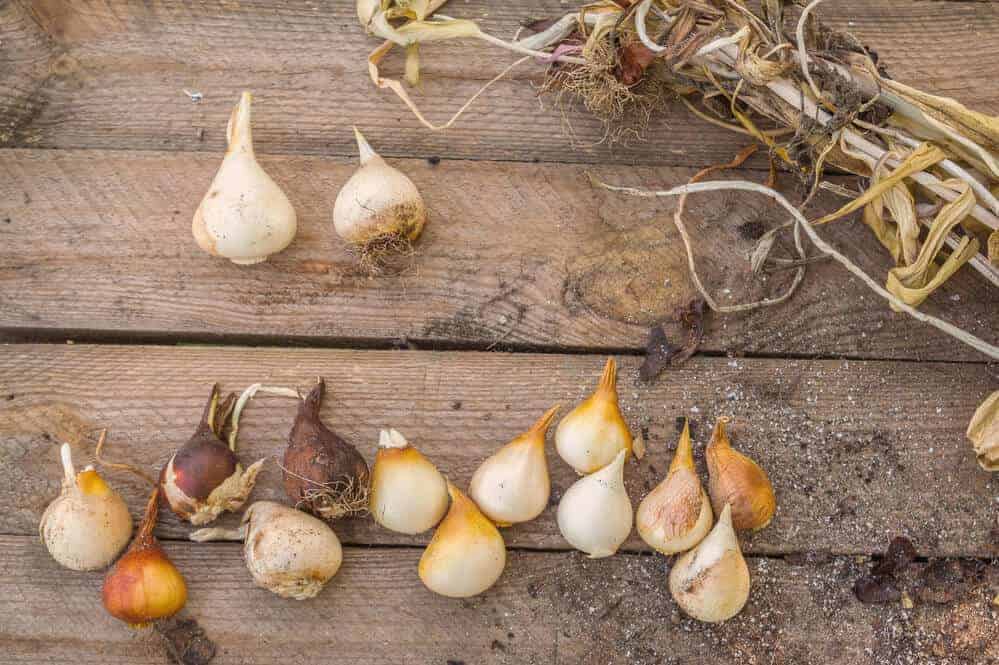
They then need to be placed in a dry place with good air circulation to cure.
Curing should continue until the remaining foliage is completely dry.
- Key points:
- Remove excess soil without washing the bulbs.
- Cure in a dry, well-ventilated area, until the foliage is dry.
Choosing a Storage Location
When storing tulip bulbs after they bloom, finding the right dry location is crucial. It should be dry, in the right conditions, and offer good airflow to preserve the bulbs’ health.
Temperature and Humidity Control
The ideal storage environment for tulip bulbs requires a cool place with temperatures consistently between 60-68°F (15-20°C). So around general room temperature.
High humidity levels can lead to mould and rot, so it’s essential to keep the area dry. A storage area with low humidity is preferred to maintain optimal conditions for the bulbs.
Ensuring Good Air Circulation
Tulip bulbs benefit greatly from a well-ventilated area to prevent any moisture buildup. I would avoid a plastic storage container.
Storage options might include cardboard or mesh boxes that allow air to move freely around the bulbs.
Each bulb should be placed in such a way as to not touch the others, thus ensuring proper air circulation and reducing the risk of disease spread.
Selecting the Right Container
When storing tulip bulbs, the choice of container is crucial for maintaining bulb health. Containers should facilitate good air circulation and manage moisture effectively.
Mesh Bags for Airflow
A mesh bag is ideal for storing tulip bulbs because they provide excellent air circulation.
It’s important that bulbs are not suffocated and have the ability to breathe to prevent mold and rot. Gardeners should consider the following when using mesh bags:
- Size: The bag should be large enough to hold the bulbs without crowding them.
- Material: Opt for a durable mesh material that can withstand the storage period without deteriorating. These are perfect from Amazon.
Paper Bags to Absorb Moisture
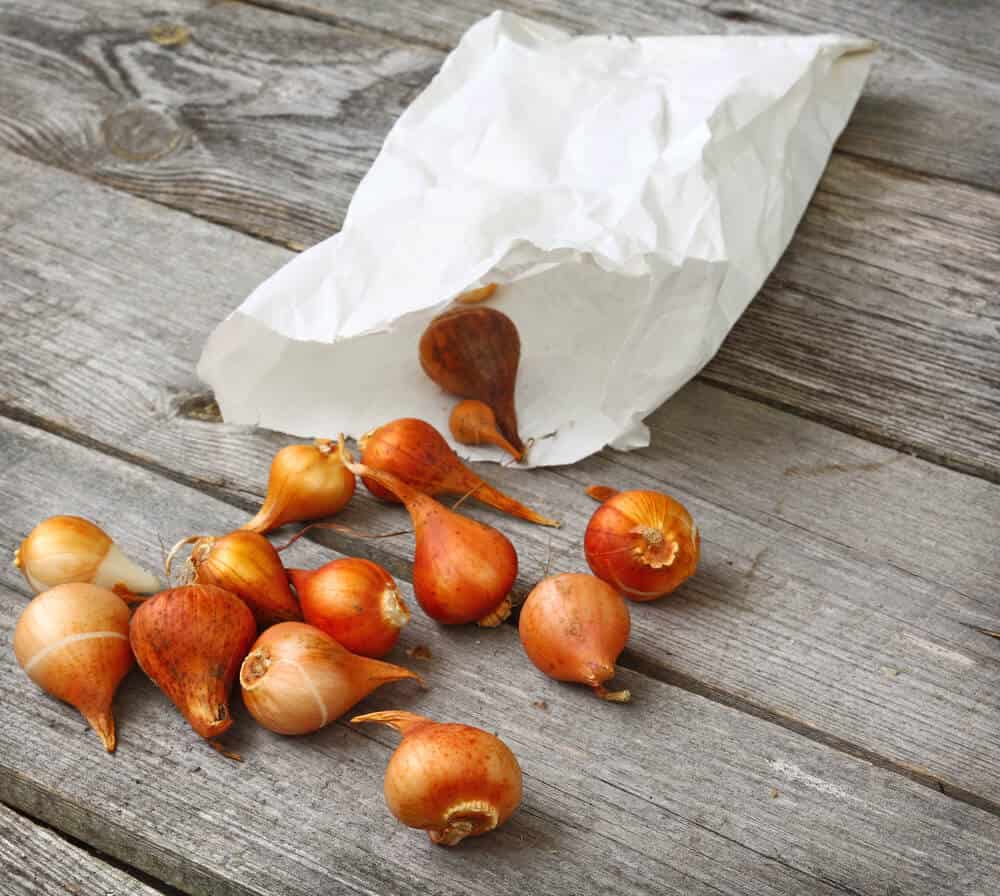
Paper bags are another great storage option as they absorb excess moisture, which can be detrimental to the dormant bulbs. Here’s how gardeners can properly use paper bags for their tulips:
- Labeling: Clearly label the bags with the tulip variety and date of storage.
- Checking: Periodically inspect the bulbs for signs of decay or excessive drying out.
Maintaining Bulbs During Off-Season
In the off-season, storing tulip bulbs correctly ensures they are healthy and ready to produce vibrant flower buds in the next growing season.
One should focus on regular inspections and proper storage techniques to maintain the integrity of both new and fresh bulbs.
Regular Checks for Pests and Rot
Regularly inspecting tulip bulbs during storage is crucial to prevent damage from pests or rot. You should:
- Examine bulbs monthly for signs of decay, such as soft spots or discoloration and dark spot.
- Look for pests such as aphids or bulb mites which might compromise the bulbs’ health.
- Remove any affected bulbs immediately to prevent the spread to healthy ones.
Proper Handling to Avoid Damage
Handling tulip bulbs with care will protect them from unnecessary damage and subsequent stress. The following practices should be adopted:
- Lift the bulbs gently from the ground to avoid bruising.
- Clean dirt off the bulbs with a soft brush, careful not to damage the protective outer skin.
- Store the bulbs in a cool, dry place that’s well-ventilated, and ensure they’re not touching each other to reduce the risk of damage and disease spread.
Replanting Strategies
After tulips have bloomed and the bulbs are stored properly, successful replanting is crucial for vibrant blossoms in the following year.
Proper timing and suitable site selection lay the foundation for tulip health and beauty.
Choosing a Planting Time
To ensure tulips thrive, you should plant the bulbs in the late fall, several weeks before the ground freezes.
They require this cold period to break dormancy and flower in the spring.
The ideal planting time can vary by region, but typically it falls between late September and early November.
Gardeners should keep a close eye on local weather forecasts to avoid early freezes that could damage the bulbs.
Soil and Location Considerations
Tulips flourish in new soil rich in organic matter and provide well-drained conditions to prevent rot.
They should be planted in an area that receives full sun for most of the day which promotes strong growth and timely blooms.
It is generally recommended to:
- Prepare the soil: Amend with compost or other organic matter to improve drainage and nutrient content.
- Select the right location: A spot that gets at least six hours of direct sunlight is ideal.
- Consider the depth: Planting bulbs at a depth of three times the height of the bulb ensures adequate protection from harsh weather and gives roots room to grow.
I hope you find this step-by-step guide on how to store tulip bulbs after they bloom useful. Feel free to tag me in your pictures on social media @rachelbustin

Frequently Asked Questions
When it comes to ensuring the viability of tulip bulbs for subsequent seasons, understanding the nuances of proper storage techniques is essential. This section addresses common queries on preserving tulip bulbs after they bloom.
How should tulip bulbs be stored after flowering to preserve them for winter?
Tulip bulbs require a period of dormancy after flowering and should be stored in a cool, dry, and dark place.
They need to be kept at a consistent temperature, ideally between 60-68˚F (15-20˚C).
What is the recommended duration for keeping tulip bulbs in the refrigerator?
If using a refrigerator to provide a cold treatment, tulip bulbs should be stored for 12-16 weeks to simulate winter conditions before planting them in the spring.
Is it possible to leave tulip bulbs in pots until the next season?
Tulip bulbs can remain in pots if the soil is kept dry during summer dormancy, but they are typically better stored in a controlled environment to avoid extreme temperatures and moisture that can cause decay.
What are the necessary steps to store tulip bulbs for an entire year?
After the tulip stems wither, the bulbs should be dug up, cleaned of soil, and allowed to dry.
They must then be stored in a mesh or paper bag in a cool, dark place until they are ready to be planted in the fall.
When is the ideal time to plant tulip bulbs for optimal growth?
The best time to plant tulip bulbs is in the fall, when soil temperatures have dropped below 55°F (13°C), usually from September to November, depending on local climate.
Should tulip bulbs be cleaned before storage and if so, how?
Bulbs should be gently brushed to remove excess dirt and allowed to dry thoroughly.
Do not wash them with water as moisture can promote fungal growth during storage.