
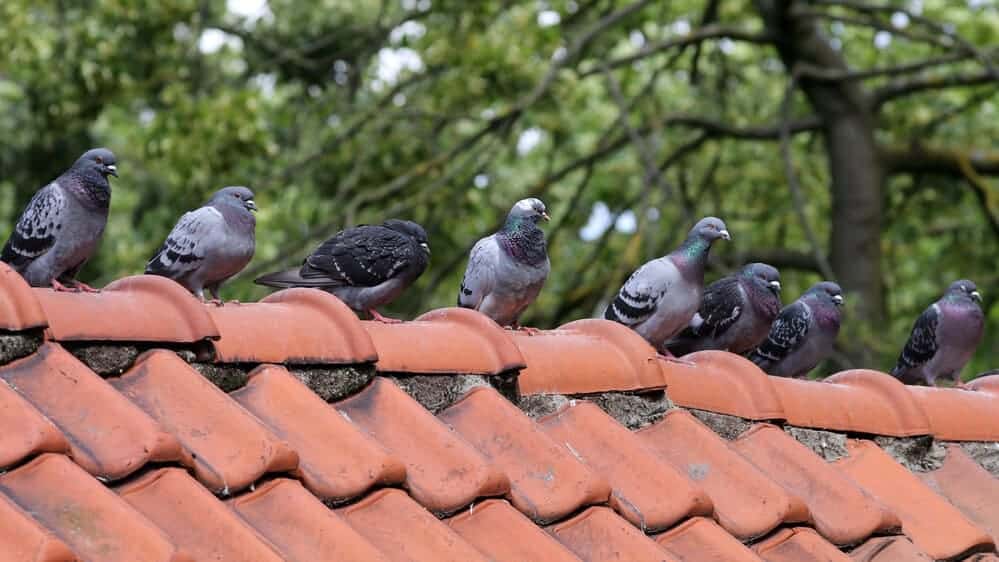
Pigeons on your rooftop have multiple negative effects on the property. It is harder to maintain the property with bird droppings chipping away the time that could be invested in maintaining other aspects. Bird dropping markings are hard to remove, and in the long run, those markings impact the property value. Landlords with a pigeon problem might have more tenants leaving. With all this in mind, it is imperative to deter pigeons from your roof. Here are some popular methods to implement with a high efficacy rate.
Using shock devices
Trial by shock waves is an effective method of preventing pigeons from roosting on top of your roof. Adding shock tracks, strips, or wires on the roof can prevent birds from settling. Shock devices are very effective because pigeons are settlers. If they find a comfortable spot, they’ll start building nests. Shock devices make it very uncomfortable for pigeons to look for a place to build a nest.
Without an elevated spot to roost, pigeons tend to leave and look for an alternative location. You can add the shock devices all along the apex and edges of the roof since these are common landing spots for pigeons. Consider adding shock devices on balconies and other elevated areas where birds can roost.
Lacing the roof with poison
Feeding poison to pigeons is a permanent solution to deter birds from settling on top of it. Finding effective poison regardless of weather predicaments is essential to solve pigeon problem on roof at home or work. There are different types of methods you can use.
Before resorting to an inhumane method, consider lacing the rooftop with bird contraceptives to prevent them from roosting. OvoControl has highly effective bird contraceptives that can ‘deter’ future generations from roosting on your roof. The current generation can then be depopulated by being shot down or poisoned. If you poison pigeons that have laid eggs, there is the risk that there might be future generations that nest on your roof.
Shooting pigeons down
Shooting pigeons down leans towards pigeon depopulation mostly, but it also indirectly deters the flock from roosting and building nests. Monitoring elevated voids where birds might roost and shooting down any that you see can scare off the others. When pigeons have settled, they can get quite stubborn, so be prepared to do this for longer than expected.
If you feel sporty, lure out the birds by throwing bird feed or crushed bread around the yard. Once they come out to feast, pick them off one at a time. The sound of a bird hunting rifle could scare the others, and they might fly off to another location. Before doing this, de-conflict it with the neighbors and endeavor to do it while they are still at work.
Using metal nets
A softer approach to driving away pigeons is using metal nets in places where they are likely to roost. Some prime real-estate spots for pigeons, such as roof voids, under solar panels, gutters, and commercial rooftops. The metal nets should be placed in a way that prevents the birds from building nests.
If possible, the gaps between the net should be just wide enough to make it uncomfortable for pigeons to get settled. If you suspect the net might not be sufficient, consider electrifying it to have the effect of shock devices. Metal nets are available in most hardware stores. You just have to find the best one for your roof.
Spreading sticky gel
Using a sticky gel can deter birds from trying to land on the roof. As soon as the birds touch down, they will feel the discomfort of trying to move around the gel and take off to find another alternative location. The sticky gel does not have to be specific for this purpose. It could be silicon or another adhesive that is not permanent.
Using glues or hard drying adhesives will make it hard for the pigeons to roost in another location. Carefully consider the type of sticky gel you will use. Place it on top of a wood strip to avoid ruining your roof, and replace it once in a while once it loses its adhesive texture.
Angle roof edges
Birds prefer landing on surfaces where they can be upright. To deter them from your roof, try to counter any flat surfaces on the roof by creating awkward angles for birds. This will be much work, but the long-term results could be worth it. Angles that birds avoid range between 45 to 60 degrees.
Angled roof edges can also be done with material such as spikes or even shock devices with live electric current. The implementation of this solution depends on local circumstances, such as the shape and slope of the roof.