
A homeowner in Las Vegas sprays the baseboards after spotting a scorpion in the hallway, feels satisfied for about a week, and then sees three more scorpions the following month. It’s a familiar cycle in a desert climate where block walls, irrigation, and mild winters keep pest pressure active nearly year-round. The can from the hardware store did exactly what it promised: it killed the insects it touched. What it couldn’t do was solve the actual reason scorpions kept finding their way in.
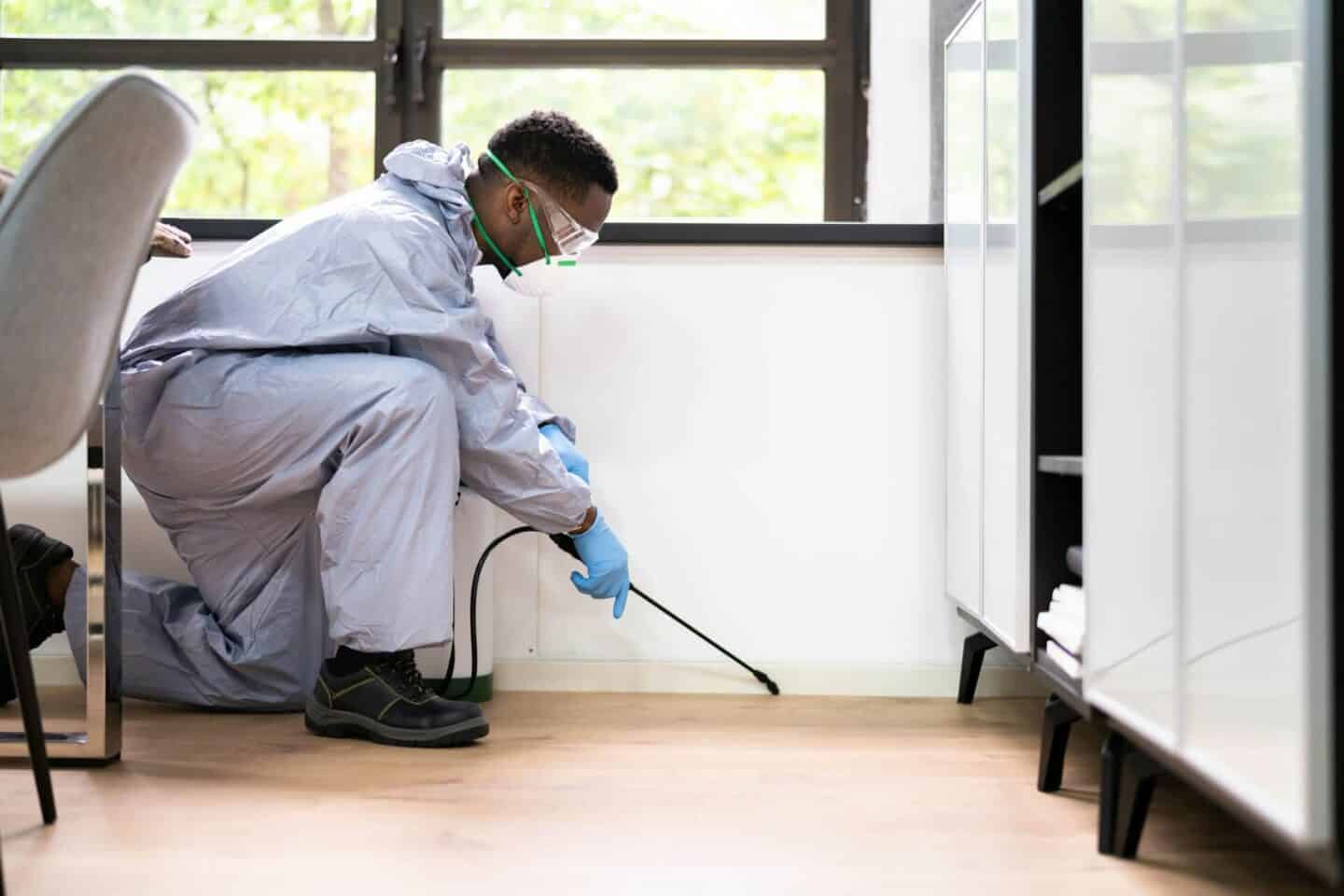
That gap between “killed what I saw” and “solved the problem” is the real difference between a DIY spray and professional pest control, and it explains why the strongest companies in the industry build their service around something a can simply isn’t designed to offer.
Store-Bought Products Are Legally Weaker Than What Professionals Use
Consumer-grade pesticides aren’t just less effective by reputation. They’re less effective by law. The EPA’s introduction to pesticide labels is direct about this: the label is legally enforceable, and every registered pesticide carries the statement that using it in a manner inconsistent with its labeling is a federal violation.
Products approved for general retail sale are registered at lower concentrations and narrower application methods specifically because they’re intended for use by people without training or protective equipment. Licensed professionals have access to a different tier of registered products entirely, along with the training to apply them at strengths and locations a homeowner legally can’t.
A Spray Treats What’s Visible, Not What’s Actually Happening
Killing the ants on a kitchen counter doesn’t touch the colony feeding that activity, and killing the scorpions along a baseboard doesn’t address why they’re getting inside in the first place.
Professional treatment starts with identifying the actual source, whether that’s a gap under a garage door, a moisture source drawing in insects that scorpions feed on, or an entry point around a utility line. Spraying visible pests without addressing the underlying condition is a bit like mopping up a leak without ever finding where the water is coming from. It looks resolved for a few days, and then it isn’t.
Prevention Requires a System, Not a Single Application
The pest control companies that actually keep homes clear year-round build their service around a layered approach rather than a single treatment. That typically means:
- Inspecting the property for entry points, moisture sources, and conditions that attract pests in the first place
- Applying targeted treatment to nesting sites, cracks, and exterior pressure points where pests actually live
- Maintaining a perimeter barrier around the home’s exterior that gets reapplied and adjusted seasonally
- Monitoring for new activity and adjusting the approach as conditions change through the year
A one-time DIY spray addresses exactly one of these steps, and only partially. It’s the equivalent of changing a smoke detector battery without ever checking whether the alarm itself still works.
Local Knowledge Changes What Actually Gets Treated
Pest pressure isn’t generic, and it isn’t the same from one region to the next. In Las Vegas, long warm seasons, desert landscaping, block walls, and irrigation systems can create conditions that keep scorpions, ants, and rodents active for much of the year.
When comparing pest control companies in Las Vegas, homeowners should consider whether the provider understands these local conditions rather than applying the same treatment approach everywhere. Fortified Pest Management, for example, factors the area’s seasonal pest activity and property conditions into its approach, which can be especially important when infestations keep returning despite routine treatments.
What This Means Before Reaching for a Can
A few honest questions help clarify whether a DIY approach is actually going to solve the problem:
- Has the source been identified? Look for the actual entry point, nesting area, food source, or attractant rather than simply treating visible pests.
- Is there a follow-up plan? Repeated activity may require monitoring and additional treatment rather than a single application.
- Is the treatment appropriate? The product should be suited to the specific pest and the conditions in which it is active.
- Could something be hidden? If pests keep returning, a professional inspection may uncover nesting areas, entry points, or moisture problems that a surface-level spray cannot address.
The goal is not to avoid DIY solutions entirely, but to recognize when they are no longer addressing the real problem. Once pests become persistent or keep returning, finding the source is usually more valuable than applying another round of spray.
Conclusion
DIY sprays aren’t useless, and they’re a reasonable first response to an isolated pest sighting. But they were never built to solve the underlying reason pests keep returning, and legally, they can’t be formulated as strongly as what a licensed professional is trained and permitted to use.
The companies that actually keep homes pest-free long term treat the visible problem and the invisible cause together, on a recurring schedule shaped by local conditions rather than a generic label. For anyone tired of spraying the same baseboard every few weeks, that structural difference, not a stronger chemical, is usually what actually breaks the cycle.