
Becoming more eco-aware is beneficial for the present-day life on the planet just as it would be beneficial in the future if we consider the key benefit that lies within the eco-friendly and sustainable changes and practices – that of reducing the carbon footprint. And, while there are numerous strategies we can implement in our day-to-day lives, few have as big of an impact as those that have to do with our homes.
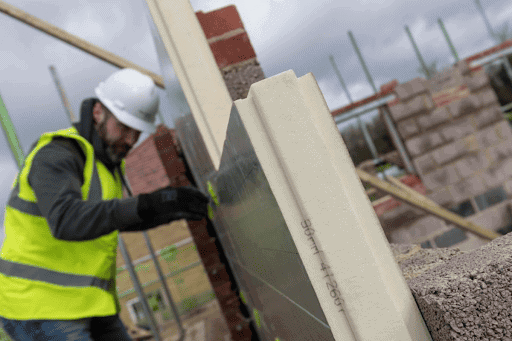
So, if you want to embark on the journey of sustainability and a green lifestyle, it all starts with the home. You may be doing all the changes you can imagine with consumerism habits, positively affecting waste reduction, but it wouldn’t make that big of a difference if there’s one big issue you leave out of the eco-friendly equation – the energy waste.
This happens mainly due to the home’s poor insulation, especially if you have one of the pre-1920s homes featuring external solid walls (no gap in-between) with distinct alternating brick patterns. The bad news is you won’t be able to do cavity wall (gap in-between) insulation which is more affordable than solid wall insulation.
The great news (yes, there’s excellent news!) is the latter is much more beneficial long-term if we consider the durability and energy savings that lie ahead, and it’s as easy as adding one of the exceptional PIR insulation like the 40mm PIR insulation board solution from outstanding brands such as Kingspan, Ecotherm, Mannok, and Celotex. Versatile and multi-purpose as they are, they’re equally fit for other projects, such as those of pitched and flat roofs and floor insulation.
What Does Solid Wall Insulation Do?

In basic terms, it helps reduce your heating and cooling costs and adds to the comfort of the abode by providing that much-needed additional wall layer. Not having to spend on artificial heating and cooling as you used to, opens up the path to cutting down on unnecessary costs and saving up that money for more important things, like getting that lovely furniture set you were eyeing for the bedroom, or finally enhancing the interior décor of the whole home.
According to the government’s latest statistics done by December 2022, there are still around 7.7 million homes in the UK with solid walls that remain uninsulated, so despite the many improvements in this regard nationwide with the ECO (Energy Companies Obligation) scheme, there’s still room for improvements with 40mm PIR insulation board strategies, or even thicker options.
Especially if we consider how much heat loss uninsulated walls make up for, which is about a whopping 45% – double the amount of the uninsulated cavity wall alternative. On the positive note, when you do boost your home’s insulation with PIR, depending on the size and how much board you use eventually, you can expect to benefit from saving up as much as £410 or more annually on energy bills, as well as contribute to cutting down at least 0.9 tonnes of CO2.
How Do You Insulate a Solid Wall?

There are two options you can choose from: external and internal insulation with the PIR insulation board strategy. Even though there are other ways you can do so, with other insulating materials, PIR stands out with its lightweight and thin design so you can count on the insulating benefits minus the weight and use of more space than needed.
Moreover, it’s durable, easy to handle to the wanted shape and size, can be combined with various applications, complies with fire regulations, is pressure-resistant, dimensionally stable, and above all humidity-proof so you don’t have to fret about any mould problems. All of which makes it an excellent insulator.
As it can be applied both externally and internally, each of which comes with its pros and cons, it takes weighing in what you’re willing to work with, and what you simply can’t deal with, to get to the final decision. Take your time when deciding, as it’s a considerable investment.
It costs initially, but brings about a load of benefits afterwards, like increasing your home’s value with the increased EPC (Energy Performance Certificate) rating. This is great to know regardless of whether you plan to sell the property or not.
External Wall Insulation
As the adjective is self-explanatory, this is the type of installation added on the outside. At first glance, there’s the fact it’s more expensive than the internal considering the price of £11,000 is not uncommon since it requires more than the 40mm PIR insulation, as opposed to the £7,000 typically for the internal counterpart that can do with a thinner layer. Then, there’s the other fact it’s not the best option for properties in a conservation area with strict codes on how the exterior is supposed to look.
But, despite all this, it still comes with its pros that can’t be overlooked. First, since it’s added outdoors, it’s considerably less disruptive to your life indoors. Work can continue outside even as you go about your day inside your home, which isn’t to say about the internal alternative.
Also, given that it’s added outside, it gives your home a boost in both weatherproofing and soundproofing and as a result enhances your overall comfort. Let’s not forget, when possible, it can significantly improve the look of your property as well, boosting its curb appeal and as a result its value along with other elements such as new painting, layering, or cladding.
Internal Wall Insulation
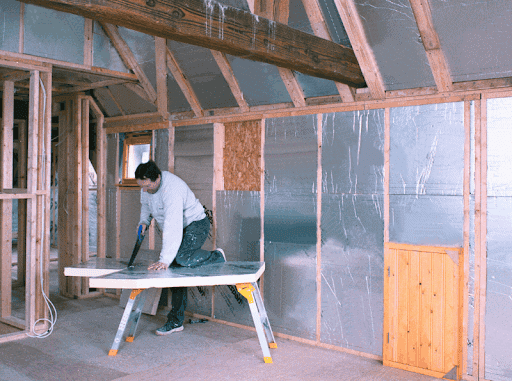
As mentioned, this is the more affordable variant of the two, and for many, the more acceptable one for this particular reason. Out of the two, it’s also the acceptable one when being part of a conservation area doesn’t provide much flexibility with the insulation strategy. In addition to being a flexible option as you can instal it on a room-by-room basis, it’s also a versatile choice as you can choose to add the boards directly to the wall (e.g. with the Celotex and Kingspan PIR boards bonded to plasterboard with a vapour barrier), opt for a batten-wall solution, or construct a stud wall with a cavity.
The cons with this method are that it’s quite disruptive to the life you have in the abode, as it contributes to noise as much as to mess and usability of the rooms. This is especially true in rooms like bathrooms and kitchens with appliances and units fitted right against the walls. Depending on how big of a home you have, and what the ideal board may be, you may end up with less space than before if the 40mm PIR panel isn’t enough to make an energy difference.
Despite the benefit of making your home airtight, out of the two options this one is riskier in terms of condensation and ventilation, especially if you have walls with some non-breathable finishes like vinyl wall paint and textured wallpaper, in which case you’d have to invest in some ventilating strategy too. Consider these aspects before the installation and be sure to talk to a professional so you can find the perfect solution that’s eco-friendly and lifestyle-friendly for you!