
A first eye examination can sound surprisingly formal when you are trying to explain it to a young child. They may imagine difficult questions, bright lights, or a letter chart filled with symbols they are expected to recognise.
Parents can feel uncertain too. You may wonder whether your child is old enough to cooperate, what the equipment does, or whether an unclear answer could affect the result.
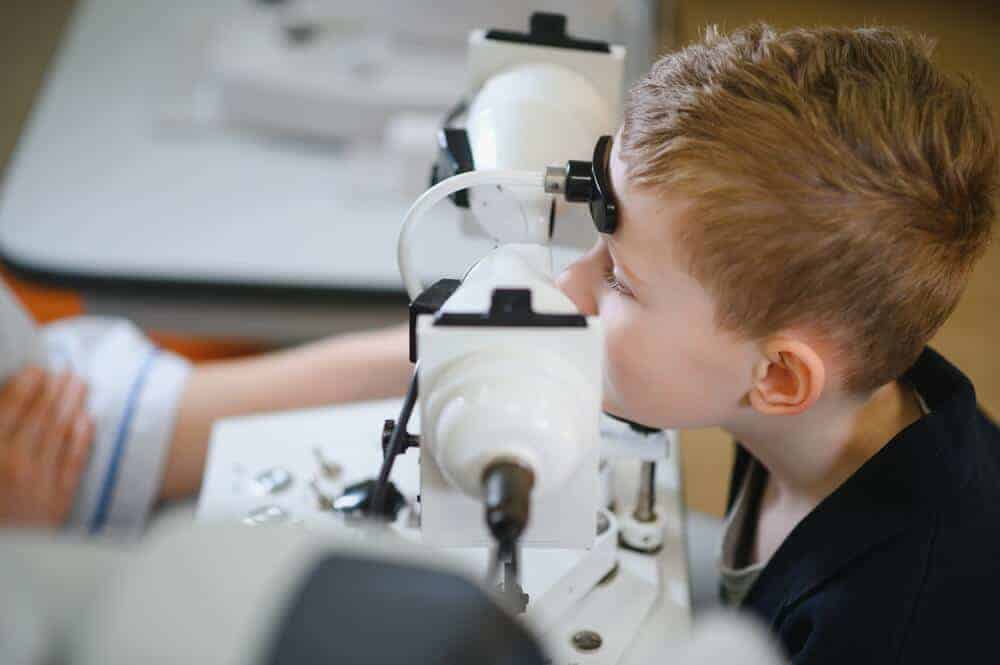
A child’s eye examination is usually made up of several short checks. Some feel like matching games, while others involve following a light, looking through lenses, or allowing the eye care professional to observe how the eyes work together.
Marc S. Werner, MD, from Stahl Eyecare Experts, notes that an eye examination can involve much more than reading letters from a chart. Depending on the setting, a child may be examined by an optometrist or an ophthalmologist. The tests can be selected according to the child’s age, communication style, confidence, and ability to concentrate [1].
The exact order will vary, and every child will not need the same tests. Knowing the general shape of the appointment can still make the experience feel more familiar for the whole family.
How to prepare your child before the appointment
Children often cope better with a new experience when they know what will happen in simple terms. A calm explanation given a day or two before the appointment is usually more helpful than a detailed description several weeks in advance.
You might say: “The eye doctor will show you some pictures and lights to learn how your eyes are working. You only need to say what you can see.”
Try to describe the visit as a series of activities rather than a test the child must pass. When children become determined to give the expected answer, they may guess, peek around the eye covering, or continue naming symbols after they have become too blurry to recognise.
It is completely acceptable for a child to say that something looks unclear or that they cannot see it. That response gives the examiner useful information.
Parents can prepare by thinking about what they have noticed at home or what teachers have mentioned. Useful observations may include:
- Sitting unusually close to the television
- Holding books or devices very near the face
- Covering or closing one eye
- Squinting when looking into the distance
- Losing their place while reading
- Complaining of headaches or tired eyes
- Avoiding drawing, puzzles, reading, or ball games
- Finding certain classroom tasks unusually tiring
These behaviours do not confirm that a child has an eye condition. They simply provide context that may help guide the examination.
Bring any current glasses, contact lenses, previous prescriptions, and relevant medical information. It is also useful to know whether close relatives had a childhood squint, amblyopia, strong glasses prescriptions, or another eye condition.
A favourite small toy may help a nervous child settle. Children with sensory sensitivities may benefit from knowing that the room could become darker, one eye might be covered briefly, and lights may be shone towards their eyes. Parents can mention communication, developmental, or sensory needs when booking so the clinic can plan an appropriate approach.
The checks that can be done without reading letters
Many parents assume that an eye examination begins and ends with a letter chart. Visual acuity, which describes how clearly each eye sees detail, is important, but letters are only one way to measure it.
Younger children may identify pictures or simple symbols instead. They might name a shape, point to a matching card, or show which direction a symbol is facing. Professional guidance recommends selecting methods that match the child’s age and ability while assessing each eye separately, near and distance vision, eye alignment, focusing, depth perception, prescription, and eye health [1].
Babies and children who cannot reliably match pictures can also be assessed. The examiner may watch which image attracts the child’s attention, observe how the eyes follow a toy or light, and use techniques that require little or no spoken response.
Each eye will usually be checked separately. One eye can sometimes see much better than the other, yet the difference may go unnoticed during daily life because the stronger eye compensates when both eyes are open.
The examiner will also look at how the pupils respond to light, whether the eyes move smoothly, and whether they remain aligned. Other checks may explore how well the eyes focus at different distances, work together for depth perception, and appear at the front and inside.
During a cover test, one eye is briefly covered while the child looks at an object. The examiner watches for small movements that may reveal how the eyes are aligning.
Another technique, called retinoscopy, uses a light and a series of lenses to estimate a glasses prescription. The child only needs to look towards a target while the examiner studies how light reflects from the eyes.
These checks are part of what separates a full examination from a school or community vision screening. Screening can be valuable because it helps identify children who may need further assessment. It cannot provide the same detailed information about an individual child.
In a Canadian study of children aged four and five, a combination of screening tools detected most of the children later found to have a visual problem, but it still missed some and referred others who did not have one of the targeted conditions [2].
For parents, the practical point is that a screening result is useful information rather than a complete diagnosis.
Why the optometrist may use eye drops
Eye drops are not required at every appointment. They may be recommended when the examiner needs a clearer view inside the eyes or a more accurate measurement of focusing power.
Children can focus very strongly. This ability, known as accommodation, helps them see nearby objects, but it can also temporarily hide part of a long-sighted prescription during an examination.
Cycloplegic drops briefly relax this focusing system. Once they have taken effect, the examiner can measure refractive error more accurately and determine whether the child has short-sightedness, long-sightedness, astigmatism, or a meaningful difference between the two eyes.
A systematic review of 10 studies involving 2,724 children found that measurements taken without cycloplegia did not always agree with those taken after the focusing system had been relaxed. The authors concluded that cycloplegic refraction should remain the preferred method when an accurate prescription measurement is needed for children aged 12 and under [3].
For a parent, this explains why the drops may be suggested even when a child appears to cooperate well with the earlier tests. The aim is to see the prescription without the child’s strong focusing ability affecting the result.
The drops may sting for a few moments when they are applied. They can temporarily enlarge the pupils, blur close-up vision, and make bright light uncomfortable. How long the effects last depends on the drops used and varies from child to child [4].
The appointment may take longer because the drops need time to work. Sunglasses can help with light sensitivity on the journey home. Reading and close schoolwork may also feel more difficult for a while, so it is worth asking the clinic what to expect before planning the rest of the day [4].
A simple and honest warning is usually best: “The drops may feel a bit strange for a moment, and things close to you might look blurry afterwards.” This prepares the child without making the experience sound frightening.
What parents can ask before leaving
By the end of the examination, parents should understand more than whether their child could see the smallest pictures or letters.
Useful questions include:
- Is each eye seeing as clearly as expected for my child’s age?
- Are the eyes moving and working together comfortably?
- Does my child need glasses now?
- If glasses are recommended, when should they be worn?
- Were there any signs of amblyopia or a squint?
- Is the prescription likely to change as my child grows?
- When should the next examination take place?
- Which symptoms should bring us back sooner?
When glasses are prescribed, ask what they are intended to do. Some children need them mainly for distance, while others may wear them for reading, schoolwork, or throughout the day. Clear instructions make it easier for the child, family, and school to follow the plan consistently.
A normal result also provides a useful baseline and can help exclude common eye and prescription problems. When reading or classroom difficulties continue, the child may need additional support from school, a paediatrician, or another appropriate professional [5].
The practice provides comprehensive examinations for adults and older teens, as well as myopia-control care for appropriate patients, through its Garden City and Hauppauge offices. For a younger child’s first examination, families should choose a clinician who routinely works with that age group and confirm availability before booking.
The appointment may include pictures, lights, lenses, eye drops, or simply careful observation. Each part helps build a clearer picture of how the child sees and how comfortably the two eyes work together.
References
[1] College of Optometrists. (n.d.). Examining younger children: Key information to gather and tests to carry out. https://www.college-optometrists.org/clinical-guidance/guidance/knowledge%2C-skills-and-performance/examining-younger-children/key-information-tests.
[2] Nishimura, M., Wong, A., Cohen, A., Thorpe, K., & Maurer, D. (2019). Choosing appropriate tools and referral criteria for vision screening of children aged 4–5 years in Canada: A quantitative analysis. BMJ Open, 9(9), e032138. https://doi.org/10.1136/bmjopen-2019-032138.
[3] Wilson, S., Ctori, I., Shah, R., Suttle, C., & Conway, M. L. (2022). Systematic review and meta-analysis on the agreement of non-cycloplegic and cycloplegic refraction in children. Ophthalmic & Physiological Optics, 42(6), 1276–1288. https://doi.org/10.1111/opo.13022.
[4] American Association for Pediatric Ophthalmology and Strabismus. (2025). Dilating eye drops. https://www.aapos.org/glossary/dilating-eye-drops.
[5] American Association for Pediatric Ophthalmology and Strabismus. (n.d.). Learning disabilities. https://www.aapos.org/glossary/learning-disabilities.