
The physics of light is a fascinating subject that has captured the interest of scientists and laypersons alike for centuries. From Sir Isaac Newton’s experiments with prisms to modern-day research into the properties of lasers, light has been studied in great detail. Three fundamental concepts that have arisen from the study of light are refraction reflection absorption. Understanding these principles is essential in many areas of science and technology, from optics to telecommunications.

What is Light?
The concept of light has been a topic of discussion among scientists for centuries. At its core, light is a form of electromagnetic radiation that travels through space and can be detected by our eyes. It consists of tiny particles called photons that are in constant motion, moving at a speed of 299,792,458 meters per second.
The wavelength and frequency of each photon determine the color and intensity of light that we perceive. Light is essential to our daily lives as it plays a vital role in illuminating our environment, allowing us to see the world around us.
Refraction
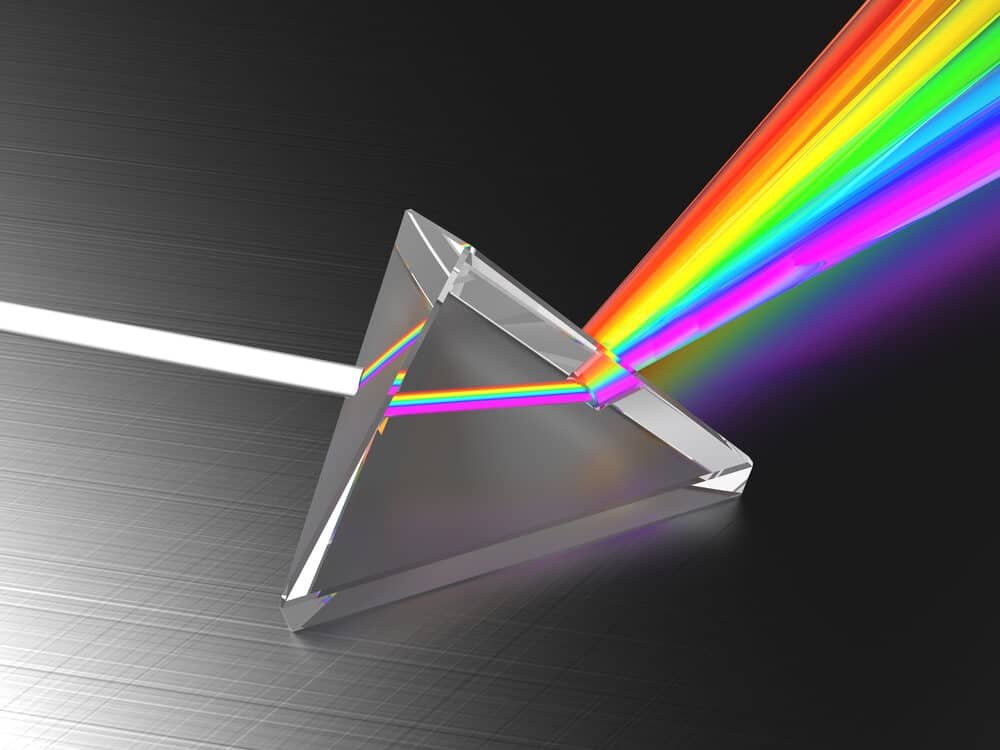
Refraction is a fundamental concept in the science of light that involves the bending or deviation of light rays when they pass through a transparent medium such as water, glass, or air. The magnitude and direction of the refraction depends on the angle of incidence, the refractive index of the medium, and the wavelength of the light. The process of refraction plays an essential role in a wide range of applications, including optics, physics, meteorology, and engineering.
Understanding the principles of refraction can help researchers and scientists analyze and design optical systems, improve the performance of lenses and mirrors, predict the behavior of waves in different media, and develop advanced technologies for communication, sensing, and imaging. Indeed, refraction is one of the key phenomena that has helped us to unravel the mysteries of the natural world and harness the power of light for countless applications.
Reflection
Reflection is a fundamental concept in the science of light that occurs when a beam of light encounters a surface and changes direction back the way it came. The angle at which the light hits the surface – known as the angle of incidence – determines the angle at which it bounces back – known as the angle of reflection.
Reflection plays a critical role in various optical systems, including mirrors, lenses, and telescopes, where it is carefully managed to produce specific outcomes. However, reflection is not only a physical phenomenon but also a metaphor for personal and professional growth. Reflection is an essential practice for individuals to examine their actions, thought processes, and behaviors to acquire new insights, identify areas of improvement, and refine their approach to achieve their goals.
Absorption
When it comes to understanding the behavior of light, absorption is a crucial concept to explore. Absorption refers to the process by which light is taken in and absorbed by a material, rather than being either transmitted through or reflected off of it. This process occurs when light waves come into contact with an object that is able to absorb some or all of the wavelengths present.
Certain materials are much better at absorbing specific wavelengths of light than others, which can impact the colors and qualities of light that we see. By studying absorption, we can gain a deeper understanding of the ways in which light interacts with and is influenced by various materials and surfaces in our environment. This knowledge can be used to develop a range of advanced technologies, including solar cells and light-emitting diodes.
Applications
With the advancements in technology, applications of the science of light have become ubiquitous in our daily lives. From the screens we use to access information to the cameras we use to capture moments, the science of light has a significant impact on our digital experiences. Photo-editing software relies on an understanding of light reflection and absorption to create realistic images.
Moreover, lenses in smartphones and cameras use the principles of light refraction to produce high-quality images. Industrial applications of light include laser cutting and welding, fiber-optic communication, and solar energy harvesting. In the healthcare industry, light-based therapies are being developed and used to treat various medical conditions.

In summary, the science of light is essential to a wide range of applications that are vital for our everyday lives. From optics and engineering to medicine and communication, understanding the fundamental concepts of light enables us to develop technologies that can improve our quality of life.
The Human Eye
The human eye is a fascinating organ that plays a central role in our perception of light, color, and the world around us. The eye is the organ responsible for collecting, refracting, and focusing light rays onto the retina, where the light-sensitive cells convert the light into neural signals that are sent to the brain for interpretation.

The eye’s complex structure includes a lens, cornea, pupil, and iris, all of which work together to allow us to see sharp, clear images. Additionally, the eye’s ability to adjust the amount of light entering the eye through the pupil, and to adjust the focus of the lens via the ciliary muscles, allows for the visual system’s incredible flexibility and adaptability.
The study of light and its associated phenomena provides us with a better understanding of the world around us as well as our own capabilities. From exploring the science behind optics to gaining insights into the workings of the human eye, we can use light to advance
Conclusion
Light is a fundamental phenomenon that has fascinated scientists and philosophers for centuries. By studying light, we have developed an understanding of the nature of light and its various properties, as well as the ways in which it interacts with different materials.
In addition to being essential for our vision, understanding the science of light provides us with insights into new technologies and applications that can improve our lives. From smartphone lenses to medical therapies, the science of light is essential for a wide range of industries and technologies. Thus, by understanding this fascinating phenomenon, we can gain a greater appreciation for the world around us.