
Outdoor advertising has taken a lot of hits in the conversation around modern marketing. Digital budgets keep growing, attention spans keep shrinking, and there’s a reasonable argument that anything not on a screen is losing ground.
So when it comes to bus wrap advertising, which is also a form of outdoor ad, you may wonder, does it still work at all?
The answer is yes, and in some ways more effectively than it did a decade ago, precisely because the advertising landscape around bus wraps has changed. When every other channel is fighting for eyeballs on a four-inch screen, a full-size bus moving through a city is genuinely hard to ignore. The question isn’t really whether bus wraps work. It’s understanding why they work, and what makes the difference between a wrap that builds brand recognition and one that gets forgotten at the next traffic light.
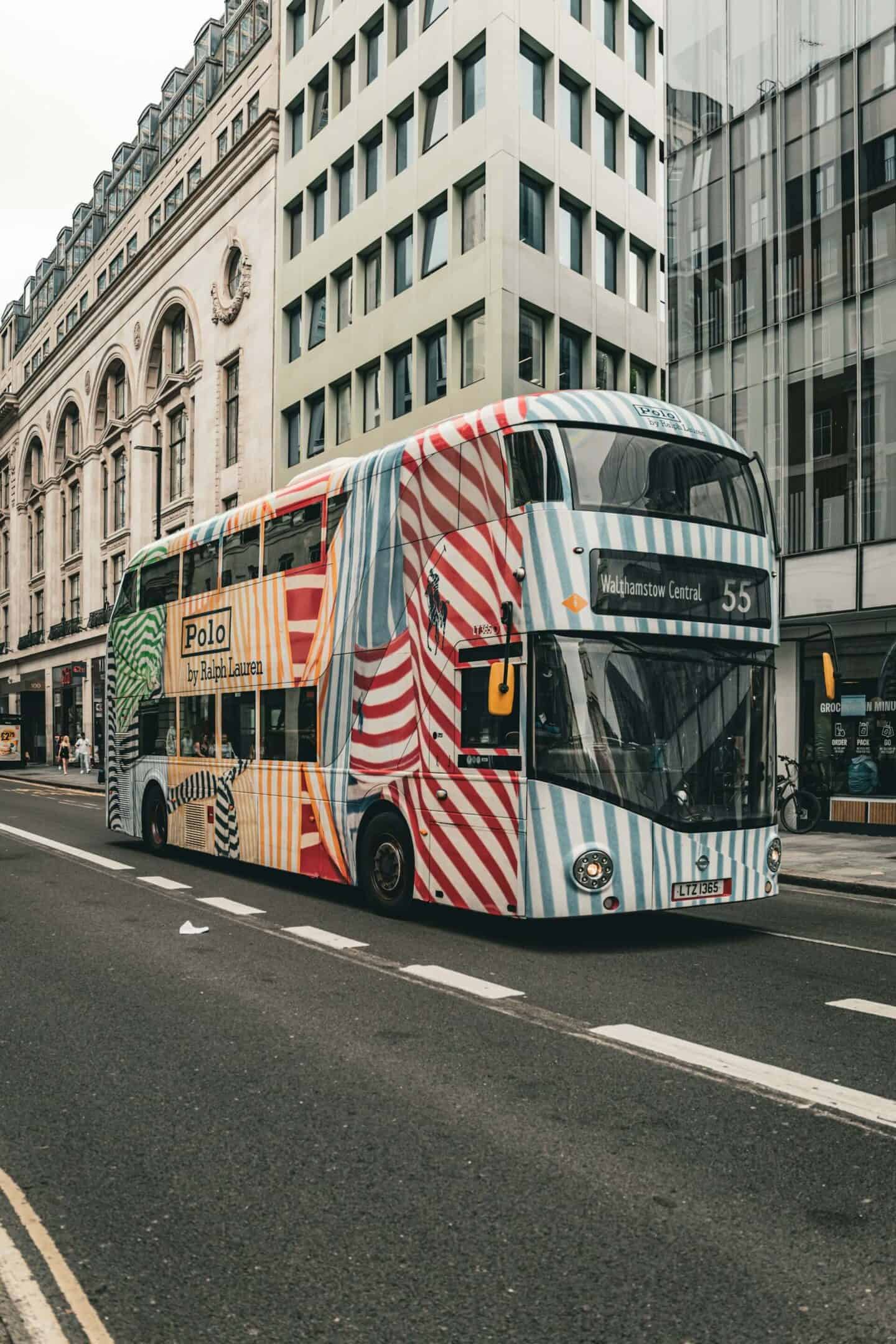
6 Ways Bus Wraps Influence Brand Visibility
Bus wrap advertising transforms public transportation into a powerful moving display that captures attention across busy streets and neighborhoods. Its large size and frequent visibility help businesses create repeated brand impressions among diverse audiences.
Unlike many traditional advertising formats, bus wraps combine high exposure with strong visual impact, making them an effective way to build brand recognition. Here’s what actually drives their effectiveness.
1. They Generate Impressions at a Scale Most Local Channels Can’t Match
A bus doesn’t sit in one place. It moves through high-traffic corridors, stops in commercial districts, idles at intersections, and parks where people wait. The Outdoor Advertising Association of America has noted that transit advertising consistently ranks among the highest reach formats in urban markets, with a single vehicle capable of generating up to 70,000 daily impressions depending on the route. For brands trying to build recognition in a specific city or region, that kind of consistent, repeated exposure is difficult to replicate through other local channels at a comparable cost per impression.
2. The Format Forces Attention Without Asking for It
Digital ads require someone to be on the right platform, in the right mindset, at the right moment. A bus wrap requires nothing from the audience except proximity. Pedestrians see it. Drivers see it. Passengers on other vehicles see it. It doesn’t ask anyone to click, scroll, or engage. It just exists in physical space and registers. That passive quality is actually one of its strengths, because brand familiarity builds through repetition, and repeated exposure to the same visual across different contexts is exactly how recognition forms over time.
3. Full-Coverage Wraps Create Visual Impact That Partial Ads Can’t
There’s a meaningful difference between a small panel ad on the side of a bus and a full wrap that covers the entire vehicle. A full wrap turns the bus itself into the creative canvas, which changes how it reads at a distance and how long it holds attention up close. The scale commands a second look in a way that smaller placements simply don’t. Providers like RoadRunner Wraps approach full-coverage bus wraps with attention to how the design functions at both highway speed and a standstill, since a wrap that reads well from thirty feet doesn’t always hold up when someone is standing right next to it at a bus stop.
4. They Work Continuously Without Ongoing Media Spend
Most advertising channels charge by the impression, the click, or the placement period. Stop paying and the exposure stops. A quality bus wrap continues generating impressions for years without any additional spend attached. For brands with limited recurring marketing budgets, that durability changes the cost-per-impression calculation significantly compared to channels that require continuous investment to stay active.
5. They Reinforce Other Advertising Channels
When someone sees a brand on a bus in the morning and then encounters a digital ad from the same brand later that day, the familiarity built by the physical exposure makes the digital touchpoint more effective. This cross-channel reinforcement is well documented in advertising research. In practice, brands running coordinated campaigns that include transit advertising alongside digital and social tend to see stronger overall recall than those relying on any single channel alone.
6. Route-Based Placement Offers Meaningful Targeting
Bus wraps aren’t targetable in the algorithmic sense, but they’re not random either. Routes run through specific neighborhoods, commercial corridors, and demographic concentrations. A brand that serves a particular part of a city can choose transit placements that keep their messaging circulating in exactly the areas where their customers live and work. That geographic intentionality gives bus advertising more strategic value than it sometimes gets credit for.
What to Consider Before Investing in Bus Wrap Advertising
Bus wrap advertising isn’t a fit for every business, and going in without thinking through the following factors is how budgets get wasted. Here’s what to work through before committing.
Your Business Serves a Local or Regional Market
If your customers are spread nationally or acquired primarily online, impressions generated in a single city won’t move the needle meaningfully. This format works best when growth is tied to visibility within a defined area.
You Have a Clear, Simple Visual Identity
A bus wrap has roughly two to three seconds to communicate something. Brands with complex messaging or no strong visual identity tend to struggle with the format. The businesses that get the most out of it are the ones that can distill their brand into a strong logo, a single line, and a color scheme that reads instantly from a distance.
You’re Thinking in Months, Not Weeks
Bus wrap advertising builds through repetition. It doesn’t generate leads the week the wrap goes up. Businesses expecting immediate trackable ROI will likely be disappointed. The value compounds over time, which means it suits brands playing a longer brand-building game.
Your Budget Accounts for Quality Execution
A poorly designed or cheaply printed wrap can do more harm than good, signaling the opposite of the professionalism the format is supposed to communicate. The investment only makes sense if design and print quality are high enough to represent the brand well at scale.
Conclusion
Bus wraps work in 2026 for the same fundamental reason they’ve always worked: physical presence in public space builds familiarity, and familiarity builds trust over time. What’s changed is the context around them. In a media environment saturated with digital noise, a well-designed wrap on a moving bus stands out more, not less, than it used to. For the right brand and the right market, the format has quietly become more valuable, not less.