
If you’re tackling any major DIY project, you’ll likely discover a need for wood sheet materials sooner or later. Sheet materials are core to many DIY home improvement projects as they are versatile, relatively cost-effective, and easy to work with – for instance, plywood is great for projects requiring a flexible sheet material.
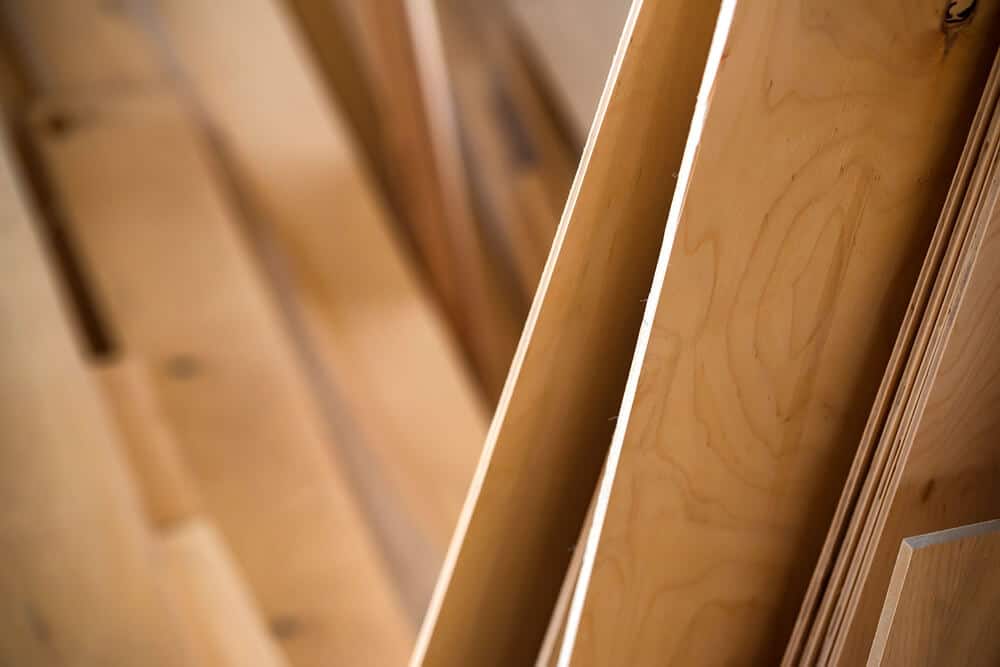
Depending on the sheet material, they can be used for everything from wall, floor, and ceiling panelling to cabinetry and much more.
A great advantage of sheet materials is that they are great for the environment in that they use waste timber materials to create something useful for construction projects (but more on that below).
Today’s article will cover the different sheet material types to consider for your project and their differences. Let’s start with the following;
Plywood
Plywood is one of the more common types of wood sheet materials that you are likely to come across due to being fairly cheap to manufacture but very useful for various applications.
It is made by pressing various layers of wood veneer together using adhesives and pressure. The strength of plywood comes from layering the wood veneer 90 degrees to one another’s grain with each pressed layer.
It is a very flexible board type, making it useful for surfaces requiring slight bends. For instance, plywood is the go-to for things like skateboarding ramps. For the home, it is a great option for wall panelling and (depending on the thickness) floor or ceiling panelling.
Generally, plywood will be available in the following ways:
- 3-4mm
- 6mm
- 9mm
- 12mm
- 16mm
- 18mm
Different timber merchants will have different sizes available, but most won’t be far off the above sizes listed.
There are various types of plywood, too, with softwood and hardwood used to make plywood sheets. This will, of course, change the look and strength of the plywood. Even variants can be used for marine applications and humid conditions – it all depends on the project’s requirements.
Chipboard
Chipboard is another wood sheet material you’ll want to consider for your project. Chipboard is a low-density fibreboard created by mixing epoxy resin and wood particles (usually wood residuals from other manufacturing processes).
The mixture is pressed using heat and pressure to bond the wood residuals and resin to create a board with a smooth surface.
Due to the nature of this board, it is not very flexible and does not cope well with water, moisture, or humidity – all of which can compromise the board’s integrity. However, if treated with a coating such as melamine) chipboard can be used in wet environments such as kitchens for countertops.

Chipboard is also commonly used as an underlay for flooring or insulation in construction projects. Standard sizes of chipboard include:
- 18mm
- 22mm
- 24mm
Other sizes are available, depending on the manufacturer and timber merchant.
MDF
MDF (or Medium Density Fibreboard) is a very similar product to chipboard but varies in that it tends to be less porous and more compact.
MDF is manufactured from smaller wood particles and residuals than would be used for chipboard, meaning that it can be compacted using resin, heat, and pressure into a sheet material denser than chipboard.
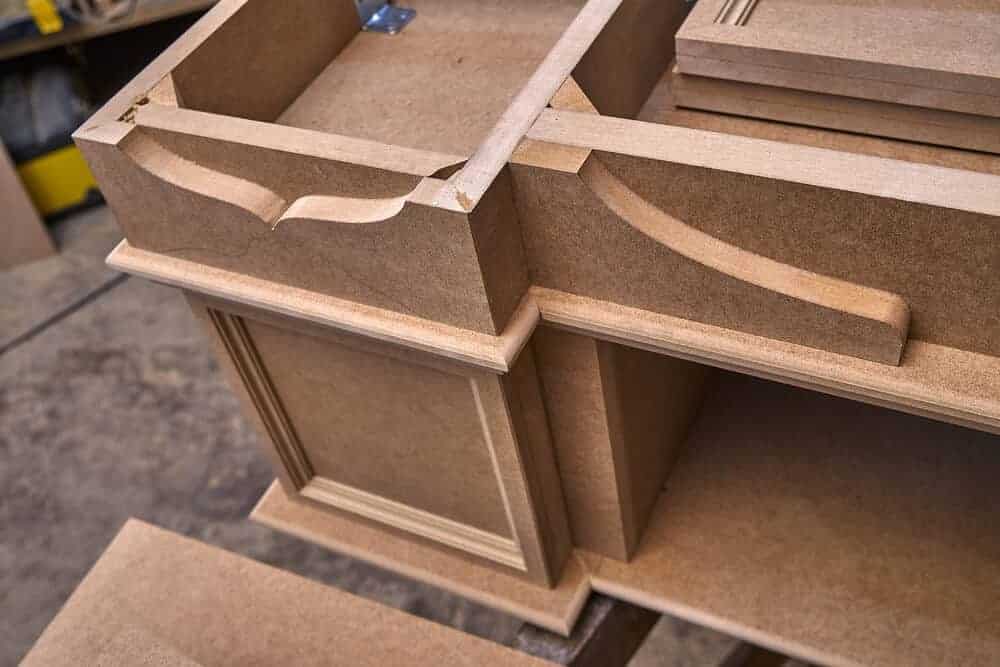
How MDF is made means that it is a better choice for projects requiring more strength in their materials than that of plywood or chipboard. MDF is also more resistant to moisture because it is more densely compacted. MDF is also available in fire retardant variations.
Standard MDF Cut To Size include:
- 6mm
- 9mm
- 12mm
- 18mm
OSB
OSB (also known as Oriented Strand Board) is a type of sheet material similar to plywood in density but has proven to provide more strength structurally than plywood in most instances.
Its strength comes from the fact that OSB is engineered to have oriented strands of wood pressed together in an adjacent formation to give the board a more robust structure than plywood.
One main advantage of OSB over plywood is that it isn’t as prone to warping as much as plywood due to the way it’s formed, but it does take longer to dry, meaning it isn’t as good for outdoor construction projects (unless you have dry weather).
Sizes of OSB follow a very similar sizing pattern to that of plywood, and the two materials are often used interchangeably.
Plasterboard
Although not wood, plasterboard is a sheet material that is great for insulation and forming the internal structures of homes and buildings. It can also be known as drywall, dry lining, wallboard, gypsum board, and various similar names.

Plasterboard is created from a layer of gypsum plaster that is layered between two layers of heavy paper or fibreglass mats – making it great for keeping the heat in and decorating its surface. It is commonly used for both walls and ceilings.
Common sizes include:
- 9.5mm
- 12.5mm
Thicker and thinner sizes do exist if needed, but 9-12mm sizes are generally required for most projects.
Summary
With so many wood sheet materials, knowing what’s best for your situation cannot be very clear. We hope our breakdown of the different materials has helped!
What will you be using?