
The exact center of the Mediterranean Basin is the Tyrrhenian Sea, that portion of open water that goes from North Tuscany to the northern shores of Sicily, skirting all the Italian western coast (as well as the Sardinian and Corsican eastern ones, to be precise). Roughly halfway the Tyrrhenian coast there is Naples, probably the most important city facing that sea after Rome. It follows that most of the tourists usually rent a boat in naples to explore the entire area.
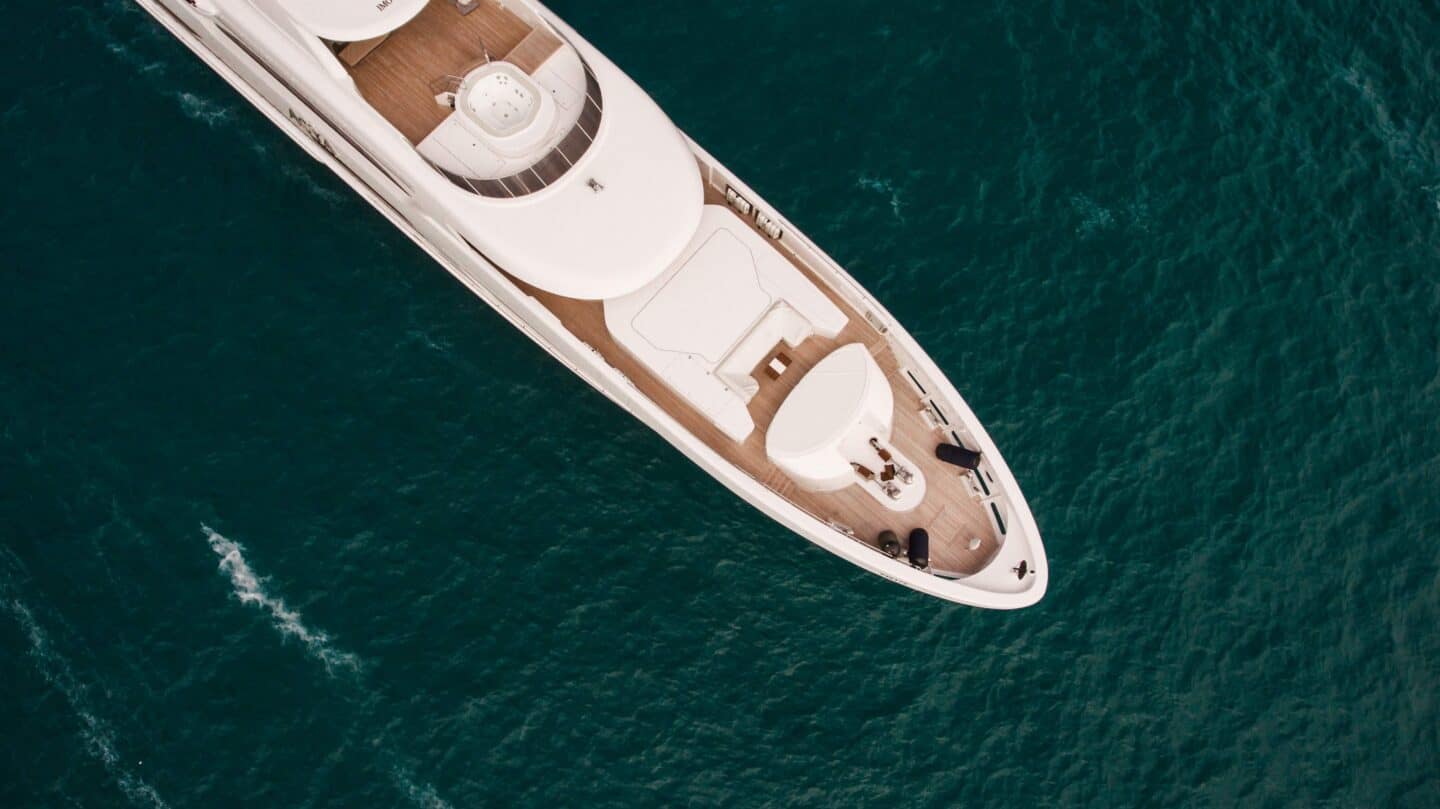
Usually, those who have this habit are content with exploring the rich nearby, that is to say the (objectively astonishing) islands scattered all over the Bay of Naples and its immediate surroundings: Capri, Ischia and Procida first. But it will be a real shame if a sailor decided to limit his outreach to this (all in all small) portion of sea, without daring to reach further, in order to discover the beauty of this constantly underestimated sea.
On the other hand, we must consider that the usual routes within the Tyrrhenian’s waters are covered everyday by the Italian (and, to a lesser extent, Corsican) maritime public transportation. Every day (and in most cases even at night) dozens of ferries link together all the most important Tyrrhenian ports. Thus, hiring a boat to cover a route which is already covered by a public mean sounds perfectly useless and a little pretentious.
It sounds much better charting a totally original course, pointing on a map the destinations that each sailor desires to visit. Also, because the Tyrrhenian Sea offers such plenty of choice in that sense. In fact, since the ancient times, this portion of Mediterranean was the epicenter of every maritime traffic and almost all the trading activities connected to it.
This gave the Tyrrhenian the reputation of some kind of “aquatic trade center”, neglecting at the same time its artistic, cultural, environmental and anthropological potential. Such a reputation has managed to survive to the present day, and it turned into an actual prejudice, like if this sea has too few to offer to those who are looking for a cultural enrichment. Even nowadays, the majority of people (starting from the Italians themselves) are still considering the Tyrrhenian just a “linking space” between different shores.
In other words, it is deemed a ginormous business area, and it’s not by coincidence if the majority of the most important routes for merchant shipping go over it, or even find their final docking in one of its ports. Just think about the importance of mooring places like La Spezia, Livorno, Palermo or Naples itself for activities like heavy industry or cargo handling.
Even the tourism business area seems to work the same way. The Tyrrhenian is crowded with tourists: but they seem more attracted by some of its shores (Versilia in Tuscany, Southern Latium and Amalfi Coast in particular, plus famous islands like the above-mentioned Capri or Ischia and some of East Sardinia’s beaches) than by its waters. As a result of it, the Tyrrhenian shores are usually crowded (not only on summer), while its waters are left at the mercy of dozens of cargo ships: a real paradoxical situation, to say at least.
That’s why it’s important to develop a full awareness and a deeper knowledge of what the Tyrrhenian Sea has to offer, not only in terms of mere navigation, but also when it comes to leisure time and opportunities for fun. In other words: this sea needs to have its external perception radically changed.
Five reasons why hiring a boat in Naples and exploring the Tyrrhenian could be more beneficial that one might expect
At this point, the question would be: what does the Tyrrhenian Sea have to offer that the majority of people (tourists and, in many cases, locals) don’t know yet? We have tried to highlight five qualities that haven’t been adequately considered so far. They’re listed below.
- The pleasure of sailing. The Tyrrhenian is one of the most pleasant seas to sail. Typically, it’s quiet, calm, silent: winds are moderate and usually manageable, and violent storms are so rare. If you are a beginner, or in any case don’t want an “adventurous” and reckless sailing experience, this is the ideal stretch of water.
- Its seabed. Nobody seems to know it, but in many points (not just the ones by its shores), the Tyrrhenian bottoms are just spectacular. In its deepest points (more than 3.000 meters) many of the rarest species of fish of the whole Mediterranean Basin managed to survive the intensive fishing that have decimated them in the past. This characteristic (plus other ones) makes the Tyrrhenian one of the best seas for scuba diving.
- Weather. Italy is characterized by a quite stable weather, with short winters, long summers and a pretty pleasant average temperature. And the Tyrrhenian is the epitome of this stability. Besides that, as we said before, it’s very rare to find a storm in this portion of sea. So, if you plan to go swimming offshore, there is nothing comparable to its waters.
- People. Italy is surrounded by the sea. This mean that people have developed kind of a symbiotic relationship with it. If you want to share your sea experience with someone else, you can manage to find one or more fellow travellers literally in a heartbeat. Same thing if you are looking for an experienced crew.
- History and culture. If the Mediterranean Area as a whole is renowned as the cradle of civilization, the Tyrrhenian is undoubtedly the radiating source of it. The reason is apparently quite simple to guess: the hegemony of Roman Empire on the region. Nonetheless, it would deserve at least a slight in-depth insight.
Rent a boat and plunge into the history of Western civilization
In the Aeneid, Virgil tells the story of the Trojan hero Aeneas, fleeing from its now destroyed homeland, and bound to reach the Latium’s shores to found a city and settle a new breed that will rule the world. The poem gives us back the idea of how crucial was the Tyrrhenian waters for the ancient populations, and how they used to see it as the centre of any development of human history.
Of course, we are aware that the Tyrrhenian ones are not the only shores that have known important historical events. Just think about the South Mediterranean shores, with the Egyptian and Carthaginian civilizations, or the Aegean Sea and its strict connection with the ancient Greek culture, also in terms of literary and poetic productions (after all, the Homeric poems are all, in whole or in part, tales of navigations).
Nevertheless, if the whole Mediterranean was, for the Romans and the people from its provinces, the Mare Nostrum, a fully-fledged part of the Empire’s territory, the Tyrrhenian portion of it was like its “management district”. From its ports, all the commercial and military shipping operations used to leave the mainland, to reach the farthest provinciae, like for example the ones located past the Strait of Gibraltar on the African Coast (at the time known as Mauretania Tingitana).
This is testified by the many relics and vestiges found both on the sea and by its shores. Evidence of the intense activity that used to take place over those waters. Even now, the remains of ancient Tyrrhenian ports can be traced all along the Italian western coast, and they represent an archeological testimony of inestimable value.
This is probably the main reason why the Tyrrhenian should no longer be just a sea for commercial activities. Tourism should discover its secrets, managing to get closer to them. And the best way to achieve that is refusing the traditional, conventional, institutional routes, renting a boat and tracing a personal itinerary on the map. Something that was nearly impossible just a few years ago, but now it’s one of the easiest things to do.
Especially if we learn to rely on those online platforms that put in touch boat owners and potential rentees. There are many reliable ones: like SamBoat, that operates in all the most important sea hubs all over the world, and ensure a wide range of options as well as the maximum rate of safety and quality of the ships listed on its site.
Rent a boat in Naples and sail: where to?
That said, there is nothing left to do but answering the last question: where to sail? Which are the most important, attractive, charming, maybe hidden sea hubs all along the Tyrrhenian coast that are worth visiting? We tried to give an answer to that, detecting eight of them. Below you can find a brief description of each one.
Clearly, we neglected to mention the most notorious ones, since we take for granted that they are already a common patrimony in terms of awareness. Nobody needs to know something more about Viareggio or Capri or the Amalfi Coast. So, we focused on those locations that maybe would need a further boost of knowledge.
- Lerici. Located near the border between the Ligurian Sea and the Tyrrhenian (whose exact definition is still matter of debate even among the local geographic institutes), this small town is a sort of “antechamber” of the renowned Cinque Terre area. Nonetheless, its most significant vestiges (including the ancient port) date back to the Etruscan era.
- Orbetello. Settled in a small lagoon, it’s the center of one of the most surprising and unexpected landscape of the entire Tyrrhenian area. It’s also surrounded by several protected natural areas. The renowned promontory and cliffs of Mount Argentario are pretty close as well. Among all the Tuscany’s Sea resorts, this one stands out for its uniqueness, despite the many restrictions in terms of navigation, necessary to preserve the environment.
- San Felice Circeo. Another promontory, the Circeo (so named because the myth tells that it was the home of the sorceress Circe), and another natural reserve, both on the land and the sea. But also, the typical lively nightlife of South Latium. The nearby is filled with clubs and restaurants, which makes this destination the most suited for the young sailors who want to navigate without giving up completely their leisure time.
- Sapri. Past the Amalfi Coast, almost by the border with the Basilicata region, there is another small inlet, the Gulf of Policastro. Nestled in the middle of it, lies this lovely town, once a secluded retreat for many celebrities who wanted to flee from the crowd. The small plain by the beach where it’s settled is surrounded by the Southern Apennine’s mountains, giving the landscape a suggestive, unique look. Cicero used to call it “the southern seas’ little jem”.
- Maratea. Basilicata is a mountainous region located in the heart of South Italy. It has a pretty wide outlet on the Ionian Sea and a tighter one on the Tyrrhenian. In the middle of it, you will find this amazing town, completely built over or along a series of mountains that jut directly on the sea. The only plain area is by the Noce River’s mouth. So, you can have mountains, sea and river all at once, within a few kilometers.
- Tropea. Among the seaside towns of South Italy, this one enjoys the reputation of heart of the local movida, at least on the Tyrrhenian side. This means seriously underestimating its cultural and environmental potential. Located in the middle of Calabria’s western coast, this small town of about 5.000 people sees its population more than quintuple on summer.
- Lipari. The most important of the Aeolian Islands is a secluded retreat in the middle of the sea for those who are looking for a more relaxed and peaceful atmosphere. Slow rhythms, silence, the pleasure of tasting every moment, taking all the time necessary to enjoy every single act, even the most ordinary one, like drinking a coffee at a bar or just strolling along the shoreline.
- Cefalù. In the middle of the northern Sicilian shoreline is settled this town which is literally etched in stone. From the sea, its view is just stunning, with a giant promontory on its back (the Rocca di Cefalù, a 268 meters steep rocky cliff) that dominates the area. Palermo is just a few minutes away, but many people don’t even consider to visit the Sicilian capital: they’re too busy admiring what they have in front of their eyes.
If you enjoyed this post, you may like: