
Tulips bring a vibrant array of colour to gardens in the early days of spring, heralding winter’s end with cheerful blooms. These beloved bulbous plants, known for their simplicity and elegance, are a staple in many gardens across the world. Yet, their beauty can be enhanced when paired with the right companion plants. A well-thought-out garden plan that includes companion planting not only maximises visual appeal but also promotes a healthier environment for all the plants involved. In this blog post today, I go into depth about companion plants for tulips. I hope you enjoy it!

Selecting companion plants for tulips is a delightful way to extend the flowering season and fill in gaps in the garden bed. Companions such as daffodils, with their sunny yellow tones, complement tulips and bloom around the same time, creating a harmonious display of spring colours. On the other hand, plants like creeping phlox spill over garden edges with lush blooms, framing the tulips and adding depth to the floral arrangement. These companions not only share similar cultural requirements but also help in deterring pests and diseases, which can be beneficial for the tulips.
This guide intends to assist gardeners in understanding the advantages of companion planting and to provide insight into which plants serve as the best companions for tulips. Choosing the right partners can lead to a garden that is not only visually striking but also a testament to thoughtful horticultural practices. It’s about creating a symbiotic relationship where each plant supports and enhances the other, making for a flourishing and happy garden.
Essentials of Tulip Care
When cultivating tulips, gardeners should prioritise ensuring their tulip bulbs are planted in well-draining soil; this is fundamental to the care process. Good drainage helps prevent bulbs from rotting, a common issue in overly moist conditions.
Here’s a concise guide to the essentials:
- Sunlight: Tulips thrive in a position that enjoys full sun. They need at least 6 hours of sunlight daily which is vital for their growth.
- Planting Season: Autumn is the optimal time to plant tulip bulbs, allowing them to establish roots before the winter chill sets in.
- Soil Requirements:
- Texture: Loamy, sandy or clay soils with good drainage.
- pH: Slightly acidic to neutral (pH 6.0 to 7.0).
- Watering: Regular watering is needed after planting until the ground freezes. Come spring, only water tulips during dry spells.
- Feeding: A balanced, slow-release bulb fertiliser applied when planting and again as shoots appear in spring supports their growth.
Bulbs should be planted at three times their height in depth and a few inches apart from one another. After the tulips have bloomed, and the petals fall, the foliage should be left to die back naturally; this allows the plant to gather energy for the next year’s growth.
Following these guidelines helps ensure a vibrant and healthy display in any garden come springtime.
Benefits of Companion Planting
Companion planting is the strategic placement of plants to enhance the garden’s visual appeal, manage pests, and extend the variety of blooms throughout the season.
Visual Aesthetics
In the tapestry of the garden, tulips stand out more strikingly when paired with carefully selected companions. The contrast in height, colour, and texture can lead to a dynamic visual impact. For instance, pairing tulips with daffodils, which offer cheerful shades of yellow complementing pink, purple tulips, red, or white tulips, can enhance the garden’s palette and give you gorgeous flowers to enjoy longer.
Pest Management
Companion plants act as a line of defence against hungry critters. Specific plant pairings can deter pests naturally, reducing the need for chemical interventions. Aromatic plants such as catnip may repel unwanted insects while attracting beneficial ones, thereby aiding in maintaining the garden’s ecological balance.
Extended Bloom
Different plants have various bloom times, and by planning accordingly, you can enjoy a succession of flowers blooming. Companions with alternate blooming periods extend the garden’s display well before or after the tulip bloom has peaked. This ensures that the garden remains vibrant and colourful throughout the growing season.

Selecting Companion Plants
When choosing companions for tulips, gardeners should look for plants that share similar cultural needs and that complement the bloom period and foliage of tulips.
Criteria for Selection
Selecting the right companion plant for tulips revolves around a few key factors: the plants should have similar needs in terms of sunlight and soil, and their growth patterns should neither overwhelm the tulips nor leave them overshadowed. Ideally, they bloom at the same time or successively, offering an extended display of colour.
Perennial Pairings
Perennials that share tulips’ love for well-drained soil and full to partial sun make excellent companions. Consider these steadfast partners:
- Narcissus: With their early spring blooms, they are perfect for creating a layered effect alongside tulips.
- Alliums: These tall, spherical blooms add a vertical dimension and continue the floral show as tulip blooms start to fade.
Annual Allies
Annuals add a splash of colour while tulips are in bloom and help cover the dying tulip foliage once the blooming period ends. Perfect for rock gardens and partial shade.
Gardeners often opt for these annuals that tend to have similar needs:
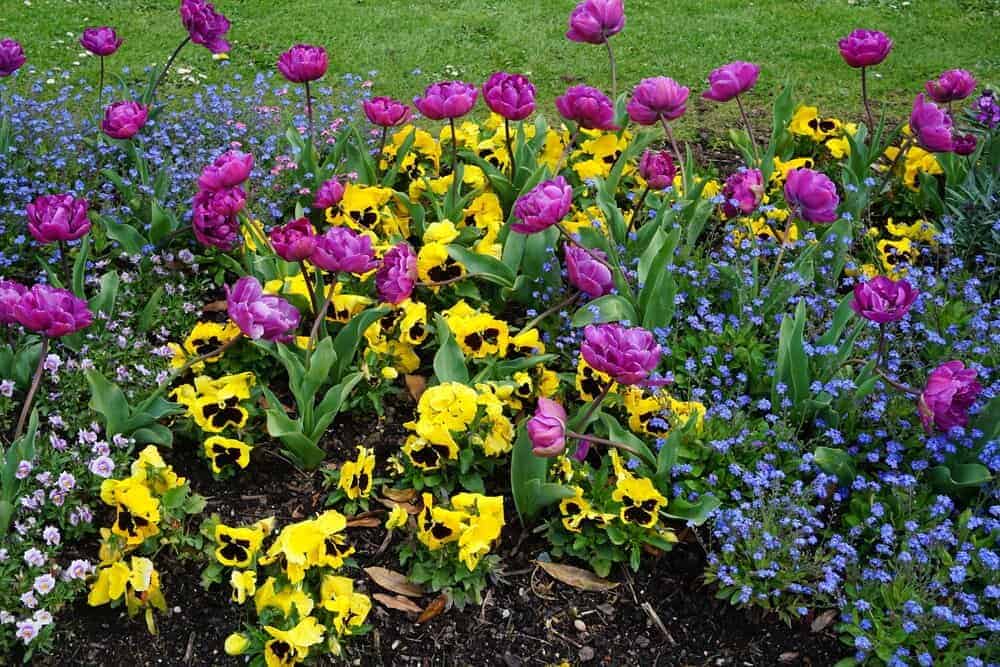
- Pansies: They thrive in the same conditions as tulips and provide a low-growing blanket of colour.
- Forget-me-nots: Their delicate blue flowers mesh well with the larger tulip blooms and help fill in gaps at ground level.
Perfect Perennials for Tulips
When designing a flower bed with tulips, incorporating the right perennials can enhance both aesthetics and garden health. Perennials offer lasting structure and are the ideal partners for these iconic spring bulbs. Here are some perennial plants that make excellent companions for tulips:
- Narcissus (Daffodils): These are hardy and cheerful, blooming vividly in early spring alongside tulips. They are available in delightful shades of yellow and complement tulips in various colours. I always think they make the start of the blooming season!
- Creeping Phlox: It creates a striking carpet effect with its masses of flowers. The creeping habit is especially attractive in raised beds, where it can cascade over edges.
- Arabis (Rock Cress): This low-growing perennial features a profusion of flowers in spring and can tolerate dry conditions, making it a great low-maintenance option.
- Aubrieta: Known for its drought resistance, this flowering groundcover provides a vibrant display that contrasts well with the upright form of tulip blooms.
- Crocus: Often blooming even before tulips, crocuses add variety and extend the flowering season of the bed with an early burst of colors.
- Muscari (Grape Hyacinth): With its conical clusters of blue flowers, grape hyacinth pairs beautifully with tulips and fills the mid-spring garden with colour. They are the perfect spring-blooming bulbs and early bloomers accompaniment.
For those who value foliage as much as flowers, Catmint (Nepeta) serves as an excellent background with its grey-green leaves and lavender flowers that bloom later in the season.
Here’s a quick reference table for tulip companion perennials:
| Perennial Plant | Flower Colour | Bloom Time | Benefits |
|---|---|---|---|
| Narcissus | Yellow | Early Spring | Hardy and cheerful |
| Creeping Phlox | Various | Spring | Ground cover, cascading effect |
| Arabis | White, Pink | Early Spring | Drought-tolerant, low maintenance |
| Aubrieta | Purple, Blue | Spring | Vibrant, contrasting display |
| Crocus | Varied | Early Spring | Early bloomer |
| Muscari | Blue | Mid-Spring | Colourful complement to tulips |
| Catmint | Lavender | Late Spring | Foliage interest, pest repellent |
By choosing these companions, one can create a diverse and resilient flower bed that boasts a succession of blooms and robust perennial plants. They not only bring out the best in tulips but also contribute to a vibrant and healthy garden throughout the season.

Annuals to Accentuate Tulips
Gardeners often seek to adorn their tulip displays with annuals that enhance the beauty of these spring favourites. Forget-me-nots (Myosotis sylvatica) with their sky-blue flowers are a traditional choice. They bloom in early spring alongside tulips and create a delightful contrast.
For an eye-catching, star-shaped flower, borage (Borago officinalis) presents a stunning option. Typically found in shades of blue and purple, borage flowers contribute both form and hue to the garden. These flowers attract beneficial pollinators, making them dual-purpose companions for tulips.
Pansies offer a diverse palette, echoing nearly every colour of the rainbow. Their early blooming period complements the tulip’s season. When planted together, the broad-faced pansies can provide a continuous swathe of colour, outlasting the tulip’s shorter bloom time.
Here’s a quick reference for annuals to plant with tulips:
| Annual Plant | Notable colours | Bloom Period |
|---|---|---|
| Forget-Me-Nots | Sky-blue | Early spring |
| Borage | Blue, Purple | Spring to summer |
| Pansies | Varied | Early spring |
Gardeners can create a harmonious display by pairing these annuals with tulips. They should consider the full-grown size of their companion plants and the mature spread of tulips to ensure each plant has adequate space. Avoiding overcrowding will help maintain plant health and showcase the beauty of each species.
Planting and Timing Strategies
When planning a garden, the gardener must consider not just what plants to pair together but also when each will display its finest. The artistry of combining tulip companion plants lies in the careful orchestration of planting and timing to ensure a continuous and complementary display throughout the blossoming seasons.

Photo by Anya Chernik on Unsplash
Layered Planting
In layered planting, one takes advantage of the different heights and bloom times of plants. Gardeners often intermingle bulbs of tulips with other flowering bulbs and perennials, which can provide a variable display of colours and shapes. For instance, daffodils often bloom in early spring, right alongside tulips. By arranging these bulbs in layers—tulips beneath and daffodils above—one ensures a dimension of height and a succession of blooms in the same space.
| Layer | Plant | Bloom Time |
|---|---|---|
| Top | Daffodils | Early Spring |
| Bottom | Tulips | Late Spring |
Successional Blooming
Successional blooming refers to planting a variety of species that flower at different times, creating a continuous showcase as one plant’s bloom fades and another begins. A gardener could coordinate early summer flowers to follow tulip blooms, which predominantly adorn the garden in late spring. Creeping phlox, for example, can extend the bloom spectacle as they can drape over edges with masses of flowers when tulips begin to wane.
Annuals and perennials could be selected for their flower shapes and sizes to complement the bold cups of tulip flowers, ensuring that as one bloom retreats, another takes centre stage.
- Late Spring: Tulips
- Early Summer: Annuals and Perennials (Creeping Phlox, etc.)
Tulips in the Perennial Garden
In any perennial garden, tulips are a splendid choice to create a vibrant burst of colour in the early spring. They bring a joyful symphony of reds, pinks, yellows, and purples to the landscape. When planting tulips, gardeners often consider companion plants to complement these spring beauties.
Great companion plants serve multiple purposes; they can cover unsightly gaps or fading foliage as the tulip blooms begin to die back. As tulips are perennials, they return year after year, making it essential to plan for their life cycle alongside their companions.
- Lush foliage is provided by plants like Arabis and Aubrieta, which double as flowering groundcovers. These companions help maintain a green, filled-out look even after the tulips have completed their show.
- To address the concern of fading foliage, gardeners can employ companions such as Catmint, with its pleasant fragrance and purple blossoms, to draw attention away from the dying tulip leaves.
Here is a short list of compatible plants that work well with tulips:
| Companion Plant | Benefits |
|---|---|
| Arabis | Ground cover, early bloomer |
| Aubrieta | Adds colour, ground cover |
| Grape Hyacinth | Complementary colour, texture |
| Daffodil | Sequential blooming |
| Catmint (Catnip) | Fragrance, aesthetic backdrop |
These companions not only fill the garden with diverse textures and hues but also help tulips to stand out, enhancing the overall visual appeal of the perennial garden. When one selects companions, it is advisable to consider their water and fertilisation needs to ensure they are compatible with those of tulips, avoiding over-watering or feeding that could be detrimental to the bulbs.

Caring for Your Tulip Companions
When planting companion plants for tulips, it’s crucial to consider the types of foliage plants that coexist well with these spring beauties. They can share space and resources without competing excessively. You should look for plants that thrive in well-drained soil, as tulips are susceptible to rot if waterlogged.
For the best growth, ensure the soil is rich and amend it with compost or a slow-release fertiliser. These nutrients will benefit both the tulips and their companions. Since tulips are usually planted in early fall, one might select companion plants that can either be sown at a similar time or are perennials returning each season.
Proper care for these companions involves regular watering, especially in periods of drought, and deadheading as needed to encourage further blooming and prevent self-seeding if undesired.
Here are a few tips for specific companion plant care:
- Daffodils: Like tulips, they require minimal care once established. Avoid watering excessively post-bloom.
- Catmint: Drought-tolerant once established, requires trimming after the first bloom to encourage a second flush of flowers.
- Creeping Phlox: Keep soil moist because of its shallow roots, and trim back after flowering to maintain a neat form.
In the growing season, regularly inspect plants for signs of pests or diseases as healthy foliage plants can deter such problems from affecting the tulips. Companion planting creates not only a visually appealing garden but also a harmonious environment where plants support each other’s growth.
Popular Tulip Companions
When planting tulips, gardeners often seek out companion plants to enhance visual appeal and extend the flowering season. Here are some well-suited companions for tulips:
- Grape Hyacinths: With their charming blue flowers, grape hyacinths complement tulips well. They bloom in early spring and the contrast of their cobalt blue blooms alongside the varied hues of tulips creates a captivating display.
- Coral Bells: Known as Heuchera, coral bells offer foliage in various shades and delicate flowers. Their leaves provide a colourful backdrop to tulip blooms. Hardy and easy to grow, they suit a range of garden settings.
- Darwin Hybrids: These tulips are themselves a robust choice with large blooms. They are ideal for creating bold swathes of colour and work well with other spring bloomers.
- Hardy Geraniums: Often referred to as cranesbill, these hardy geraniums grace gardens with their foliage and flowers, which can camouflage dying tulip foliage as the season progresses.
- Russian Sage: With its tall, airy spikes of lavender-blue flowers, Perovskia atriplicifolia or Russian sage, adds both height and a contrasting texture to tulip arrangements.
Here’s a quick reference to understand why each companion works well with tulips:
| Companion Plant | Benefit |
|---|---|
| Grape Hyacinths | Early bloom, vibrant colour contrast |
| Coral Bells | Varied foliage colour, texture |
| Darwin Hybrids | Large, showy companion tulips |
| Hardy Geraniums | Long-lasting coverage, foliage interest |
| Russian Sage | Height, airy texture |
These companions ensure that your tulip display is a seasonal burst and an evolving tapestry that shifts and changes as spring moves into summer.
I hope you liked my post on Companion Plants for Tulips, it’s been great researching and trying out all these ideas! I hope you have the same success. I’m always happy to hear your ideas in the comments below.
Happy Planting!

Frequently Asked Questions
Pairing tulips with the right companions can greatly enhance the vibrancy and health of your garden. These FAQs should help gardeners select plants that will flourish alongside their tulips, taking colour, blooming time, and care requirements into account.
What are the best flowering plants to pair with tulips in garden beds?
Flowering plants like pansies, violas, and grape hyacinths complement tulips well. They not only match the spring bloom time but also provide a varied palette of colours and textures to garden beds.
Which perennials make good companions for tulips?
Perennial plants such as daffodils and creeping phlox are excellent companions for tulips. They can provide lasting structure to a garden bed and coordinate well with the bloom time of tulips.
Can you suggest some vegetables that grow well with tulip plants?
Vegetable companions for tulips might include leafy greens like lettuce or spinach, which have short stature and don’t compete for the same space as the tulip blooms. These can be planted around tulips to create a functional and attractive display.
How can I achieve continuous summer blooms in a bed where tulips are planted?
After tulips have finished blooming, plants like daylilies or salvia can take over, offering continuous colour in the garden bed. Choose summer-blooming perennials with staggered bloom times to ensure colour throughout the season.
What are some planting strategies for combining bulbs and perennials?
Strategic layering can be employed when combining bulbs and perennials. Planting tulip bulbs deeper and covering them with lower-growing perennials or ground covers can create a multi-tiered effect as the plants mature and bloom.
Which plants are suitable to cover up the fading foliage of tulips post-bloom?
Creeping plants such as forget-me-nots or early summer ground covers can conceal the fading foliage of tulips as they die back. These plants also provide additional colour and texture to the garden as the season progresses.