
Finding the right manufacturing partner can determine whether a collection launches on time, at the right level of quality, and with the production relationship a brand actually needs. The apparel factories below serve fashion brands seeking quality production across a range of minimums, specialties, and service models, each with a distinct approach to how they work with clients.
1. The Evans Group (TEG)
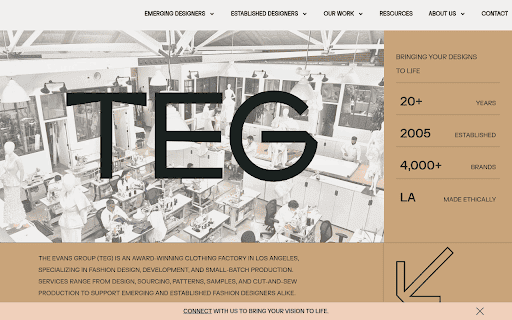
What it does: The Evans Group (TEG) is a vertically integrated apparel development and manufacturing company based in the Arts District of downtown Los Angeles. Founded in 2005 by Jennifer Evans, TEG brings design, fabric and trim sourcing, pattern making, sample development, and cut-and-sew production together under one roof. The company has worked with nearly 4,000 designer brands since its founding and is listed in the CFDA Production Directory.
Where it shines: TEG’s process centers on master patternmakers and dedicated sewing teams who stay with a project from development through production. In-process quality checkpoints run throughout the build, and a third-party final inspection happens before delivery. The company handles complex garment construction across silks, leather, complex knits, beading, couture, bridal, and deconstructed builds. Domestic production starts at 10 pieces per style at the studio level, with standard turnaround running 4 to 8 weeks. Rush production (1 to 4 weeks) is available on qualifying projects. Founder mentorship with Jennifer Evans is also offered for brands that want direct strategic guidance.
2. Los Angeles Apparel
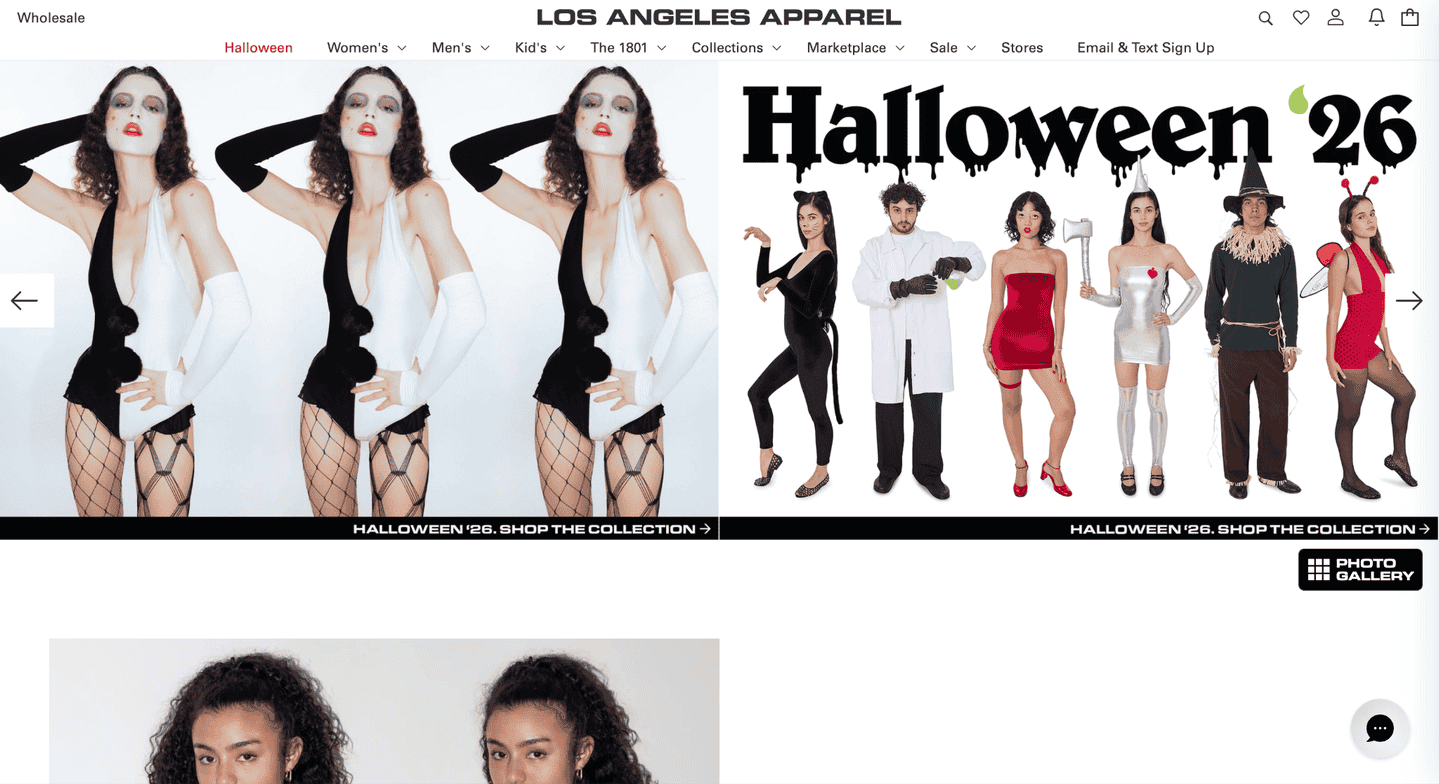
What it does: Los Angeles Apparel is a vertically integrated basics manufacturer and distributor headquartered in South-Central Los Angeles. Founded in 2016 by Dov Charney, the company employs over 1,500 people and produces a broad range of essentials, activewear, and intimates for men, women, and children, including t-shirts, sweatshirts, swimwear, bodysuits, and garment-dyed collections. Products are sold through their e-commerce site and a wholesale channel, with retail locations in Los Angeles and a newer store in New York City.
Where it shines: Domestic manufacturing and worker compensation are central to how this company operates. Garment workers can earn up to $35 an hour with productivity bonuses. That commitment to in-house, US-based production gives brands sourcing through Los Angeles Apparel a documented domestic-manufacturing story. Los Angeles Apparel is primarily a basics manufacturer, so brands looking for custom development, pattern making, or sample services may find the offering narrower than a full-service production house.
3. American Apparel
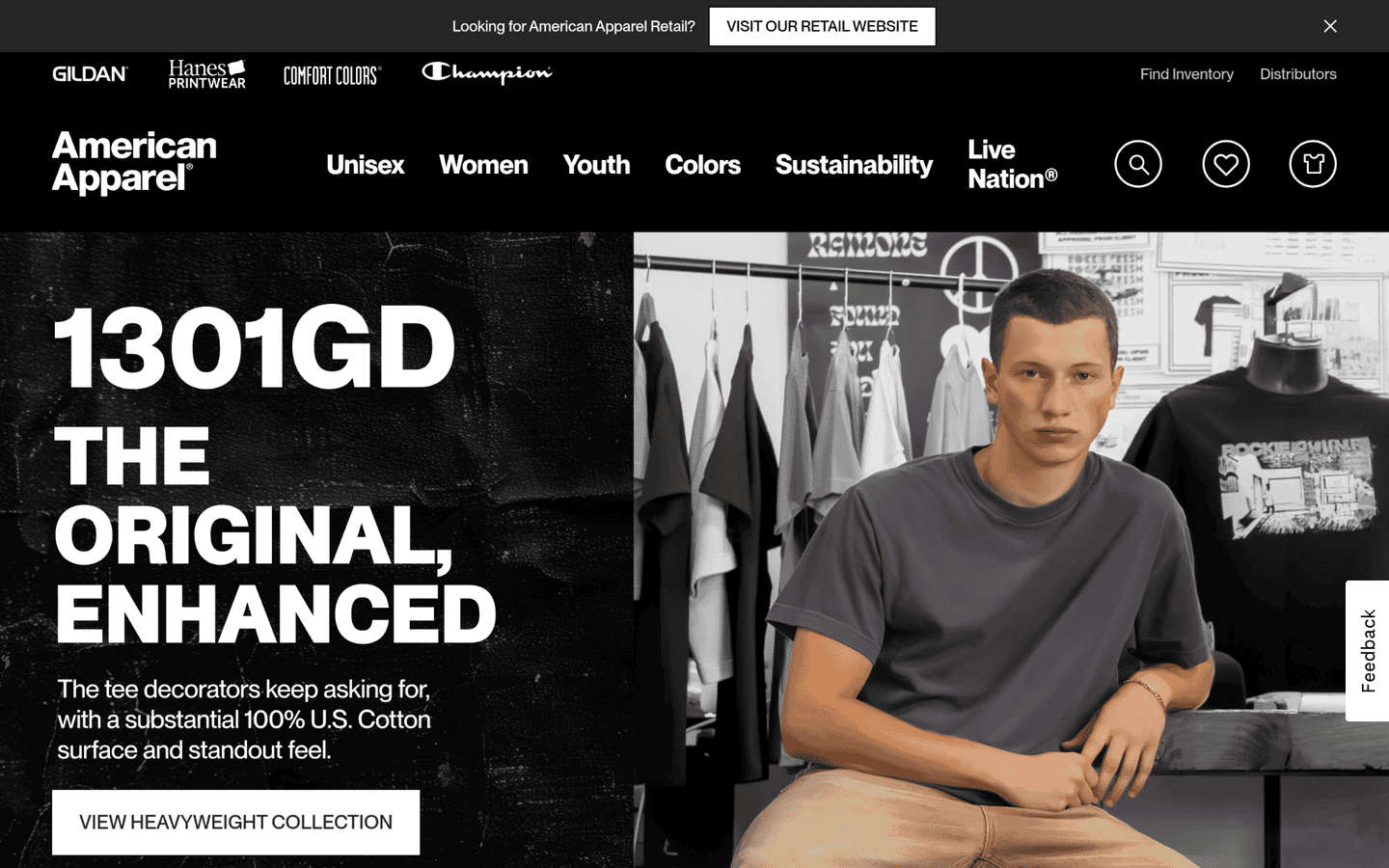
What it does: American Apparel is a Los Angeles-based clothing brand originally founded in 1989 by Dov Charney. Gildan Activewear acquired the brand in early 2017 and relaunched it as an e-commerce-focused basics label. The company markets itself as ethically made and sweatshop-free, with approximately 10,000 employees across six continents. Most of its apparel is now manufactured in Honduras and Nicaragua. In August 2025, Gildan named S&S Activewear as the exclusive US wholesale distributor for American Apparel in the imprintables market, effective late 2025.
Where it shines: American Apparel built its brand around the claim “sweatshop-free” in the garment industry. That brand equity around ethical production continues to carry weight with wholesale buyers and imprintable-market clients who value that positioning. The brand is no longer a vertically integrated US manufacturer in the way it once was, and brands seeking Made-in-USA production won’t find that here, as the manufacturing footprint shifted after the Gildan acquisition.
4. Apparel Factory
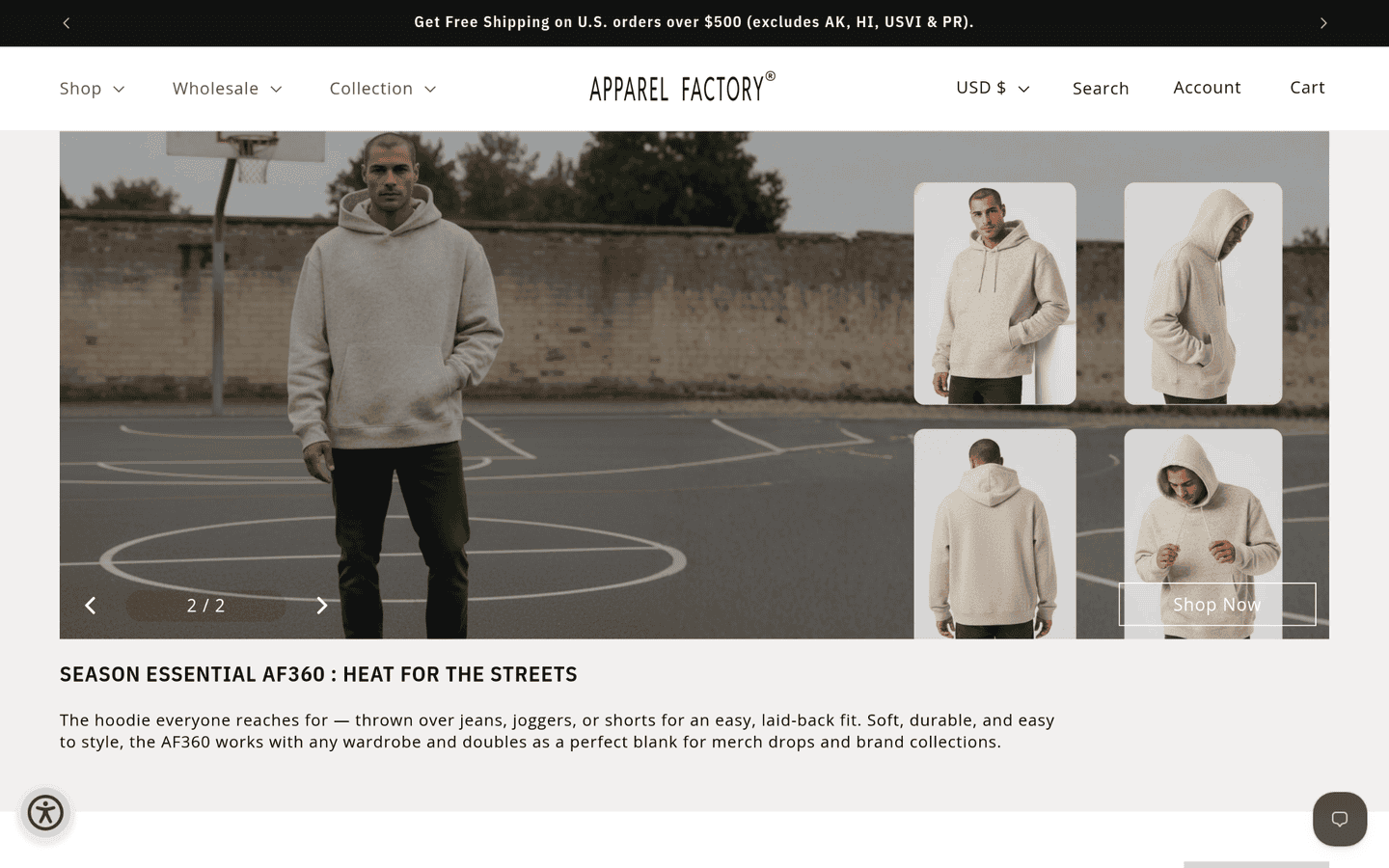
What it does: Apparel Factory is a Los Angeles-based manufacturer and wholesale supplier of blank and custom apparel, located at 226 W 37th Place in Los Angeles. Their production process covers pattern design, fabric sourcing, cutting, printing and embroidery application, sewing, and a final quality inspection. Product categories include t-shirts, polos, tanks, sweatshirts, women’s, and youth apparel, with wholesale and custom options available.
Where it shines: The company accommodates bulk orders of 100 or more items and handles both embroidered and digitally printed workwear, making it a practical option for corporate clients and brands that need branded uniforms or logoed basics. Free shipping applies to California orders over $350 and US orders over $500 (excluding Hawaii, Puerto Rico, and Alaska). The phone and email contact lines are clearly published for wholesale inquiries. Founding details, team size, and broader production capacity figures aren’t publicly documented on their site, so brands with complex development needs may want to contact them directly to confirm capabilities before committing.
5. Affix Apparel
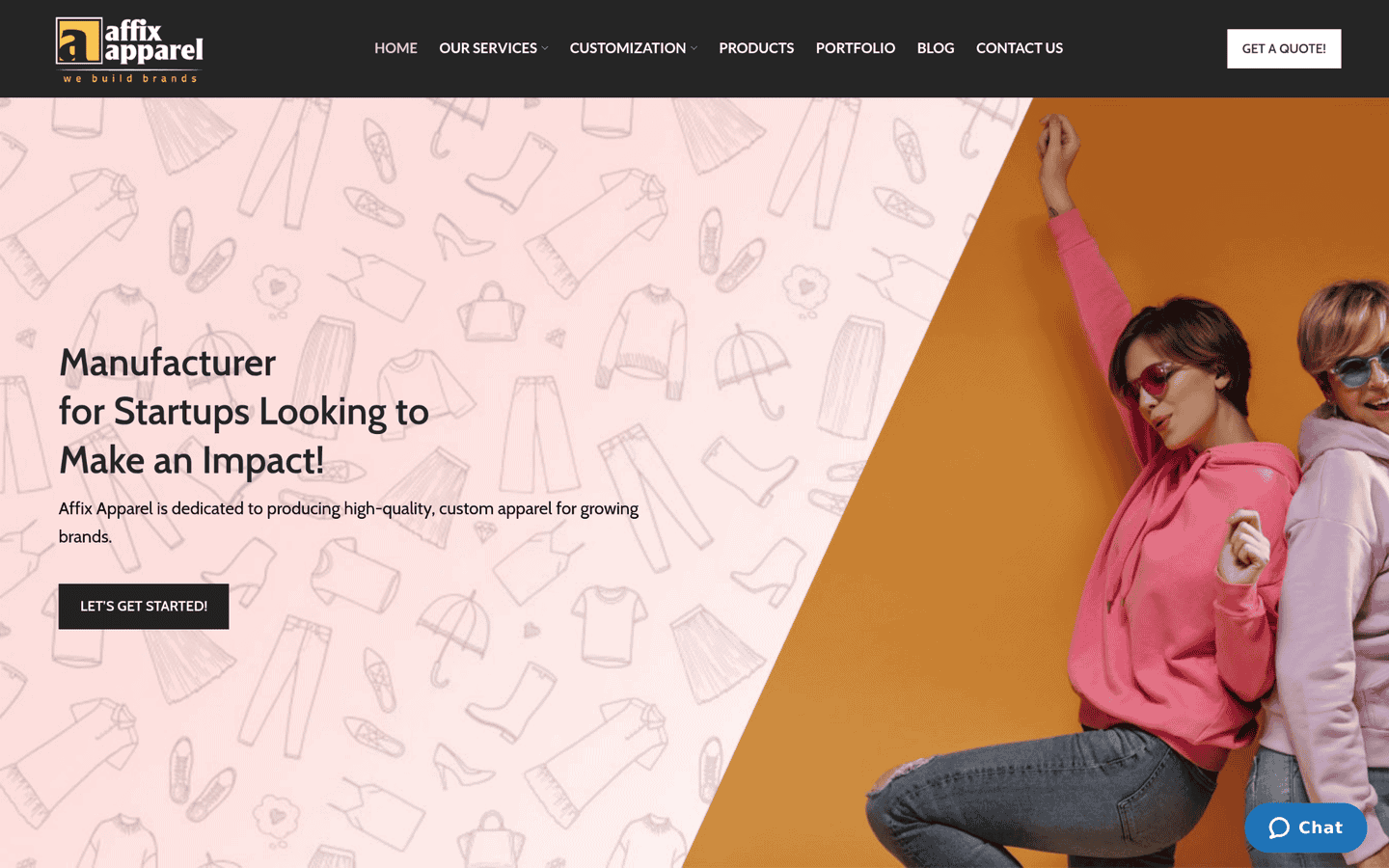
What it does: Affix Apparel is a custom clothing manufacturer based at 7190 W Sunset Blvd in Los Angeles, specializing in private-label production for startups and emerging retailers. Their services include cut-and-sew manufacturing, screen printing, all-over sublimation, custom embroidery, and apparel packaging. The product range spans t-shirts, jeans, leggings, hoodies, bras, hats, underwear, socks, leather goods, sports apparel, baby clothing, swimwear, and bed and bath linens.
Where it shines: The minimum order quantity starts at 50 pieces, which positions Affix well for small brands that aren’t ready for factory-scale minimums. Their four-step process (consultation, design mockups, sample production, and full-scale manufacturing) gives clients a clear path from idea to finished garment. The company provides guidance through material selection and design finalization, which is helpful for founders who don’t have a full technical team in place. Specific pricing, founding details, and client case studies aren’t published publicly, so brands should request a quote early to confirm whether the production model fits their budget and timeline.
What to consider before you commit to a factory
Choosing among apparel factories for fashion brands seeking quality production comes down to a few practical questions, and the answers vary more than most founders expect.
- Minimums and run size matter immediately. Some factories won’t touch an order under 500 units. Others, like studio-level operations, start at 10 to 50 pieces per style. Matching your planned run size to what a factory actually produces at avoids a lot of early friction.
- Service scope is the second filter. A manufacturer that only does cut-and-sew production is a different partner than one that also handles pattern making, sourcing, and sample development. Brands that arrive without a tech pack need a factory willing to work upstream. Not every operation does.
- Production origin affects both cost and marketing. Domestic US manufacturing typically carries higher per-unit costs but shorter lead times and a cleaner supply-chain story. Offshore production can support volume at lower cost, but checking for defects and communication require more active management. “Made in USA” is a claim that has legal requirements, so it can’t be applied loosely.
So talk to multiple factories before deciding. Request samples where you can, confirm lead times in writing, and ask how quality issues are handled mid-production, not just at final inspection.
Bottom Line
What a brand actually needs right now should drive the factory search. High-volume basics labels will end up with completely different partners than emerging designers producing intricate, small-batch collections. Los Angeles domestic manufacturing brings genuine benefits, easier quality checks, clearer communication, and a made-in-USA story that resonates with buyers. But finding the shop whose minimums, production model, and development support genuinely fit your project takes real work. Use the entries above as a starting point, verify capabilities directly with each factory, and prioritize the partners whose finished work reflects the standard your product demands.