
Getting the caravan ready for a trip usually means checking the tyres, packing the essentials and making sure everything is working. But there’s one thing that’s easy to overlook until you arrive on site – the leisure battery. A few simple checks before you leave can save a lot of hassle once your holiday begins.
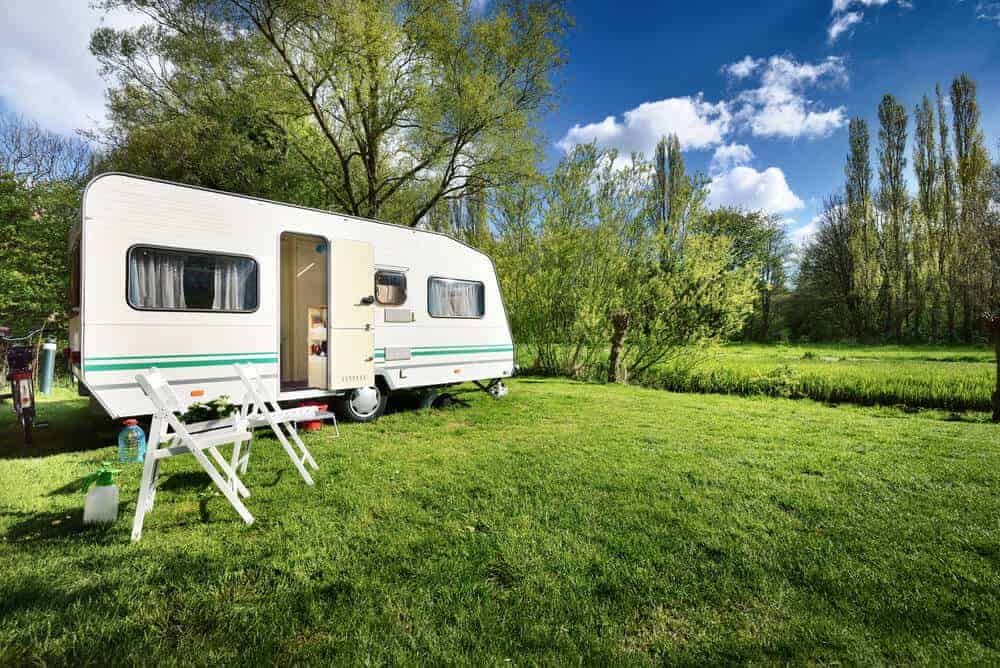
Getting the caravan ready is part of the holiday
For many families, getting the caravan ready is when the holiday starts to feel real. Bedding comes out of storage, cupboards get filled, outdoor chairs are packed and somebody inevitably has to work out where everything was put after the last trip.
There are also the less exciting jobs. Tyre pressures need checking, gas bottles need looking at and anything that has been sitting unused for a while needs making sure it still works.
One thing that deserves to be on that list is the leisure battery.
It is easy to forget about because it quietly sits there doing its job. But once you arrive at a campsite, particularly if you are not constantly connected to an electric hook-up, you soon notice when the battery is not performing as it should.
Your leisure battery has a different job to a car battery
Although they may look similar, a leisure battery and a normal car starter battery are designed for different jobs.
A starter battery needs to provide a large burst of power for a short period to start an engine. A leisure battery is designed to provide power more steadily over a longer period.
In a caravan, that can mean supplying things such as lighting, water pumps and other 12V equipment.
That is why simply fitting any battery that happens to fit the space is not a great idea. The correct battery needs to suit both the caravan and the way you intend to use it.
Give it a proper charge before you leave
If the caravan has been standing for weeks or months, do not assume the battery is ready just because everything worked when you last used it.
Batteries gradually lose charge while they are stored, and additional equipment connected to the electrical system can increase that drain.
Charge the battery properly before the trip using a charger suitable for its battery type. It is far better to discover a charging problem at home than after you have arrived at the campsite.
If the battery charges but quickly loses power again, that can also be a sign that it is reaching the end of its useful life.
Check more than just the charge level
While you are looking at the battery, give the rest of it a quick inspection too.
Check that the terminals and connections are secure and look for obvious corrosion or damage. The battery should also be properly secured in its compartment.
If there is swelling, cracking, leaking or any other physical damage, do not continue using it.
These checks only take a few minutes and can identify problems that might otherwise be missed until you are away from home.
Think about how your family actually uses the caravan
There is no single leisure battery that is automatically right for every caravan owner.
A family that spends most of its holidays on campsites with electric hook-up may place very different demands on its battery from somebody who regularly stays away from mains electricity.
Think about what you normally power, how long you expect to be away and how frequently you will have an opportunity to recharge.
Capacity is usually shown in amp-hours (Ah). In simple terms, a higher Ah figure means the battery can store more energy, but bigger is not automatically better. Physical dimensions, weight, charging arrangements and the caravan manufacturer’s requirements all need to be considered.
If your old battery has performed well, its specifications are a useful starting point when choosing a replacement.
AGM, conventional and other battery types
Shopping for a replacement can become confusing once different battery technologies start appearing.
Depending on the caravan and charging system, you may come across conventional lead-acid batteries as well as AGM and other deep-cycle options.
They have different characteristics and charging requirements, so it is worth checking what your caravan and charger are designed to work with rather than choosing solely on price or advertised capacity.
If you are replacing an existing battery and are unsure what you need, the information printed on the old battery can help identify the correct specification.
Battery2U stocks leisure batteries for caravans, motorhomes and campervans in a range of sizes and capacities, making it easier to compare suitable replacement options before a trip.
Don’t wait until the morning you are leaving
Anyone who has travelled with children knows there is already enough happening on departure morning.
Finding that the caravan battery is flat while the car is packed and everyone is waiting to leave is one problem you can avoid.
A week or so before travelling, connect the battery, charge it and check that the caravan’s 12V equipment is operating normally.
Doing it early gives you time to investigate if something is wrong instead of having to find a replacement at the last minute.
Look after the battery between trips too
Battery care does not stop when the holiday finishes.
If the caravan will not be used for a long period, follow the battery and caravan manufacturer’s recommendations for storage and charging. Avoid leaving a battery sitting in a heavily discharged condition for extended periods.
It is also worth checking it occasionally during the winter rather than discovering in spring that a battery which worked perfectly the previous summer will no longer hold a charge.
A little maintenance between trips can make the next getaway much easier.
One small check that can prevent a big inconvenience
Nobody books a caravan holiday because they are excited about checking a battery.
You want to get away, spend time together and enjoy wherever you are visiting.
That is exactly why checking the leisure battery beforehand makes sense.
Add it to the same pre-holiday list as the tyres, gas, water, towing equipment and everything else you check before setting off. Make sure it is charged, secure and suitable for the way you use your caravan.
Then, when it is finally time to leave, the leisure battery can go back to being something you barely have to think about.