
More and more homeowners in the UK are calling for bigger living spaces in homes. Changes to planning regulations can help address the increasing demand for housing. The demand for housing is being driven by several factors. Homeowners are opting to make more space rather than buy a bigger home. But do they choose a purpose-built working space like an insulated garden office? Would they choose a home extension instead? This analysis reviews the costs and feasibility of both options. It will show you the initial costs, the running costs, space efficiency, planning permission and ROI.

Upfront Cost Breakdown: Garden Office vs. Extension
People often find that they can add extra space with insulated garden offices for less than a home extension. It is considerably cheaper per square meter for a garden office which makes it appealing to many.
The amount you’ll pay to install a high-quality insulated garden office in 2026 depends on its size and specification. The cost of a 3m x 3m (9m²) office is usually around £20,000–£25,000. For a 5m x 4m (20m²) bespoke office, the price can rise to between £35,000–£80,000, depending on the quality. The best cost bracket for quality year-round offices is £25,000–£45,000. On average, this translates to between £1,000 and £5,000 per square metre.
In the UK, traditional extensions like single-storey types range from £1,500–£3,300 per m². Overall projects for 20–30m² will cost £20,000–£99,000+, excluding VAT. Most rear extensions cost £66,000–£99,000 plus VAT for a standard 30m².
You will also have hidden charges for either option. This will include groundwork, connections (electricity, water, drainage), and interior finishes beyond the basic shell. An example of 15m² of usable space shows the disparity: a 15m² garden office costs typically £15,000 to £30,000; a 15m² home extension costs £30,000 to £100,000+.
Planning Permission and Build Time Comparison
There is a big difference in how long it takes to build a garden office versus an extension. Garden offices are generally ready to use soon after installation. You will most likely require planning permission and building regulations for an extension.
The planning rules differ, so it is best to check with your local planning department.
However, outbuildings must not cover more than half of the garden area. Also, you can never use outbuildings as self-contained residential accommodation. Height restrictions also apply, typically limiting outbuildings to 2.5m in height.
Most home extensions do not require planning permission; however, permission may be needed if the project significantly alters the house.
Space Efficiency and Usability Analysis
Extensions and garden offices provide you with extra space, but how they create that space and what they can offer you is rather different.
An extension of your property helps add space to your home. Such an addition will fit in with the layout of your property and create a room or increase the size of a living space. This can improve the flow of your property. However, building an extension will cause construction disruption to your home.
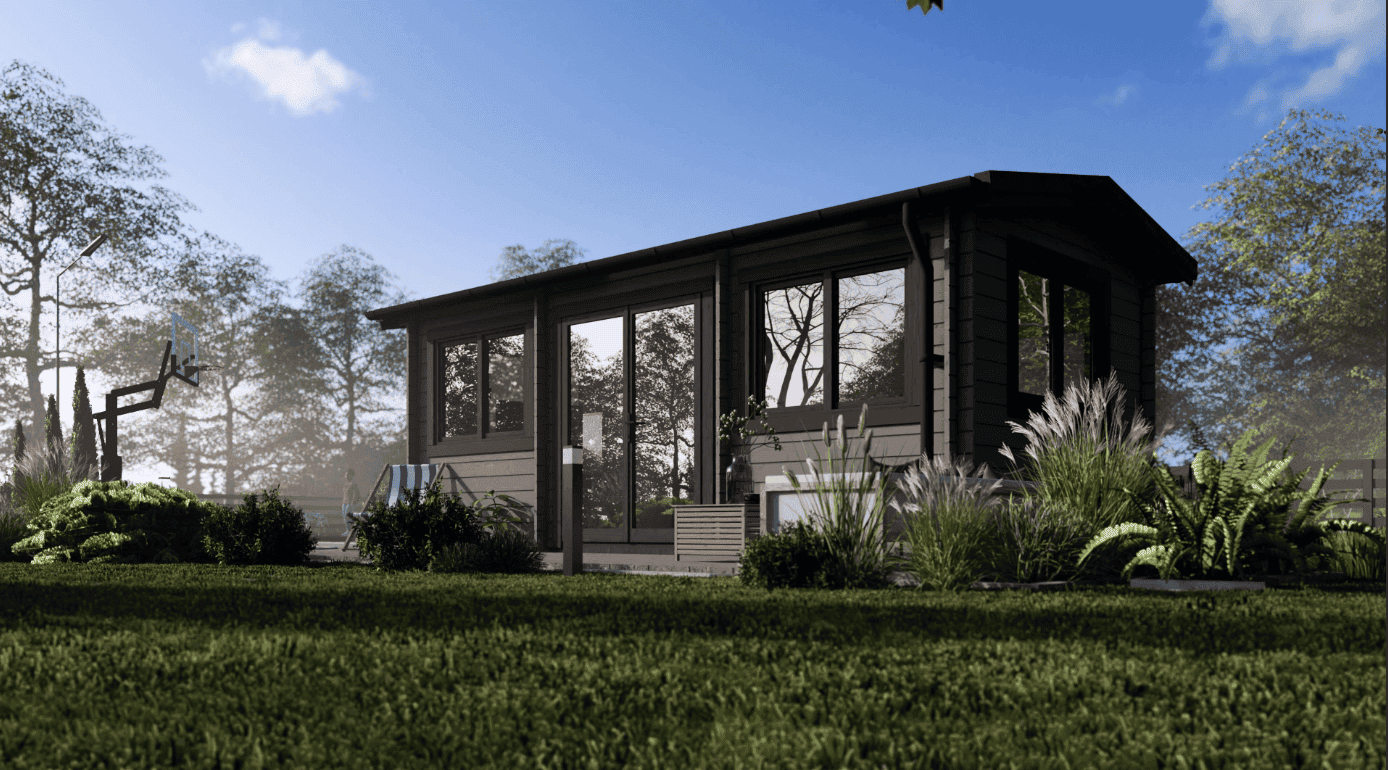
A garden office provides you with a designated area, away from the distractions of home. Working outside the main house can improve focus, while a separate entrance gives separation from home life.
Thanks to modern design and construction standards, this separation does not mean the office will be cold during winter.
Standard garden offices are designed with the following features to ensure comfortable year-round use:
- Well-insulated walls and roofs
- Double glazing throughout the building
- Optional heating systems
The ability to heat the building allows a garden office to be used all year.
Ongoing Costs: Heating, Maintenance, and Property Taxes
Whether you lease or buy your property, you will incur building costs in the beginning as well as expenses in using the property such as energy, maintenance, tax, and insurance.
Garden offices tend to be well insulated and usually run on electric heating, which tends to be fairly inexpensive because of the space. The heating for extensions is usually linked to the home’s existing central heating which is designed to heat a larger area.
Garden offices require external treatment every three to five years, costing between £200 and £500. Extensions generally require maintenance less often and repairs can be costlier.
Any extension you build may increase your council tax band if it significantly increases your property’s value. In most cases, a garden office is just a workplace and won’t incur council tax unless it’s used as accommodation.
Extensions can raise the cost of rebuilding. A garden office may need its own structure and contents cover.
Return on Investment and Property Value Impact
It is important to consider return on investment (ROI) when upgrading your home for future resale. Will a garden office do this better than an extension, or vice versa? In this article, we examine how much value an extension can add to your home and which type of extension best suits your needs.
What Is The Value Of An Extension?
A home extension can boost your house’s value by between 10% and 25%. Price depends on the current value of your home and the build quality and overall size of the extension.
Extensions are a great way of increasing the floor area of your home. Whether it is an extra bedroom or a larger kitchen or living room, it increases the living space of your home. Moreover, it also makes your home more attractive to future buyers.
What Is the Value of a Garden Office?
Garden office buildings could also be a worthwhile investment for your property, especially if you use them as a dedicated workspace. A high-quality insulated building that is well lit and heated can add between 5% and 15% to a property’s market value.
Decision Framework: Which Option Suits Your Situation
It can be tough for homeowners to choose between a garden office and a home extension. Although a custom extension may appear to be the best option, and it could well be for some, a garden office could also provide a practical workspace for your needs.
If you can spend around £25,000, think about what matters most to you.
If you want a permanent increase in the footprint of your home, building an extension can raise the value of your property. If you need a quiet workspace separate from the main house, a garden office may be the better choice.
Some homeowners even choose both, starting with a garden office and adding an extension later on. Before deciding, consider the following questions:
- Do I need internal access to the new space?
- Do I need a separate workspace?
- Am I planning to stay in this home for a long time?

Conclusion: Making the Right Choice for Your Property
A house extension is a permanent way to gain more living space that may also significantly increase the value of a property. If you want a bigger kitchen, more bedrooms, or extra family space, extensions are often an excellent choice. However, construction usually costs more, takes longer, and can cause disruption while the extension is being built.
A garden office is a workspace located in your garden that is separate from the main house. They can be installed relatively quickly and often cost much less than a traditional extension. They are perfect for working from home, pursuing creative hobbies, or creating a quiet space away from the distractions of the household.
In the end, whether a garden office or a home extension is the better investment will depend on your priorities, budget, and future plans. Carefully consider the costs, benefits, and intended use of each option before deciding which solution is right for your home.