
A living room can feel slightly off even when you’ve already invested in a sofa you like and a layout that makes sense. The good news is you don’t need new furniture to make a visible difference. Most upgrades that transform a living room come down to three things: light, balance, and the small details that make the space feel intentional.
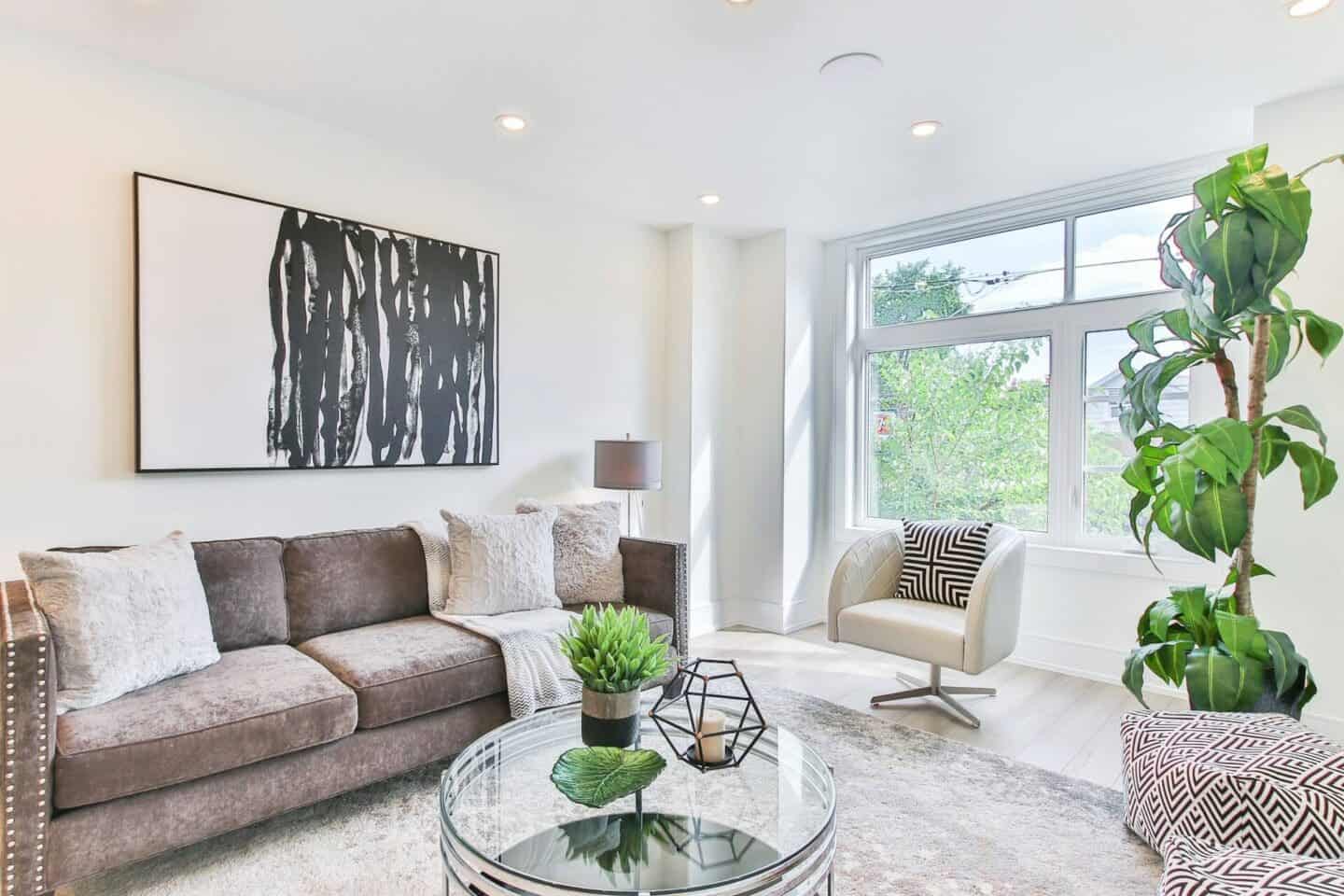
If you focus on a few high-impact changes, you can make your living room look more polished in a weekend, using what you already own and only replacing low-cost basics when it truly adds value.
Start with a quick reset that reveals what’s actually wrong
Before you change anything, do a 10-minute reset.
Clear the coffee table.
Remove items that don’t belong in the living room.
Fold throws, fluff cushions, and straighten anything that’s crooked.
Turn on the lights you normally use in the evening.
Now step back and look for the real issues. Most living rooms feel messy or unfinished for one of these reasons:
Too many small items scattered around.
A “floating” rug that doesn’t anchor the seating area.
Lighting that’s harsh, dim, or uneven.
Walls that are empty or randomly filled.
No clear focal point, so the eye doesn’t know where to rest.
Once you can name the problem, the fix becomes straightforward.
Make lighting your first upgrade, because it changes everything
Lighting is the fastest way to make a space feel more expensive without buying anything big.
Aim for three layers:
Ambient light: your main ceiling light, if you use it.
Task light: a lamp near the sofa for reading or cozy evenings.
Accent light: a smaller lamp, wall light, or even warm string lighting to soften corners.
If you only use one overhead light, the room often looks flat and unwelcoming. Two lamps in different corners can make the whole living room feel calmer and more balanced.
Quick win: switch to warm bulbs and keep the brightness consistent across lamps so the room looks intentional, not patchy.
Rebalance the room by controlling visual noise
A living room looks better when the eye sees “groups,” not clutter.
Use the rule of threes:
Group decor in sets of 3 (or 5) with different heights.
Keep surfaces at 60–70% empty.
Create one clear “moment” per surface, not ten mini objects everywhere.
For example, instead of six small items on a sideboard, do one taller object, one medium, one small. The room immediately looks styled, even if the objects themselves are simple.
Common mistake: spreading matching items evenly around the room. It can make the space feel staged. Instead, create a few stronger groupings and let the rest breathe.
Fix the rug situation without buying a new rug
Rugs are often the reason a living room feels off.
Two common issues:
The rug is too small for the seating area.
The rug is placed in a way that doesn’t connect the furniture.
If the rug is small, try sliding it so the front legs of the sofa and chairs sit on it. This anchors the layout and makes the room feel cohesive. If your rug truly can’t work, layering can help: place a larger neutral base rug under your current one to create the right proportions without replacing the rug you already own.
Improve the sofa styling using what you have
You don’t need new cushions. You need better contrast and structure.
Try this:
Use an odd number of cushions.
Mix textures, not just colors (linen, knit, velvet, woven).
Add one throw with visible texture and drape it casually.
If everything matches perfectly, the sofa can look flat. If everything is random, it looks messy. The sweet spot is one consistent color family with a few contrast moments.
Practical tip: when in doubt, reduce. A slightly simpler sofa styling usually looks more elevated.
Make your wall look intentional, even if you keep it simple
Blank walls make a room feel unfinished, but random art placement makes it worse.
Pick one strategy:
One large piece of art above the sofa.
A centered gallery wall with consistent spacing.
A long shelf with a few larger pieces leaning, not many small frames.
A helpful rule is to keep the width of your wall art around two-thirds of the sofa width. That’s usually the proportion that looks balanced.
If you’re not sure what style fits your home, browse a few directions first and commit to one. That’s where Interior design inspiration can help you narrow down the vibe before you start hanging things.
Add one “anchor” object to make the room feel designed
This isn’t new furniture. It’s a focal point.
Examples:
A large plant (real or realistic faux).
A tall floor lamp.
A big mirror that bounces light.
A statement piece on the coffee table (a tray, stack of books, or a bowl).
The goal is to give the eye something to land on. Once you have an anchor, the rest of the room looks more cohesive with less effort.
Tidy the coffee table in a way that still feels lived-in
A styled coffee table shouldn’t be precious. It should be practical.
Use a simple formula:
One tray to contain small items.
One vertical element (a candle, vase, or small lamp).
One stack (books, a box, or a basket).
This keeps things functional, makes cleaning faster, and stops the table from becoming a clutter magnet.
Solve the “random stuff has no home” problem
Many living rooms look messy because everyday items don’t have a default home.
Create a landing system:
A basket for throws and pillows you actually use.
A small box for remotes and chargers.
A shelf or drawer for board games, cables, and miscellaneous items.
When everything has a home, the room looks better even when you’re busy, because tidying becomes a 2-minute habit instead of a full reset.
Use curtains strategically to upgrade the whole room
Curtains are one of the biggest visual upgrades that don’t require furniture changes.
If you have curtains, try hanging them higher and wider so the window looks larger and the ceiling feels taller. If you don’t have curtains, adding simple, well-hung panels can instantly soften a room and make it feel more finished.
A quick checklist for a better-looking living room
If you want a fast, reliable plan:
- Add layered lighting (at least two lamps).
- Anchor the seating area with a better rug placement.
- Reduce clutter by grouping decor and leaving negative space.
- Create one focal point (plant, mirror, lamp, or art).
- Set a “default home” for everyday items.
If you want more styling directions and practical ideas you can adapt to your own space, you can use Home decor ideas by Nestify Living as a hub and follow the inspiration that matches your room and your budget.
A living room looks expensive when it feels calm, balanced, and intentional. You don’t get there by constantly replacing furniture. You get there by improving light, controlling visual noise, and making a few smart styling choices that work with the home you already have.