
Facial aging doesn’t happen all at once. It shows up quietly – softening around the jawline, folds that linger longer, and skin that no longer sits where it used to. For many people in Newport Beach and beyond, these changes feel subtle at first. But over time, they start looking for solutions that go beyond skincare or injectables. That’s usually when facelift options enter the conversation.
What often surprises patients is that not all facelifts work the same way. Terms like “traditional facelift” and “deep plane facelift” sound similar, yet they approach facial aging very differently. Understanding these differences isn’t about choosing the most advanced option by default – it’s about knowing what suits your face, your goals, and your expectations.
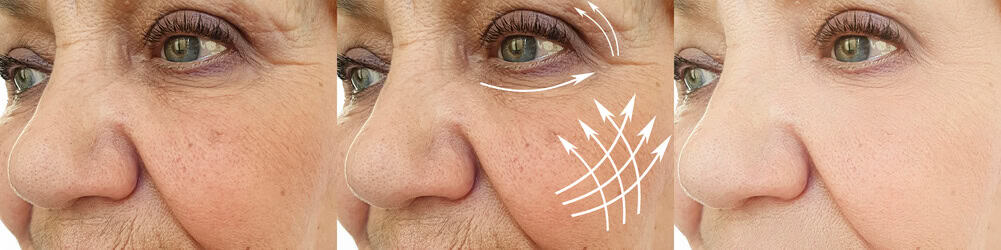
In this article, we’ll break down how a deep plane facelift differs from a traditional facelift in a way that’s clear, practical, and easy to understand.
A. Understanding Where the Real Difference Begins: Depth of Correction
The biggest difference between a traditional facelift and a deep plane facelift lies beneath the skin. While both aim to address sagging and aging, they work at different structural levels of the face.
A traditional facelift typically focuses on tightening the skin and repositioning superficial tissues. It improves visible sagging, especially around the jawline and neck, but much of the lift comes from surface-level adjustments. In contrast, a deep plane facelift works on the deeper layers of facial structure—specifically the muscles and connective tissues that naturally shift with age. This technique allows the face to be repositioned as a whole rather than pulled from the outside.
Because this technique focuses on restoring facial anatomy rather than masking aging, it is often considered by patients who want subtle, balanced rejuvenation. This is where surgeons with a strong understanding of facial structure become especially important.
For example, many patients who undergo a deep plane facelift in Newport Beach with Dr. Kevin Sadati often share that the surgeon looks beyond isolated problem areas and focuses on how the entire face moves and ages together. Rather than simply tightening what appears loose, they evaluate facial structure, proportions, and natural expressions, aiming to restore harmony instead of creating dramatic change. Patients frequently describe the outcome as looking well-rested and refreshed, rather than noticeably “worked on.”
B. How Each Technique Addresses Midface Aging
Midface aging, especially sagging cheeks and deep nasolabial folds – is one area where the difference becomes clearer. Traditional facelifts can improve these areas, but often indirectly.
Deep plane facelifts are designed to directly address:
- Drooping cheeks.
- Deep folds around the nose and mouth.
- Loss of midface volume.
By lifting the midface as a structural unit, the result often looks more balanced and youthful, rather than simply tighter.
C. Longevity of Results: Short-Term vs Long-Term Thinking
Another important distinction lies in how long the results typically last. While no facelift stops aging entirely, the way tissues are repositioned can influence durability.
Traditional facelifts may require touch-ups sooner because surface tissues are more prone to shifting again over time. Deep plane facelifts, on the other hand, often offer longer-lasting results because they correct the underlying cause of sagging rather than just the visible effect.
Patients often appreciate:
- Slower return of sagging.
- More stable facial structure over time.
- Aging that continues naturally, not abruptly.
D. Recovery Experience and Healing Considerations
Many assume that deeper surgery means longer recovery, but that’s not always the case. While both procedures require healing time, recovery depends heavily on technique and surgical precision.
With deep plane facelifts:
- Swelling may resolve more evenly.
- Skin tension is reduced, which can support smoother healing.
- Bruising patterns are often more predictable.
Traditional facelifts may involve tighter skin closure, which can sometimes feel more restrictive during early recovery.
E. Who Might Be Better Suited for a Deep Plane Facelift
Not every patient needs or wants a deep plane facelift. Suitability depends on facial anatomy, age-related changes, and personal goals.
Deep plane facelifts are often considered by individuals who:
- Have noticeable midface sagging.
- Want natural-looking rejuvenation.
- Prefer longer-lasting structural correction.
Traditional facelifts may still be appropriate for patients with milder concerns or those focused mainly on the neck and jawline.
Conclusion
The difference between a deep plane facelift and a traditional facelift goes far beyond terminology. It’s about depth, movement, longevity, and how naturally the face ages after surgery. While traditional facelifts focus on surface tightening, deep plane facelifts address the underlying structure of the face, often leading to softer, more balanced results.
By understanding these distinctions and working with an experienced surgeon, patients can make informed decisions that feel thoughtful rather than rushed. In the end, the best facelift is one that helps you look like yourself – just well-rested and renewed.