
Planning a tipi wedding can be an exciting and unique way to celebrate your special day. With their spacious and versatile interiors, tipis offer a magical atmosphere that is adaptable to any style or size of wedding. As more couples are looking for alternative and personalised venues to say their vows, tipi weddings are rapidly gaining popularity.
To plan your perfect tipi wedding, you’ll need to consider various factors such as location, size, and your guest list. Selecting the ideal site is essential to ensure there’s enough space to accommodate the tipi, as well as other elements such as seating arrangements or a dance floor. Additionally, bear in mind the ambience you wish to create, both inside the tipi and in the surrounding areas. Thoughtful lighting can make a significant difference, helping to create a magical setting for your big day.
One crucial aspect to keep in mind when organising a tipi wedding is to prepare for any unforeseen circumstances, particularly when it comes to weather. A contingency plan will ensure that come rain or shine, your wedding day runs smoothly and is memorable for all the right reasons.
Choosing The Right Tipi
Varieties of Tipi
When planning a tipi wedding, there are different varieties of tipis to consider. Traditional ones, such as the Giant Hat tipi, offer a rustic and charming atmosphere. These structures typically feature wooden poles, and canvas materials, and can be decorated with fairy lights, bunting, and greenery to enhance the natural aesthetic.
Another option to consider is the Sailcloth tent, which is a more modern take on the tipi style. These tents boast a clean and elegant design, often providing more natural light into the space. Decide on the desired aesthetic, and explore various designs from a tipi wedding hire company to make sure the selected tipi aligns with the wedding’s theme.
Size Determine
The size of the tipi plays a significant role in accommodating guests and determining the overall layout. Factors such as the number of guests, chosen configuration, and additional features like dance floors or lounge areas will impact the required size. To better understand the sizing needs, consider the following:
- Guest count: A standard Giant Hat tipi, with a diameter of 10.3 meters (sides down) or 13 meters (sides up), can accommodate approximately 70 seated guests. For larger weddings, multiple tipis can be connected to increase capacity.
- Configuration: The desired set-up for tables and chairs, a dance floor, a bar, and additional features may require more space. Experiment with different configurations and consult with tipi rental providers to find the best layout.
- Available space: When selecting a site, ensure there is enough ground space to accommodate the tipi and any other necessary structures, such as catering tents or restroom facilities. Don’t forget to account for walkways or paths connecting all areas of the wedding.
When planning a tipi wedding, it’s essential to find the perfect structure that fits the desired aesthetic and accommodates all the guests comfortably. By considering the type of tipi and the needed size and configuration, the wedding will provide a unique and memorable experience for everyone involved.

Planning The Venue
When planning a tipi wedding, one of the most important aspects to consider is the venue. This will set the stage for your entire celebration and should be chosen carefully to accommodate your desired atmosphere and guest comfort.
Choosing the Location
A tipi wedding can be hosted in various locations, such as a field, a private country estate, or even your own garden. To choose the perfect location, consider the following factors:
- Size: The location should be spacious enough to accommodate your tipi, guests, and any additional amenities such as food trucks, a dance floor, and outdoor seating areas.
- Accessibility: The site should be easily accessible for vendors, guests and catering staff, with properly marked pathways to avoid accidents. There should be an elegant spot for the private hire wedding chauffeur to stop for the bride and the groom.
- Views: Choose a scenic setting to enhance the outdoor, rustic feel of a tipi wedding, considering picturesque countryside or stunning landscapes.
- Weather conditions: Look for a location that offers natural shelter from wind and rain, taking note of any potential flooding issues or uneven ground that could prove challenging.
Applying For Permissions
Once you have chosen your ideal tipi wedding location, it is important to obtain the necessary permissions and permits to ensure a smooth and hassle-free event. Steps to follow include:
- Landowner Permission: Secure permission from the landowner to hold your event. This may involve a rental agreement or other legal documents.
- Local Authority Permits: Check with your local council to find out if you need any specific permits to host your wedding on the chosen land. Examples include temporary event notices or public entertainment licenses.
- Insurance: While tipi providers may have their own insurance, it’s wise to have additional public liability insurance to cover any potential damages or injuries.
- Health & Safety: Ensure compliance with safety regulations, such as proper access for emergency services, fire extinguishers on-site and adequate first aid provisions.
- Noise restrictions: Be aware of any local noise regulations that may affect outdoor music or entertainment.
Remember, the key to a successful tipi wedding is careful planning and anticipation of any potential challenges. By ensuring you’ve chosen the ideal location and obtained all the necessary permissions, you’ll be well on your way to creating a magical and memorable tipi wedding.
Setting The Decorations
Thematic Approach
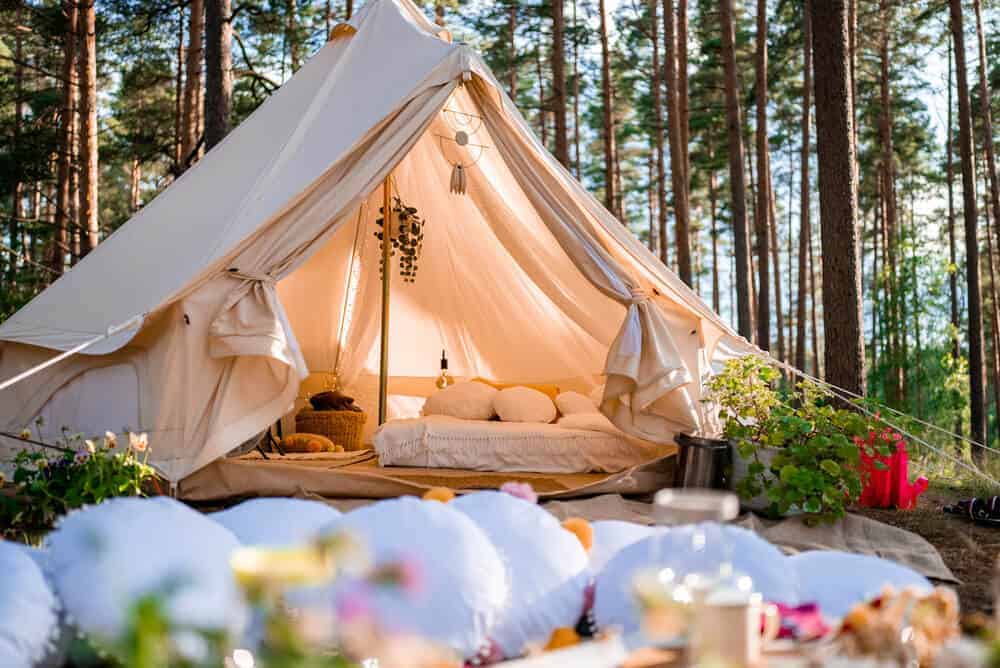
When planning a tipi wedding, it is essential to choose a theme that resonates with the couple’s personality and vision. A well-chosen theme can help in achieving a cohesive look and feel for the wedding decorations. Some popular tipi wedding themes include bohemian, rustic, woodland, and festival-inspired. Once the theme is decided, incorporate elements such as colours, patterns, and textures that align with the chosen theme to create a visually appealing space.
Floral Arrangements
Floral arrangements can play a crucial role in enhancing the ambience of a tipi wedding. Use locally sourced and seasonal blooms to achieve an organic and eco-friendly decor. Consider the following ideas for incorporating florals in your tipi wedding:
- Centrepieces: Place floral arrangements on tables as centrepieces to add a touch of nature and sophistication. Opt for low arrangements that don’t obstruct conversation.
- Hanging installations: Suspend foliage and flower garlands from the tipi poles to create a whimsical and romantic atmosphere.
- Entrance decor: Adorn the entrance of the tipi with rustic flowers and greenery, welcoming guests with a stunning visual display.
Lighting Options
The right lighting can create a warm and intimate atmosphere, perfect for a tipi wedding. When selecting lighting options, consider the following:
- Fairy lights: Drape fairy lights across the interior of the tipi, wrapping them around poles to create a magical and enchanting ambience.
- Lanterns: Hang lanterns from the tipi poles or place them strategically on the ground for a soft, inviting glow.
- Candles: Incorporate candles or tea lights in decorative holders to create a romantic and intimate atmosphere. Ensure safety measures are in place to prevent any mishaps.
With the right balance of thematic approach, floral arrangements, and lighting options, a tipi wedding can be transformed into an unforgettable and magical event.
Final Touches
Catering Choice
When planning a tipi wedding, the catering options can truly make your special day standout. As you’re dealing with an outdoor venue, consider food options that cater well to an alfresco environment. Barbecues and hog roasts are popular choices for tipi weddings, providing a laid-back atmosphere and a delightful aroma throughout the event.
For a more formal dining experience, you may opt for gourmet food trucks offering a variety of cuisines, or even arrange for a sit-down meal set up within the tipi with the help of a professional catering service.
Don’t forget to think about refreshments for your guests. Including a mobile bar within the tipi is a great way to keep the drinks flowing and the celebrations going. Consider providing a signature cocktail, personalised to your wedding theme or your love story, for a unique touch.

Wedding Favours
A tipi wedding allows you to get creative with your wedding favours, reflecting the outdoor and possibly nature-inspired theme. Here are a few ideas for unique and memorable wedding favours:
- Personalised seed packets: A packet of seeds showcasing the couple’s names and wedding date embraces the natural setting of a tipi wedding. Guests can take these home and plant them as a reminder of your special day.
- Miniature succulents: Small and easy to care for, these adorable plants make an excellent addition to any home and can symbolise the growing love between you and your partner.
- Handmade soaps or candles: Add a personal touch to your favours by crafting your own soaps or candles using natural ingredients. These items are not only practical but also a token of your appreciation.
Remember, it’s essential to include a personalised thank you note with each favour, expressing your gratitude for the guest’s presence at your wedding. Small details like these will complete your tipi wedding, creating a truly magical experience for everyone involved.
Frequently Asked Questions
What is the best way to organise a tipi wedding?
To organise a tipi wedding, start by setting a budget, choosing a suitable date, and creating a guest list. From there, you can begin researching and selecting reputable tipi hire companies, catering options, and entertainment suitable for your chosen theme. Lastly, don’t forget to tackle the logistical aspects, such as obtaining any necessary permits for the location or coordinating site visits with your tipi rental company.
What are the essential elements for a successful tipi wedding?
Some essential elements for a successful tipi wedding include a suitable location with enough space for your guests and tipis, an experienced and reliable tipi hire company, a solid contingency plan for inclement weather, and comfortable and functional furniture for your guests. Additionally, plan out your tipi’s layout and consider incorporating a mix of lighting options, such as fairy lights and lanterns, to create a warm and inviting atmosphere.
How do I choose the perfect location for my tipi wedding?
When choosing a location for your tipi wedding, consider factors such as the size, accessibility, and the natural beauty of the site. The space should be large enough to accommodate your tipis and all necessary amenities, like catering, toilets, and parking. Opt for a location that is easily accessible for your guests and has relatively flat terrain for easy tipi installation. Finally, don’t forget to check with local authorities about any restrictions or permits that may be required for using the site.
What are some cost-effective tips for planning a tipi wedding?
To save costs while planning a tipi wedding, consider these tips:
- Prioritise the most important aspects of your wedding, allocating a higher budget to those while cutting back on less essential elements.
- Seek out affordable catering options, such as food trucks, potluck-style meals, or self-catered barbecues.
- Limit the guest list to close friends and family.
- Employ DIY decorations, signage, and invitations.
- Opt for a weekday wedding, as prices for rental and services may be cheaper on non-peak days.
What is the must-know step-by-step process for planning a tipi wedding?
Here are some key steps for planning a tipi wedding:
- Set your budget, date, and guest list.
- Research local tipi hire companies and choose one suitable for your needs.
- Select an available and appropriate location that meets your requirements.
- Obtain any necessary permits or permissions from local authorities.
- Arrange site visits for your tipi suppliers.
- Choose a catering service, entertainment, and other essential elements.
- Plan your tipi layout, including furniture, lighting and decoration.
- Send out invitations, track RSVPs, and create a seating plan.
- Set up a contingency plan for inclement weather.
- Coordinate with all suppliers leading up to the event and hold a wedding rehearsal if necessary.
Weather can be unpredictable, so follow these tips to mitigate weather-related risks during your tipi wedding:
- Keep an eye on weather forecasts leading up to the big day.
- Invest in a sturdy flooring option to prevent soggy ground or slipping hazards.
- Consider additional heating elements, such as fire pits or portable heaters, to keep guests warm during colder months.
- Prepare a separate waterproof shelter or indoor space for guests to escape extreme weather conditions if necessary.
- Provide blankets, umbrellas, or hand fans to keep guests comfortable.