
There is a reason museum interiors feel so powerful. They are structured around conservation science, spatial psychology, historical context, and controlled visual hierarchy. When Egyptian artifacts are displayed in institutions such as the British Museum or the Louvre, they are positioned to emphasize cultural significance, material preservation, and narrative clarity.

Translating that institutional approach into a residential setting requires more than aesthetic imitation. Egyptian artifacts carry symbolic, religious, and funerary meaning rooted in over 3,000 years of civilization. Without contextual awareness, interiors risk becoming decorative rather than interpretive.
Creating a museum-inspired interior using Egyptian artifacts, therefore, involves adopting core curatorial principles rather than simply incorporating ancient motifs. That said, below are some research-based design principles drawn from museum display strategies and historical preservation practices.
1. Establish Historical Context Before Placement
Museums do not display artifacts as isolated décor. Each piece is positioned within a clear historical narrative — supported by chronology, cultural relevance, and original function. Ancient Egyptian works were created within deeply structured belief systems. Many objects were tied to religious ritual, funerary practice, governance, or temple architecture rather than aesthetic display.
Before integrating such pieces into a residential setting, consider:
- The artifact’s historical period (Old Kingdom, New Kingdom, Late Period, etc.).
- Its original purpose (ritual, domestic, funerary, architectural).
- The symbolic meaning is embedded within its imagery and form.
For instance, Relic & Rarity’s Egyptian mummy artifacts draw directly from funerary traditions rooted in ancient beliefs about preservation and the afterlife. In their original context, mummification was not symbolic decoration — it was a spiritual and theological practice centered on continuity beyond death. When placed within an interior without interpretive awareness, such objects risk being reduced to visual motifs rather than cultural expressions.
Selecting pieces grounded in documented archaeological aesthetics — rather than stylized or fantasy interpretations — strengthens intellectual authenticity. Context should guide placement decisions, scale, and surrounding elements. Without that framework, a space can quickly shift from museum-inspired to merely themed.
2. Apply Museum-Grade Spatial Hierarchy
Museum design follows a clear visual hierarchy. Primary artifacts receive central placement, controlled lighting, and physical elevation. Secondary objects support the narrative without competing for attention.
In residential interiors, this principle translates into deliberate spatial structuring. Some of the key considerations include:
- Designating one primary focal artifact per zone.
- Using pedestals or plinths to elevate sculptural pieces.
- Maintaining clear sightlines from entry points.
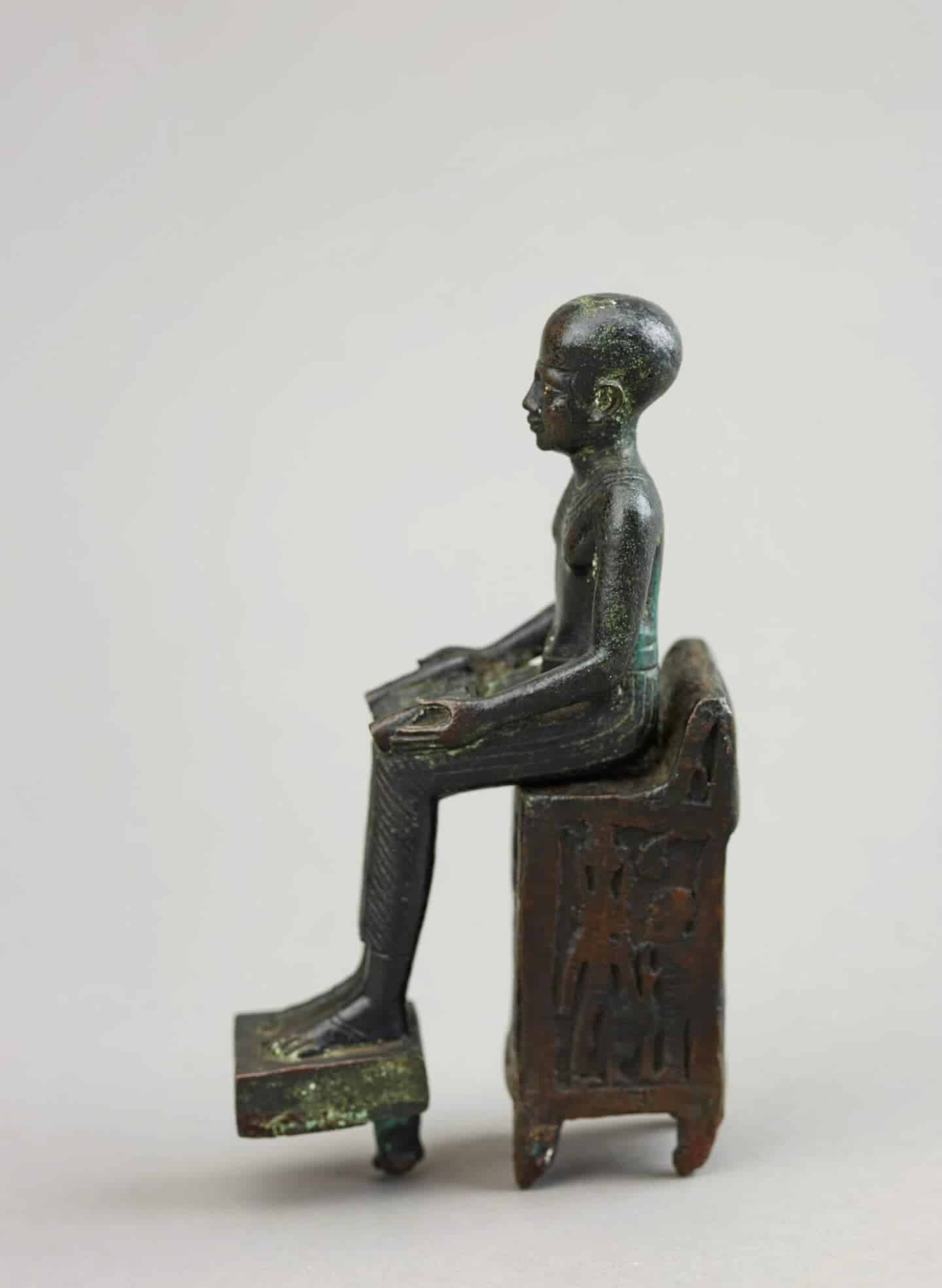
Archaeological displays often rely on vertical separation to distinguish importance. For example, sarcophagi or large statues are typically elevated slightly above floor level, while smaller items are enclosed in vitrines.
Avoid clustering artifacts along bookshelves or console tables. Dense grouping undermines hierarchy and reduces interpretive clarity. Instead, allow negative space to reinforce importance. Spatial discipline distinguishes museum-inspired interiors from themed rooms.
3. Control Light According to Conservation Principles
Lighting in museum environments is guided by conservation science. Ancient pigments, papyrus materials, and stone surfaces are sensitive to UV exposure and fluctuating intensity. While residential settings do not require full conservation-grade systems, understanding museum lighting logic improves authenticity.
Museums typically use:
- Directional LED spotlights with low UV emission.
- Controlled beam angles to highlight relief depth.
- Subdued ambient light to reduce glare.
Ancient Egyptian carvings rely on shadow contrast to reveal hieroglyphic detail. Lighting positioned at a 30–45 degree angle enhances dimensional depth in relief work.
Avoid overhead wash lighting that flattens texture. Instead, create layered illumination: ambient base lighting combined with focused accent lighting. This method reflects institutional display strategy and elevates perceived value. Last but not least, lighting should reveal craftsmanship, not overwhelm it.
4. Use Material Consistency to Reinforce Archaeological Authenticity
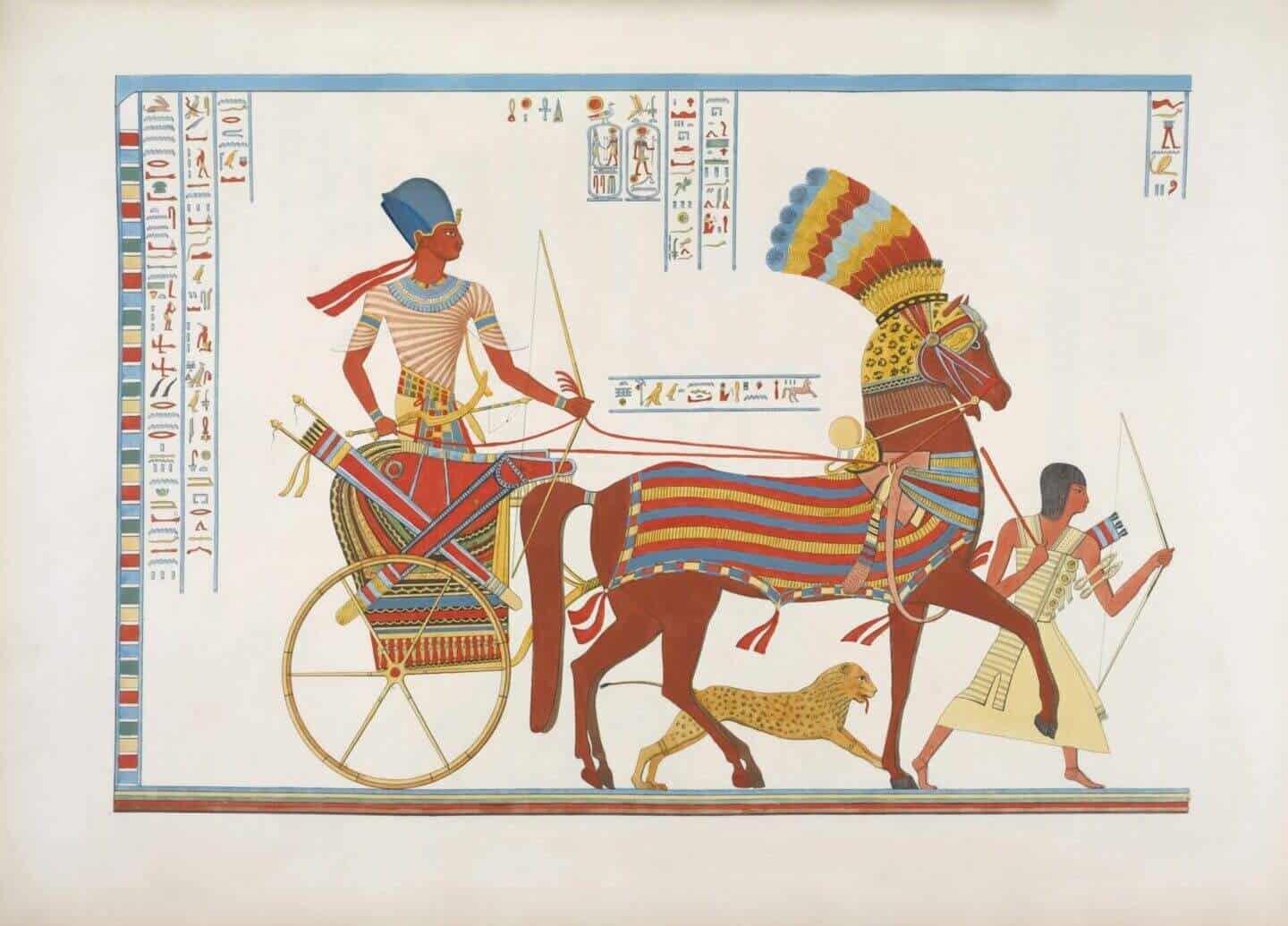
Museum galleries frequently employ restrained material palettes to prevent visual competition with artifacts. Walls are typically rendered in limestone neutrals, matte charcoal, or muted sandstone tones. These choices are not stylistic trends; they mirror archaeological environments such as tomb interiors and temple stonework.
To replicate this effect in a home:
- Select mineral-based or matte paint finishes.
- Integrate natural materials like limestone, travertine, or aged wood.
- Avoid glossy or high-saturation surfaces.
Ancient Egyptian artifacts were originally housed within stone architecture, not vibrant contemporary interiors. Maintaining tonal consistency preserves historical resonance.
Material restraint also enhances perceived authenticity. When surfaces echo archaeological textures, artifacts feel grounded rather than imposed.
To Sum It All Up!
Designing a museum-inspired interior using Egyptian artifacts requires adherence to curatorial principles rather than decorative instinct. Historical context, spatial hierarchy, controlled lighting, material restraint, and narrative framing collectively shape authentic presentation.
Egyptian artifacts represent one of the most symbolically rich civilizations in human history. Their integration into residential design should reflect that depth. Ultimately, by adopting institutional display logic and respecting archaeological authenticity, interiors can achieve sophistication rooted in cultural awareness rather than aesthetic imitation.